





Vintage Crucifix Cross
These vintage crucifix cross pieces span centuries of devotional metalwork and jewellery, offering a tangible connection to historical craftsmanship.
Vintage Crucifix Cross
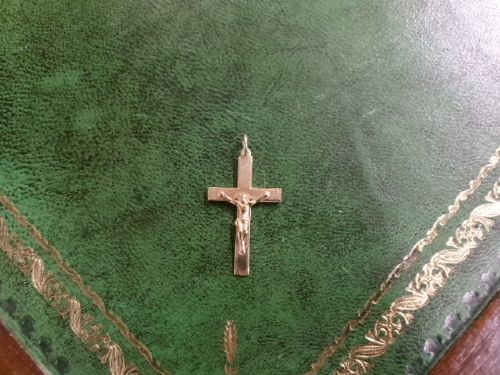
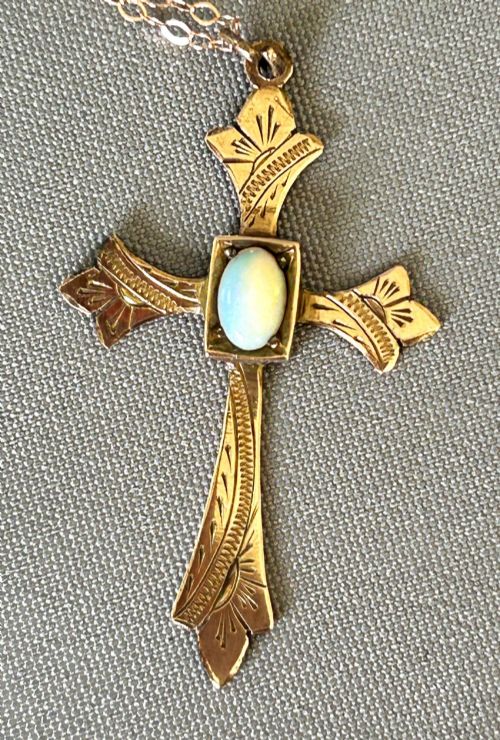
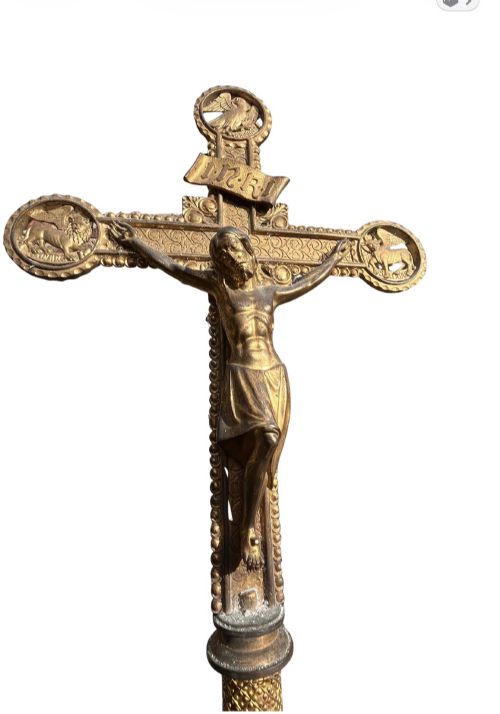
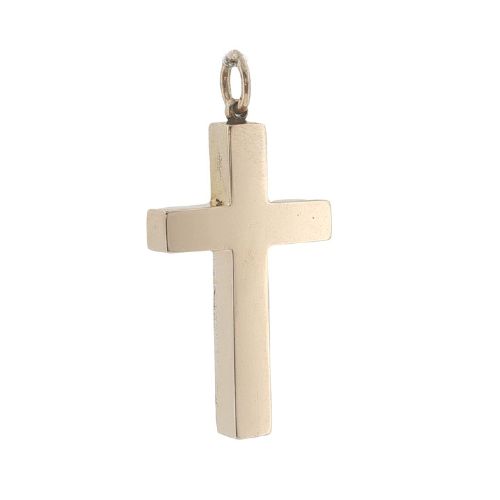
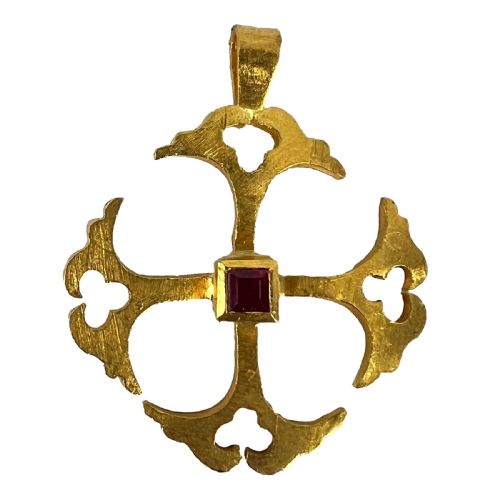
A vintage crucifix cross search reveals a diverse assembly of items, ranging from monumental processional objects and altar pieces to delicate pendants and brooches worn close to the body. You will encounter everything from substantial ecclesiastical brass items and carved oak wall pieces to fine gold and gemstone jewellery designed for personal devotion.
The objects originate from varied periods, stretching from the eighteenth century through the Victorian and Edwardian eras, and into mid-twentieth-century Modernist and Art Deco designs. Personal jewellery forms such as pendant necklaces dominate the smaller wearable items, whilst heavier brass and cast iron examples represent liturgical and architectural contexts.
Materials and Techniques
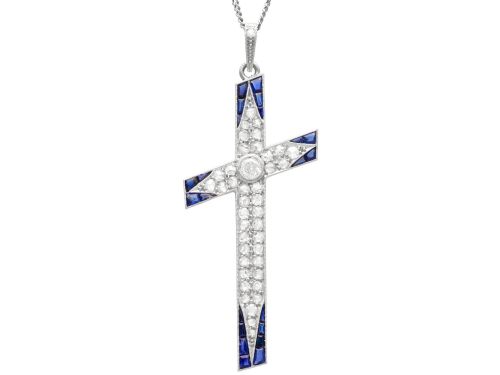
Makers utilised a wide palette of metals, combining foundational structural materials like brass, bronze, cast iron, and oak with precious metals including yellow gold, white gold, platinum, and silver. These metallic structures often serve as settings for precious and semi-precious stones such as sapphires, diamonds, rubies, amethysts, moonstones, topaz, and pearls.
Techniques range from heavy casting in iron and brass for processional and altar use to fine engraving, stone-setting, and carving in wood for personal ornaments. Continental silver and gold pieces frequently exhibit period-specific decorative traits, including Arts and Crafts hand-working or delicate marcasite detailing.
Vintage Crucifix Cross Retail Price Guide 2026
Typical asking prices for vintage crucifix cross among the pieces listed under this phrase on Sellingantiques today, from the lower quarter to the upper quarter. They describe what is for sale here now, not the wider market.
Listings feature items spanning from the 18th century to the 1960s, incorporating brass, gold, silver, oak, and sapphire.
Assessing Quality
Quality reveals itself in the precision of the casting and the crispness of surface engraving on metalwork, as well as the deliberate selection and secure setting of gemstones like diamonds and sapphires. Heavier liturgical pieces rely on structural heft and well-defined sculptural form, whereas wearable jewellery depends on delicate articulation and refined proportions.
The grade of materials - such as higher-carat gold, platinum, or solid oak - sets the baseline for durability and intrinsic value. Superior examples demonstrate a careful harmony between decorative ornamentation and the structural integrity of the corpus and cross.
The Vintage Crucifix Cross Glossary
- Corpus
- The figure of Jesus Christ affixed to the cross on a crucifix. This sculptural element varies from simple cast silhouettes to detailed miniature figures.
- Processional Cross
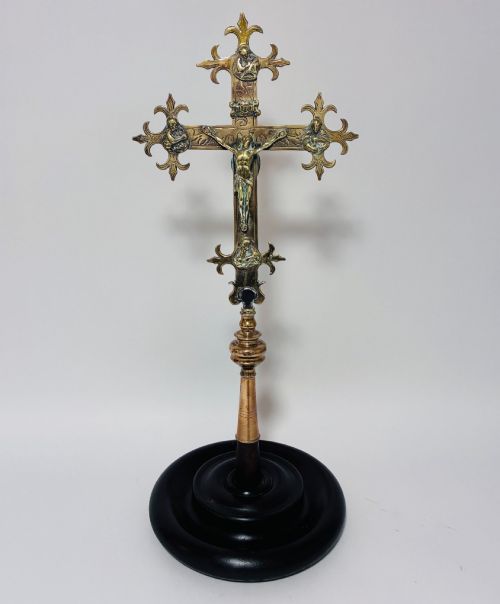
- A large crucifix mounted on a long shaft, carried at the head of religious processions. These heavy brass examples often date from the nineteenth century or earlier.
- Altar Cross
- A freestanding cross designed to stand upon or behind an ecclesiastical altar. They are typically cast in brass or bronze and maintain a stationary, upright stance.
- Marcasite
- Small faceted crystals of pyrite set into silver jewellery to provide a sparkling, diamond-like brilliance. It is particularly characteristic of mid-century decorative work.
- Rose Cut
- An antique diamond cut featuring a flat base and a domed top composed of triangular facets. This cut predates modern brilliant stones and appears in older wearable pieces.
Vintage Crucifix Cross: Frequently Asked Questions
What is a vintage crucifix cross?
A vintage crucifix cross is a devotional object depicting the cross combined with the corpus, spanning various historical eras and materials.
Items range from large ecclesiastical brass altar pieces to small wearable gold and gemstone pendant necklaces.
How were these crosses used?
Larger pieces served liturgical functions in churches and chapels, including processional duties and altar placement, or marked graves outdoors.
Smaller iterations functioned as personal jewellery, worn daily as pendant necklaces or pinned to garments as brooches for private devotion.
How do I care for my piece?
Care depends entirely upon the specific materials, requiring gentle cleaning for soft gemstones like pearls and moonstones compared to robust metal upkeep.
Precious metals and gemstones benefit from specialist jewellery cleaning, while brass and iron benefit from dust removal without harsh chemical intervention.
How can I tell the period?
Stylistic indicators such as Victorian engraving, Edwardian delicacy, or Art Deco geometric framing provide primary clues to a piece's age.
Material composition, hallmarks, and manufacturing techniques like casting versus hand-working further anchor items within their respective centuries.