

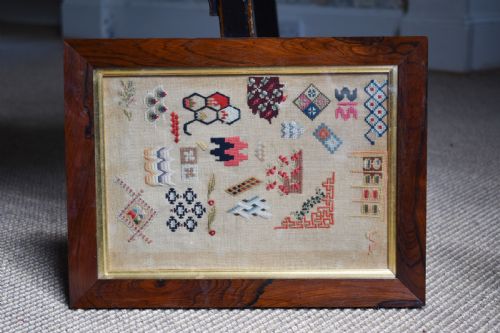


Vintage Cross Stitch
Vintage cross stitch brings domestic needlework samplers and textile art into the room, offering framed personal histories and traditional hand-worked designs from past centuries.
Vintage Cross Stitch
When buyers search for vintage cross stitch, they encounter needlework samplers, textile wall art, and embroidered panels created by hand. These works predominantly date through the nineteenth century, including Georgian and Victorian periods, alongside mid-twentieth-century maritime flags.
The most common formats on this page are needlework samplers worked by young makers, often recording a name, age, and date in thread. Alongside these domestic schoolroom pieces, the selection includes Central Asian tribal ilgich textiles and framed flags.
How they were made
Needlework samplers use silk thread, wool, and cotton stitched across woven linen grounds. Makers applied counted-thread embroidery techniques to construct alphabets, figures, and architectural motifs.
Framed textile pieces often combine wooden surrounds with glass protection to preserve the delicate fibre surfaces. Central Asian tribal examples utilise local weaving traditions with distinctive patterns and materials.
Vintage Cross Stitch Retail Price Guide 2026
Typical asking prices for vintage cross stitch among the pieces listed under this phrase on Sellingantiques today, from the lower quarter to the upper quarter. They describe what is for sale here now, not the wider market.
One Victorian needlework piece simply depicts a horse, proving that schoolroom makers occasionally abandoned the alphabet to stitch animals.
What varies in quality
Quality in these textile works rests upon the precision of the stitching and the clarity of the composition. Pieces that maintain tight, even thread tension and well-preserved lettering stand apart.
Historical documentation adds distinction to a sampler. Works that clearly record the maker's name, age, and date provide a direct link to the individual who created them.
Ann Hodson·Margaret Ann Blackow·Mary Mason·Ann B Gilies·Mary Street·Emma and Hannah Barnes
The Vintage Cross Stitch Glossary
- Sampler
- A piece of needlework produced as a demonstration or test of skill in various stitches. These works frequently display alphabets, numerals, and pictorial motifs.
- Linen
- A textile made from the fibres of the flax plant. It serves as the traditional foundation fabric for early needlework samplers.
- Needlepoint
- A type of canvas work embroidery where yarn or thread is stitched through a stiff open-weave canvas. This technique creates a dense, durable surface texture.
- Ilgich
- A decorative embroidered hanging or textile panel originating from Central Asian tribal groups. They display traditional regional patterns executed in vibrant threads.
Vintage Cross Stitch: Frequently Asked Questions
What is a needlework sampler?
A needlework sampler is a piece of cloth embroidered with various stitches, alphabets, and designs. Historically, they served to demonstrate a maker's skill and proficiency in needlecraft.
Many surviving examples include the name of the maker, their age, and a date. They offer a direct record of domestic education and textile traditions from the nineteenth century.
How old are these embroidered samplers?
The pieces available range primarily across the nineteenth century, including Georgian and Victorian eras. Dates marked directly in the thread often specify the exact year of completion.
Some examples also record the specific age of the young maker at the time of working. Additional pieces extend into mid-twentieth-century contexts such as maritime flags.
How should I frame and display textile art?
Textile art requires careful framing behind glass to protect fragile silk, wool, and cotton threads from dust and environmental degradation. Professional framing prevents direct contact between the fabric and the glass.
Display these pieces away from direct sunlight to prevent the fading of natural threads and linen grounds. Stable indoor humidity levels help preserve the organic materials.
What do alphabet samplers signify?
Alphabet samplers represent traditional exercises in literacy and needlework combined. Young makers practiced forming letters and numbers alongside decorative motifs and borders.
These pieces document educational practices in nineteenth-century schools and homes. They preserve personal narratives through the names and dates stitched into the linen.