

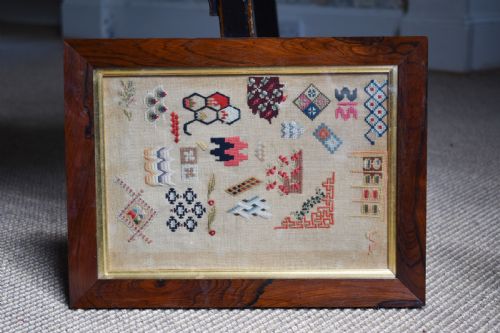


Vintage Cross Stitch Sampler
These vintage cross stitch sampler pieces are needlework treasures worked by hand, offering a direct touch of domestic history for your walls.
Vintage Cross Stitch Sampler
When you search for a vintage cross stitch sampler, you are looking at historic textile art worked by hand with needle and thread. These pieces record alphabets, verses, numbers, and decorative motifs stitched by young makers.
The versions you are most likely to meet on this page date from the Georgian and Victorian periods, often framed under glass in wooden surrounds. They include works by named makers such as Ann Hodson, Margaret Ann Blackow, Mary Mason, and Ann B Gilies.
Examples range from simple alphabet exercises to detailed pictorial scenes like horses or schoolhouse projects. Most originate from nineteenth-century England, spanning decades from the early eighteen-hundreds through to eighteen-ninety.
How they were made
These works rely on a foundation of woven linen stretched and stitched using wool, silk thread, and standard thread. Makers formed precise cross stitches and needlepoint to build up letters, borders, and figures line by line.
Finished textiles were traditionally mounted behind glass within wooden frames to protect the delicate fibres from dust and handling. Many retain their original framing setup, complete with gilt accents or simple timber mouldings.
Vintage Cross Stitch Sampler Retail Price Guide 2026
Typical asking prices for vintage cross stitch sampler among the pieces listed under this phrase on Sellingantiques today, from the lower quarter to the upper quarter. They describe what is for sale here now, not the wider market.
Emma and Hannah Barnes worked together on two alphabet samplers so neatly that someone eventually framed them as a single piece.
What varies in quality
The distinction between ordinary and exceptional pieces lies in the precision of the stitching and the ambition of the design. Examples featuring complete alphabets, detailed pictorial elements, and clear maker details tend to command more attention.
Condition also plays a significant role, particularly the stability of the linen ground and the vibrancy of the remaining silk and wool threads. Pieces preserved cleanly behind glass retain their legibility and visual impact much better over time.
Ann Hodson·Margaret Ann Blackow·Mary Mason·Ann B Gilies·Mary Street·Rachel·Emma and Hannah Barnes
The Vintage Cross Stitch Sampler Glossary
- Sampler
- A piece of needlework produced as a demonstration or test of skill in various stitches. These historic examples frequently feature alphabets, numbers, and pious verses.
- Needlepoint
- A type of canvas work embroidery where yarn is stitched through a stiff open-weave canvas. It creates a dense, durable surface that covers the foundation entirely.
- Linen
- A strong textile made from the fibres of the flax plant, used as the primary fabric ground for these historic embroideries. Its even weave made counting threads for precise stitches straightforward.
- Gilt
- Covered thinly with gold leaf or gold paint, often found on the interior slips or outer moulding of period frames. This adds a subtle brightness around the dark wood.
- Alphabet sampler
- A specific format focused primarily on rows of capital and lowercase letters. Nineteenth-century makers used these to practice lettering styles and spacing.
Vintage Cross Stitch Sampler: Frequently Asked Questions
What is a vintage cross stitch sampler?
A vintage cross stitch sampler is a historical piece of textile art created by hand, typically by young stitchers practicing their needlework skills.
These works often display alphabets, numbers, and decorative motifs, providing a direct link to nineteenth-century domestic education and craft.
How old are these needlework samplers?
The pieces available span the Georgian and Victorian eras, with dates ranging across the nineteenth century up to eighteen-ninety.
Many include specific years and the age of the maker stitched directly into the fabric, such as work from eighteen-thirty-two or eighteen-forty-seven.
How were samplers originally displayed?
Historic needlework pieces were typically framed in wood behind glass to protect the delicate silk and wool threads from atmospheric damage.
This traditional framing often includes narrow wooden moulding or gilt slips to complement the textile within.
Can I identify the person who stitched one?
Many samplers include the name of the maker, their age, and the date stitched right into the border or field.
Examples from this collection record names such as Ann Hodson, Margaret Ann Blackow, and Mary Mason alongside their working dates.