

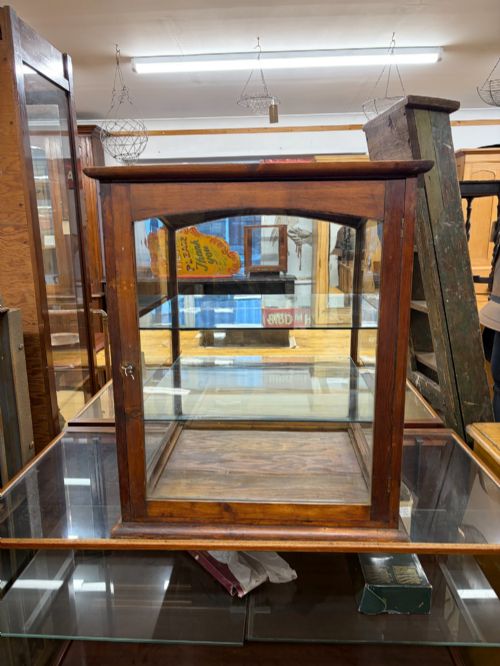






Vintage Counter Top Case
These vintage counter top case designs are robust shop display cabinets that sit on counters to hold everything from tea to soap.
Vintage Counter Top Case
When you search for a vintage counter top case, you are looking at glazed retail cabinets designed to sit upon shop counters and display goods directly to customers. These commercial pieces date from the Victorian and Edwardian eras through to the 1930s.
The selections on this page include mahogany, oak, and brass-framed cabinets built for chemists, tea rooms, and confectioners. You will encounter specialised items such as mechanical soap dispensers, pencil showcases, and chocolate display cases bearing brand names.
How they were made
Makers constructed the primary frames of a vintage counter top case using dense hardwoods like mahogany and oak, often joined with robust cabinetry techniques to withstand daily retail use. Glass panels fitted into the timber or brass framework to allow clear inspection of the merchandise inside.
Metal components such as brass framing, hinges, and mechanical dispensing parts added structural strength and operational reliability. Interior surfaces were occasionally lined with felt or velvet, while exterior lettering utilised gold leaf sign-writing to promote specific commercial brands.
Vintage Counter Top Case Retail Price Guide 2026
Typical asking prices for vintage counter top case among the pieces listed under this phrase on Sellingantiques today, from the lower quarter to the upper quarter. They describe what is for sale here now, not the wider market.
Listings feature oak and mahogany timbers alongside brass framing, with periods spanning the Victorian era through to the 1930s.
What varies in quality
The distinction between standard commercial units and finer examples lies in the sophistication of the framing materials and the presence of specialised hardware. Brass-framed joints, hardwood construction like mahogany rather than plain timber, and integrated drawers elevate a piece's manufacturing standard.
Original brand sign-writing, intact mechanical dispensing mechanisms, and specialised retail associations such as pharmacy or confectionery markings separate ordinary utility cabinets from notable commercial showcases.
Saml. Elliott & Sons·Quincy Showcase Works Illinois
The Vintage Counter Top Case Glossary
- Glazed
- Fitted with glass panels to enclose and protect the contents while maintaining visibility. This term describes the primary enclosing walls of the cabinet.
- Mechanical Dispensing
- Incorporating internal levers or mechanisms designed to release items such as soap or tablets upon demand. These functional additions are typical of specialised 1930s shop fittings.
- Hardwood
- Timber derived from broad-leaved trees, such as mahogany and oak, chosen for durability in commercial furniture. Such woods form the structural backbone of heavy-use display cases.
- Sign-written
- Lettering painted by hand onto glass or timber to advertise specific commercial brands or shop names. This traditional technique identifies the historical retail use of the cabinet.
- Counter Top
- Designed specifically to sit upon a shop sales desk rather than standing independently on the floor. These compact cabinets kept goods at eye level for the customer.
Vintage Counter Top Case: Frequently Asked Questions
What were counter top cases used for?
These glass cabinets sat upon shop counters to hold and display small retail goods directly to buyers. Merchants used them to present items like tea, soap, pencils, and chocolate.
The glazing kept merchandise clean while placing high-margin goods at eye level for the customer. Specialised versions also incorporated mechanical dispensing functions to hand out items directly.
How do I date a vintage counter top case?
Dating relies on identifying timber types, construction methods, and any surviving brand sign-writing or maker details. Victorian and Edwardian examples often feature heavy mahogany or oak frames, while later 1930s pieces frequently introduce brass framing.
Specific product names and advertising styles linked to known manufacturers or brands help narrow down the period of production. Structural hardware also shifts from hand-finished joints to early industrial manufacturing techniques across the decades.
Where should I place one at home?
These compact cabinets sit well on sideboards, desks, or kitchen counters where their glass panels can catch the light. They provide enclosed display space for collections of small objects, keeping them dust-free.
The shallow depth of a counter top case means it fits easily onto standard furniture surfaces without taking up excessive floor space.
Are the glass panels usually original?
Many surviving cabinets retain their original glass panes, which often display the slight waviness or bubbles typical of older manufacturing methods. Replacement glass does occur due to the fragile nature of retail display furniture.
Examining the fit within the timber or brass rebates helps determine whether the glazing matches the age of the frame.