





Vintage Corner Shelving
Vintage corner shelving brings neglected angles to life, turning dead space into functional tiers of wood and display.
Vintage Corner Shelving
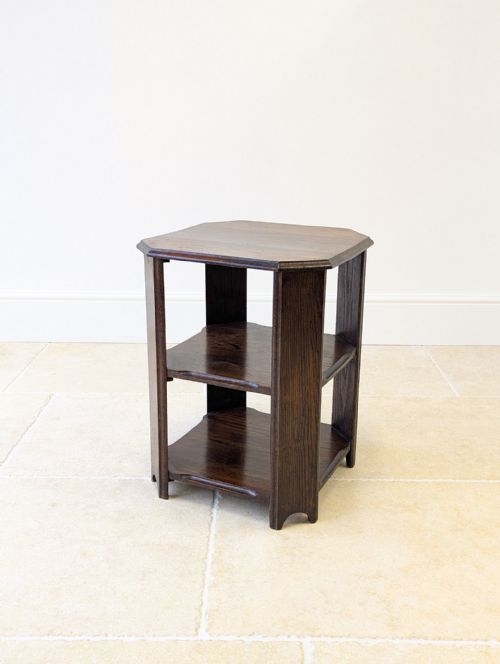
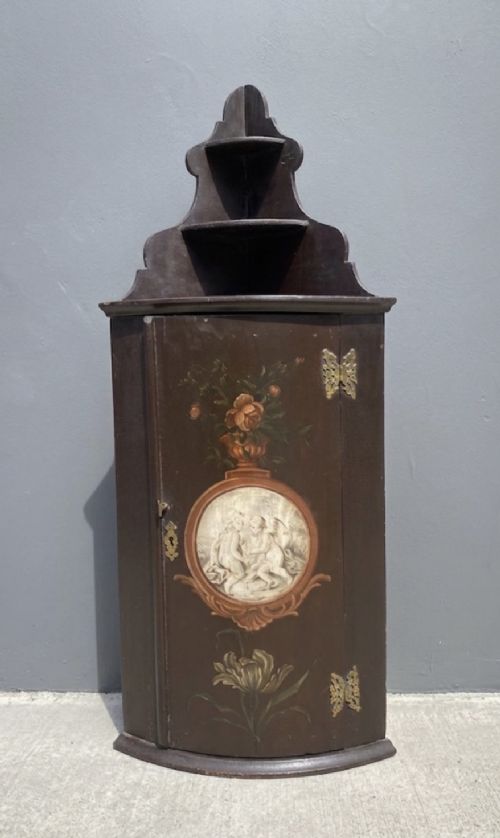
Vintage corner shelving encompasses multi-tiered display pieces designed specifically to fit into ninety-degree room angles. The selections span compact hanging cupboards to towering freestanding structures that maximise vertical space.
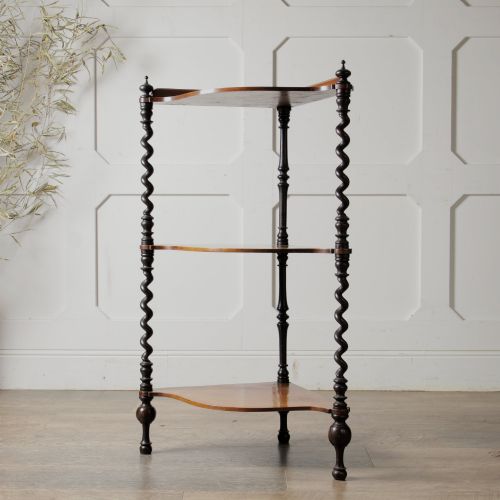
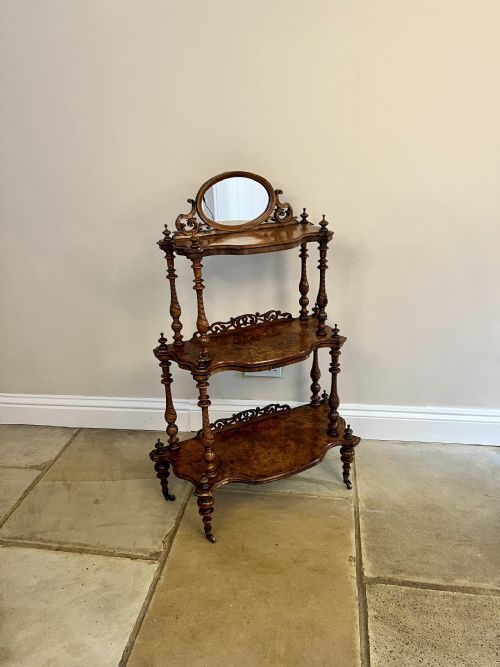
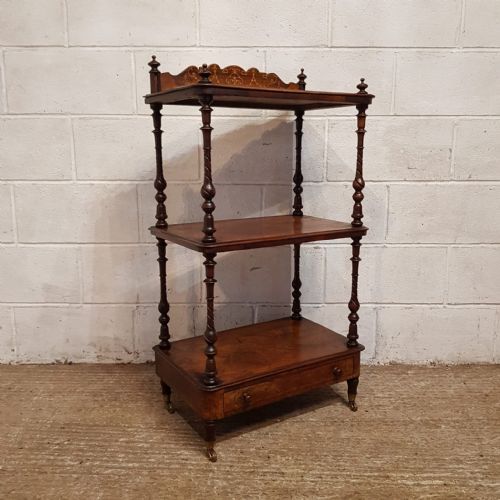
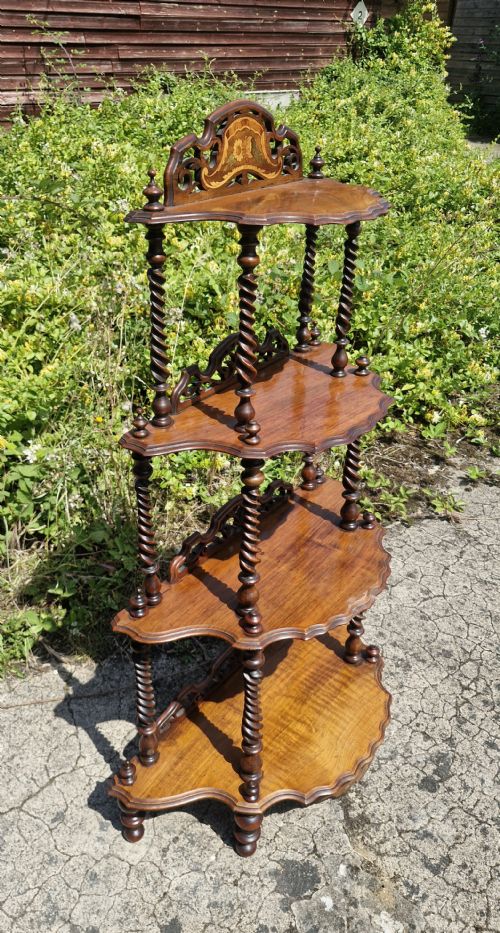
The pieces appearing most frequently across this page belong to the Victorian and 19th Century periods, constructed primarily as tiered whatnots or open corner cabinets. These functional items translate historical cabinet-making into practical display options for modern rooms.
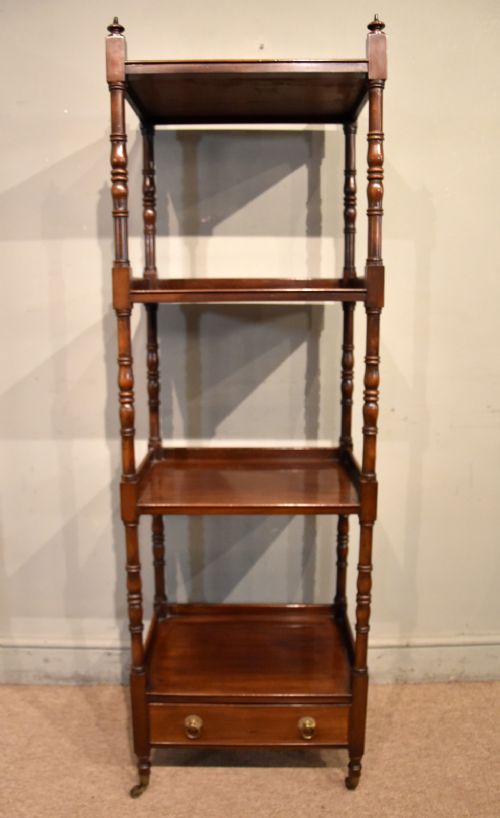
Makers historically configured these units to hold books, ceramics, and ornaments without dominating the floor plan. The forms vary from simple hanging shelves to elaborate multi-tiered stands featuring enclosed lower cupboards.
Materials and Construction
Cabinet-makers relied heavily on timbers such as mahogany, walnut, and burr walnut, often selecting figured veneers for visual depth. Structural integrity relied on precise joinery to support multiple stacked platforms without sagging.
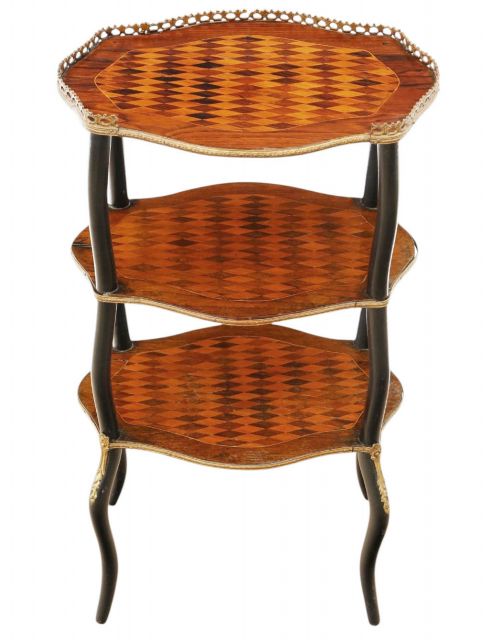
Secondary detailing involved brass mounts, inlaid parquetry, ebonised elements, and pierced fretwork panels. Surface finishes ranged from polished wood polish to painted treatments and white painted ironwork.
Vintage Corner Shelving Retail Price Guide 2026
Typical asking prices for vintage corner shelving among the pieces listed under this phrase on Sellingantiques today, from the lower quarter to the upper quarter. They describe what is for sale here now, not the wider market.
Someone once adapted a French bread rack to live permanently in a corner.
Evaluating Quality and Craftsmanship
Superior examples reveal themselves through the selection of timber, particularly the grain matching on burr walnut surfaces and solid mahogany uprights. Finer pieces incorporate delicate details like hand-cut fretwork and intricate parquetry inlay rather than stamped or painted imitations.
Structural stability distinguishes workshop standards. Top-tier items maintain rigid tier alignment and secure wall fixings or balanced freestanding legs, showing no looseness at the joints where shelves meet the upright supports.
The Vintage Corner Shelving Glossary
- Whatnot
- An open multi-tiered piece of furniture designed for displaying ornaments or books. These freestanding stands became popular during the Regency and Victorian periods.
- Etagere
- A piece of furniture consisting of a set of open shelves for displaying small objects. The term often interchanges with whatnot in nineteenth-century contexts.
- Fretwork
- Ornamental design worked in wood with a fretsaw, creating open patterns. This technique appears on the galleries of better Victorian display stands.
- Parquetry
- Mosaic woodwork used for floors or furniture decoration, formed of geometric patterns. It frequently enhances the top surfaces of late nineteenth-century pieces.
- Barley twist
- A type of turning shaped like a twisted rope, commonly found on nineteenth-century upright supports. This decorative lathe work adds vertical texture to the corners.
Vintage Corner Shelving: Frequently Asked Questions
How do I secure a tall corner whatnot?
Freestanding multi-tiered units benefit from discreet wall fixings through the upper frame, particularly on older timber floors.
Ensuring the heaviest objects sit on the lowest tier maintains natural gravity balance.
What is the difference between a whatnot and an etagere?
Both terms describe multi-tiered open shelving units intended for display.
Historical records often use them interchangeably, though etagere sometimes leans toward lighter French-influenced designs.
Can these shelves hold heavy books?
Solid mahogany and oak structures handle heavy volumes adequately if the shelf supports remain sound.
Lighter walnut veneer or bamboo versions suit ceramics and decorative objects better than dense libraries.
How do I identify a Victorian corner piece?
Victorian items typically feature darker timbers like walnut or mahogany, often with turned uprights and pierced fretwork galleries.
Construction details like hand-cut joints and timber shrinkage help confirm nineteenth-century origin.