





Vintage Copper Wall Mirror
A vintage copper wall mirror brings warmth and reflective depth to a room, drawing the eye with rich metallic tones and period character.
Vintage Copper Wall Mirror
A vintage copper wall mirror combines practical reflection with distinct period design, predominantly emerging from the Arts and Crafts and Art Deco movements. Buyers seeking these items encounter rectangular, oval, and round wall-hanging formats, alongside substantial overmantel mirrors.
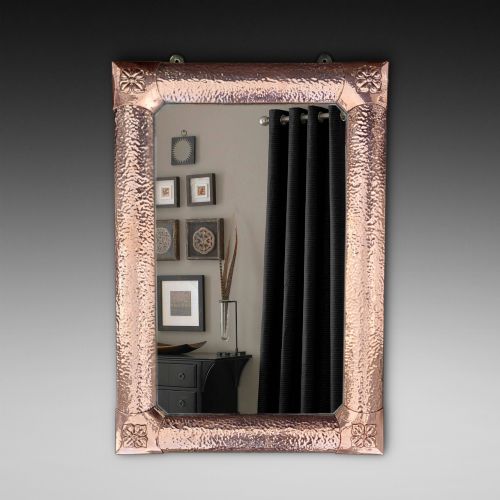
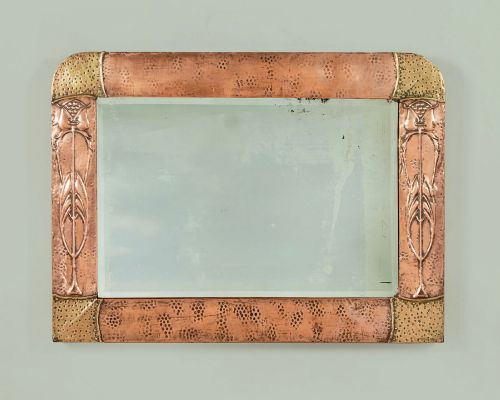
The selections span from the late nineteenth century through to the 1930s, capturing shifts from hand-worked reform aesthetics to streamlined geometric modernism. The Arts and Crafts examples dominate the selection, often displaying hammered or repoussé surfaces that showcase the metalworker's hand.
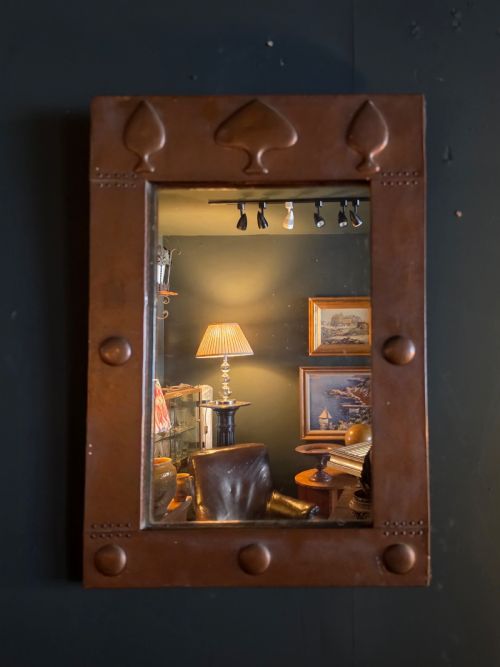
Makers and workshops of the early twentieth century frequently utilised copper frames to introduce tactile warmth into domestic interiors. Pieces range from simple utilitarian frames to elaborate designs set with ceramic cabochons or stylised plant motifs.
How they were made
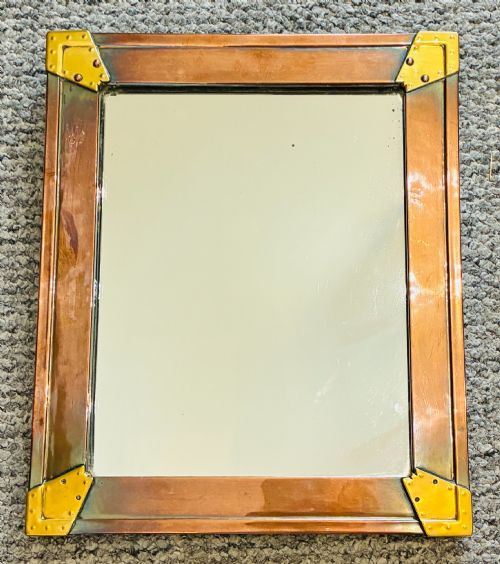
Construction relies heavily on sheet copper shaped around wooden backings or secured with brass fittings. Artisans hammered, chased, and repousséd the metal surfaces to create low-relief patterns, often leaving visible tool marks as a mark of genuine craft production.
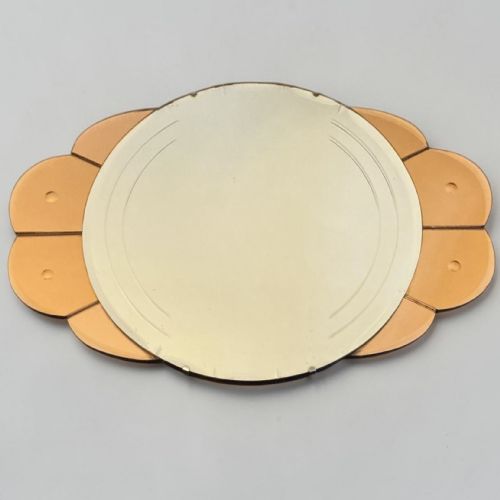
Glass elements include bevelled edges, convex forms, and specialist tinted plates such as peach coloured glass. Frames frequently incorporate subsidiary materials like brass, ceramic cabochons, and mahogany to contrast with the warm reddish hue of the copper.
Listings span from the nineteenth century through the 1930s, uniting Arts and Crafts hand-beaten copper work with Art Deco peach glass panels.
What varies in quality
Quality rests upon the depth and definition of the metalwork, distinguishing crisp hand-beaten repoussé decoration from plain pressed sheet metal. Superior examples display thoughtful integration of materials, such as Ruskin ceramic cabochons or carefully riveted brass joints.
The preservation of the original glass and the integrity of the wooden sub-structure dictate the overall standard. Pieces attributed to prominent retailers or workshops demonstrate superior gauge metal and more complex geometric or organic framing.
Liberty & Company·Ruskin
The Vintage Copper Wall Mirror Glossary
- Repoussé
- A metalworking technique where the metal is hammered from the reverse side to form a raised design in relief. This method gives early twentieth-century frames their characteristic tactile depth.
- Bevelled glass
- Mirror glass with an angled, polished edge that catches the light and frames the reflection. It indicates a higher standard of manufacture in vintage wall mirrors.
- Cabochon
- A polished, convex gemstone or ceramic piece without facets, frequently set into metal frames as a decorative accent. Ruskin pottery examples are particularly sought after for this feature.
- Overmantel mirror
- A large horizontal mirror designed to hang specifically above a fireplace mantelpiece. These pieces often feature integrated framing materials such as peach glass and metal panels.
- Convex mirror
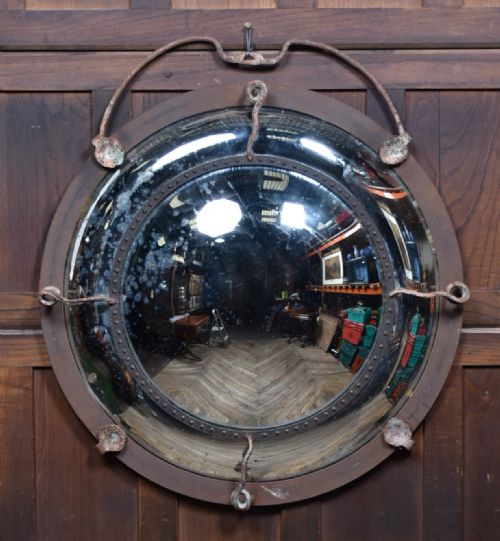
- A round mirror with a curved surface that reflects a wide, distorted field of vision. These forms appear in twentieth-century interior schemes.
Vintage Copper Wall Mirror: Frequently Asked Questions
How do I clean a copper mirror frame?
Maintain the surface by dusting gently with a soft dry cloth to preserve any historic patination. Avoid harsh chemical polishes that strip away the aged character accumulated over decades.
Test any cleaning method on a small hidden area if dirt accumulation requires intervention. Preserving the natural oxidation maintains the authentic appearance of the piece.
Are these mirrors heavy to hang?
Many examples incorporate solid wooden backings and thick glass plates, adding substantial weight to the wall hanging. Secure fixings suited to the specific wall type are essential for safe support.
Check the integrity of the original hanging loops on the reverse before mounting. Professional installation is advisable for larger overmantel formats.
How do I date an Arts and Crafts mirror?
Examine the construction methods, screw types, and backing boards to establish the approximate period of production. Pieces from the early twentieth century often display hand-beaten tool marks characteristic of the movement.
Maker marks or retailer stamps can provide more precise chronological markers. Stylistic clues like stylised tree motifs point directly to the 1900 era.
What is peach glass in Art Deco mirrors?
Peach glass refers to tinted mirror plates popular during the 1930s design period. This warm coloration softens reflections and complements the surrounding metal framework.
Such tinted panels signify the shift toward stylised glamour in interior decoration. They distinguish mid-century items from earlier Victorian and Edwardian productions.