




Vintage Copper Mirror Frame
These vintage copper mirror frame pieces bring warm metallic tone and handcrafted texture to a wall.
Vintage Copper Mirror Frame
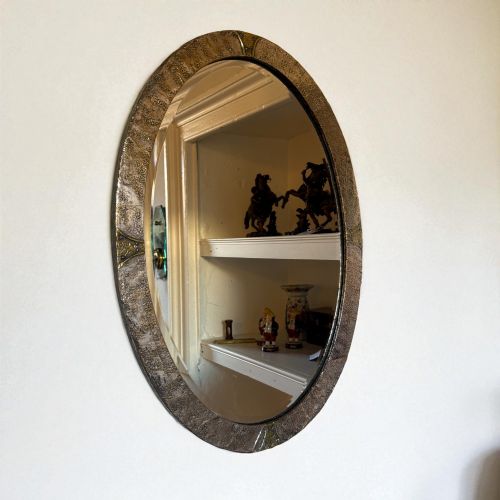
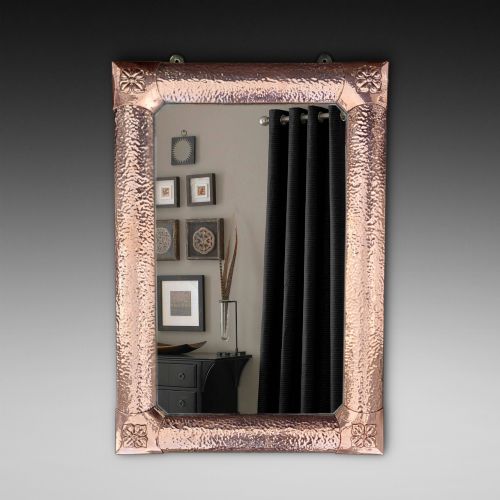
A vintage copper mirror frame centres on the rich metallic warmth and tactile surface of beaten or repoussé metal. When searching for a vintage copper mirror frame, buyers encounter pieces primarily originating from the Arts and Crafts and Art Deco periods spanning the late nineteenth century into the nineteen thirties.
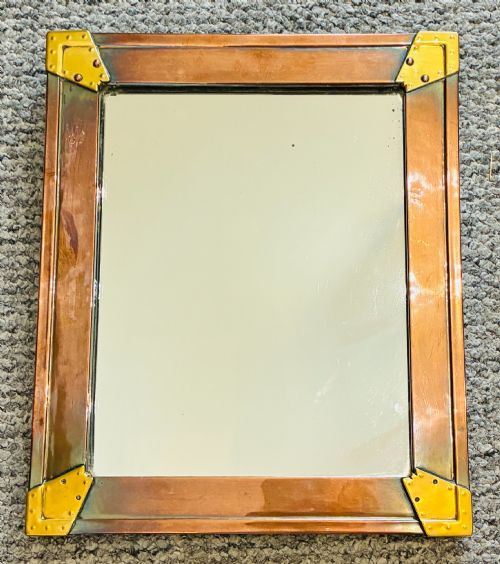
These wall mirrors take rectangular, oval, and round forms, frequently constructed with wooden backing and brass or ceramic elements. The selection relies heavily on Arts and Crafts design principles, alongside occasional Art Deco pieces featuring blue glass panels set in copper.
How they were made
Maker's workshops built these frames using sheet copper formed over wooden structures, often securing the bevelled glass mirror plates with traditional fixings. Artisans shaped the metal surfaces by hand, employing beaten and repoussé techniques to raise decorative motifs from the reverse side.
Designers incorporated contrasting materials such as brass accents and ceramic cabochons, including Ruskin pottery inserts, to add colour and texture. These pieces combined structural timber framing with finished metalwork to create sturdy wall hanging fixtures.
Vintage Copper Mirror Frame Retail Price Guide 2026
Typical asking prices for vintage copper mirror frame among the pieces listed under this phrase on Sellingantiques today, from the lower quarter to the upper quarter. They describe what is for sale here now, not the wider market.
What varies in quality
The distinction between standard production and superior examples lies in the depth and complexity of the metalwork. Hand-beaten repoussé work with intricate stylised tree designs or integrated ceramic cabochons demonstrates higher craftsmanship than plain sheet metal borders.
Attribution to established firms such as Liberty and Company elevates a piece, as does the integration of specialist components like bevelled mirror glass and coloured ceramic inserts. The crispness of the hand-worked surface and the integrity of the underlying wooden structure determine the overall calibre of the frame.
Liberty and Company
The Vintage Copper Mirror Frame Glossary
- Repoussé
- A metalworking technique where the artisan hammers the metal from the reverse side to form a raised design in relief. This method gives vintage copper frames their distinct tactile depth.
- Arts and Crafts
- A design movement valuing handcraft over mass production, prominent around nineteen hundred. Pieces from this era often feature stylised natural motifs and visible hammer marks.
- Bevelled glass
- Mirror glass with edges cut and polished to an angled slope. This traditional treatment catches the light and adds depth to the mirror plate.
- Cabochon
- A polished, convex gemstone or ceramic piece without facets, often set into metalwork. Ruskin pottery cabochons frequently appear on high quality copper frames from this period.
- Art Deco
- A design style emerging in the nineteen twenties and thirties characterised by geometric lines and stylised motifs. It represents the later phase of the metalwork seen in these collections.
Vintage Copper Mirror Frame: Frequently Asked Questions
What periods do these mirrors span?
The pieces originate primarily from the late nineteenth century through to the nineteen thirties. Most examples cluster around the nineteen hundreds during the height of the Arts and Crafts movement.
Later items extend into the Art Deco period, showing shifts in style while retaining copper as a primary medium.
What materials accompany the copper?
Copper is frequently paired with wooden backing structures to provide rigidity and depth to the frame. Brass elements and ceramic cabochons, such as Ruskin pottery inserts, also appear as decorative accents.
Mirror plates are typically made of glass, often featuring traditional bevelled edges.
How do I tell Arts and Crafts from Art Deco?
Arts and Crafts pieces from around nineteen hundred favour organic forms, hand-beaten textures, and stylised natural motifs like trees. They emphasise visible artisan craftsmanship and earthy ceramic cabochons.
Art Deco items from the nineteen thirties lean towards geometric panels and coloured glass, reflecting a sleeker modern aesthetic.