
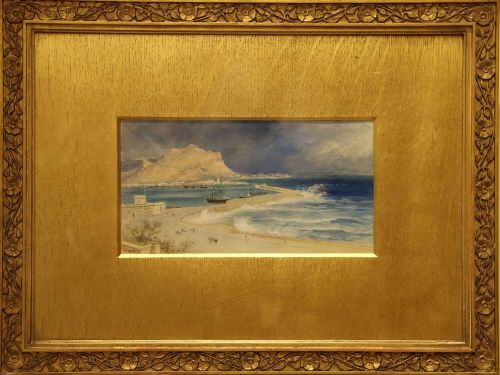


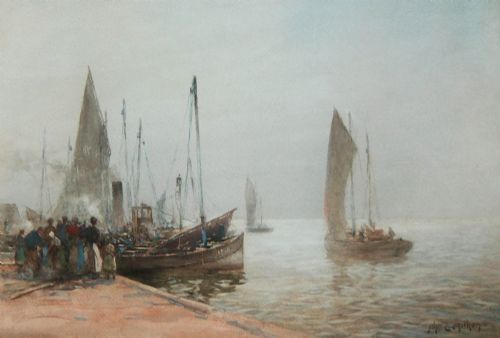


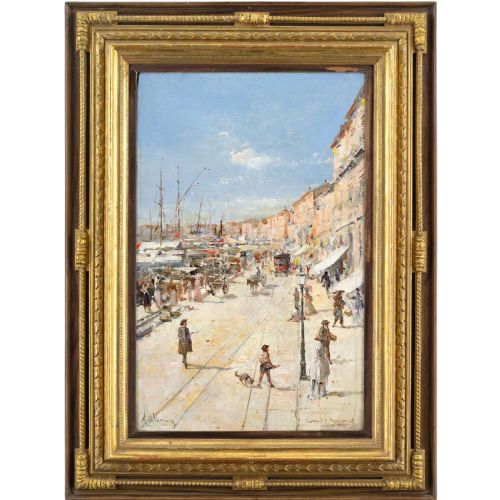
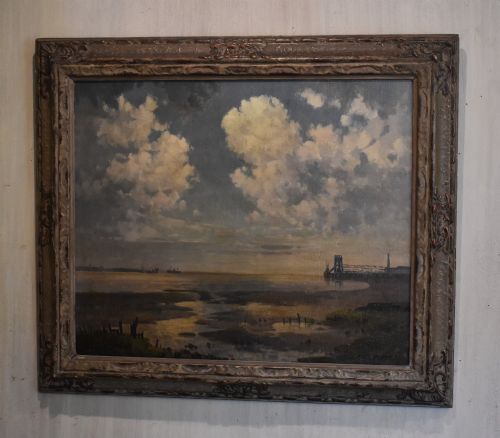


Vintage Coastal Harbour Painting
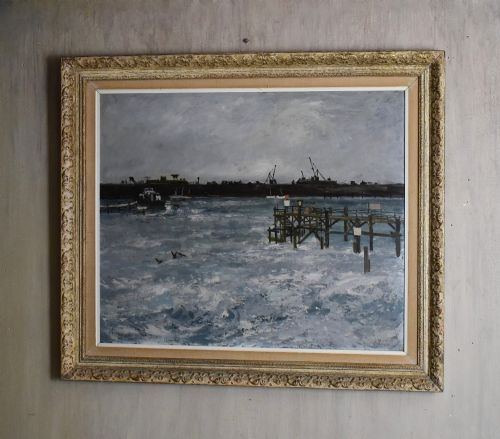
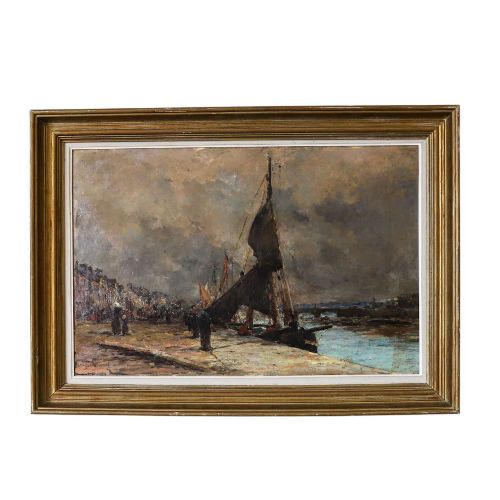
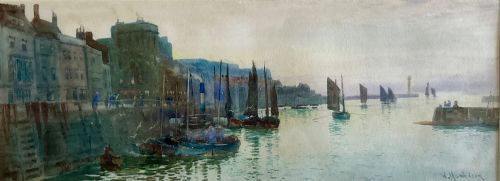
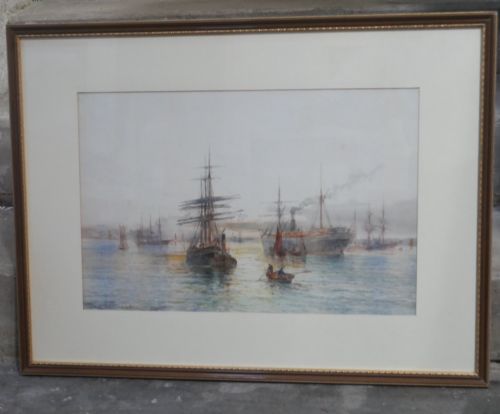
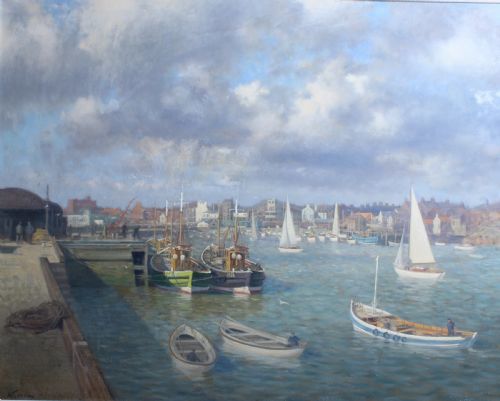
When choosing a vintage coastal harbour painting, you select a maritime view capturing working quays, fishing boats and coastal life from past decades.
Vintage Coastal Harbour Painting
A vintage coastal harbour painting captures maritime scenes from the nineteenth century through the mid-twentieth century, recording busy ports, quiet fishing villages, and tidal quays.
Buyers frequently encounter works depicting notable British coastal locations such as St Ives, Whitby, and Scarborough, alongside continental European ports in France, Italy, and Sicily.
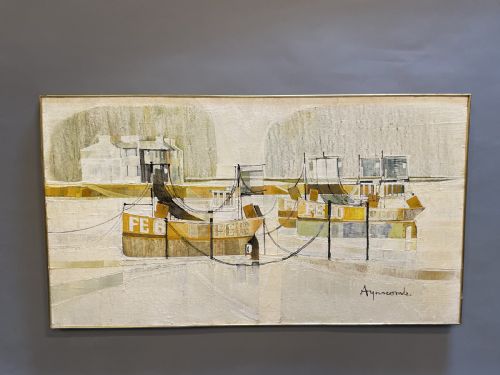
The subjects range from traditional English seascapes featuring trawling luggers to modernist interpretations of harbour walls and moored vessels executed across several decades.
Materials and techniques
Artists typically utilised oil paint on canvas or board, and watercolour on paper, applying pigments to capture changing coastal light and water movement.
Many works retain their period framing, utilising wood and gilt surrounds that complement the maritime subject matter.
Techniques span traditional nineteenth-century academic realism through to twentieth-century impasto application and post-impressionist brushwork.
Listings span the nineteenth century up to the 1960s, documenting shifting coastal aesthetics from Victorian realism to Mid-Century Modernism.
Quality and execution
Quality rests upon the artist's ability to render atmosphere, perspective, and the specific play of light on water rather than mere technical neatness.
Stronger examples demonstrate confident handling of medium, whether through fluid watercolour washes or thick, tactile oil paint strokes that give substance to hulls and masonry.
Compositional balance and the accurate depiction of rigging, tides, and vessel types distinguish more accomplished works from routine topographical records.
Kenneth Cozens·James E. Aitken·William Banks Fortescue·Augusto Alberici·Clive Browne·Peter Brannan·Paul Bret·William Matthison·Frank Kelsey·Walter Goodin·F A Roylance·George F Pennington·Alfred George Morgan·Lokre·William Edward Webb·Edward Matthew Elliott·Richard Harry Carter·Gyrth Russell·Jean-Baptiste Olive·Raymond Picque·James Fry·William Lee Hankey·George Turland Goosey·Arthur Tucker·Adrian Van Porten
The Vintage Coastal Harbour Painting Glossary
- Watercolour
- A paint consisting of a colour pigment suspended in a water-soluble vehicle, frequently applied to textured paper to depict translucent seas and skies.
- Impasto
- The process of applying paint thickly so that it stands out from the surface, used here to build texture on harbour walls and churning seas.
- Gilt frame
- A wooden picture surround covered with a thin layer of gold leaf or metallic gilt, typical of period presentation.
- Maritime
- Relating to the sea, shipping, and navigation, defining the primary subject matter of these coastal views.
- Board
- A rigid flat substrate, often made of wood or wood pulp, utilised by artists as an alternative to stretched canvas.
Vintage Coastal Harbour Painting: Frequently Asked Questions
How do I date a harbour painting?
Dating relies upon stylistic markers, artist lifespan records, framing types, and costume details of any figures depicted on the quayside.
Changes in shipping technology, such as the transition from sail to steam, also provide reliable chronological clues for these works.
Where were these coastal scenes painted?
Artists worked directly on location along active fishing ports, industrial docks, and sheltered bays across Britain and continental Europe.
Popular painting colonies emerged in coastal Cornwall and Yorkshire, drawing artists to record daily maritime labour.
Are watercolours as durable as oils?
Waterworks require protection behind glass to prevent atmospheric damage to the paper substrate and fugitive pigments.
Oil paintings on canvas or board are generally more robust but still benefit from stable indoor environments away from direct sunlight.
How should I frame an antique painting?
Preserving the original period frame whenever possible maintains the historical integrity and aesthetic harmony of the artwork.
If framing is damaged, replacements should match the period style and material of the piece rather than introducing modern incongruities.