

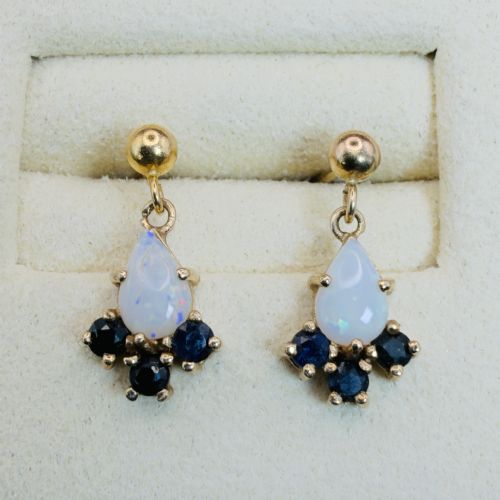
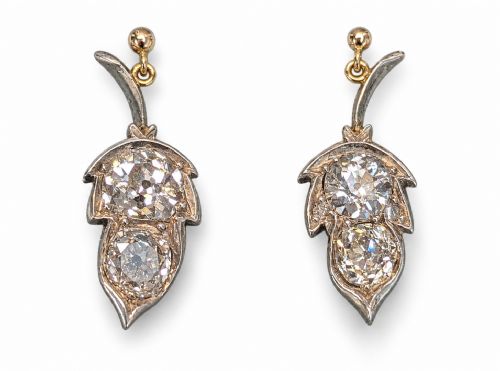
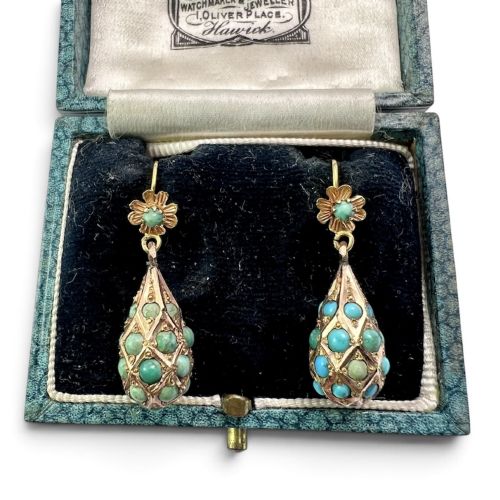
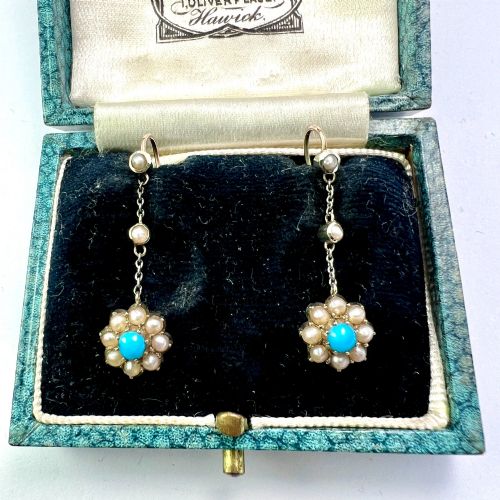



Vintage Cluster Drop Earrings
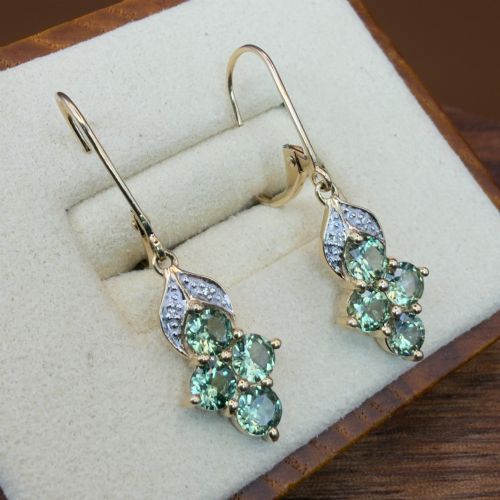
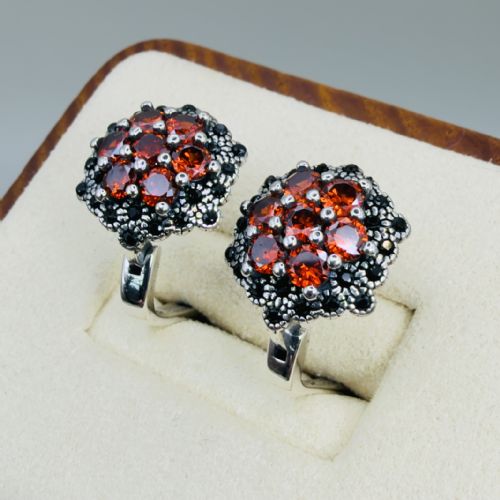
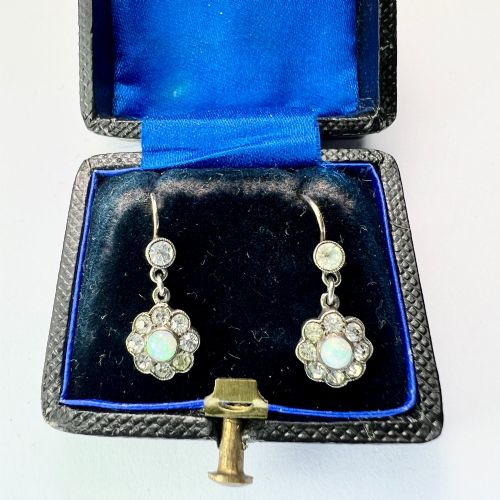
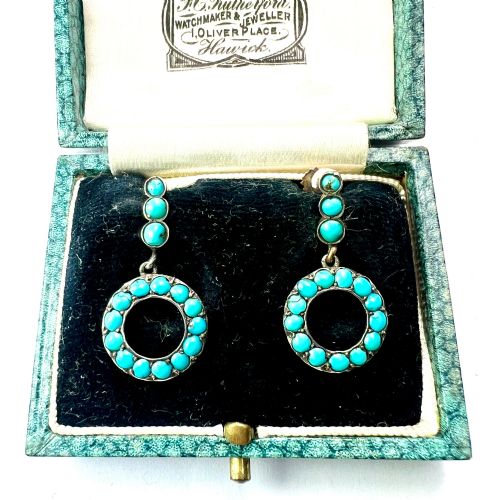
Vintage cluster drop earrings bring together tight arrangements of stones and suspended movement, spanning Victorian gold work to Art Deco platinum.
Vintage Cluster Drop Earrings
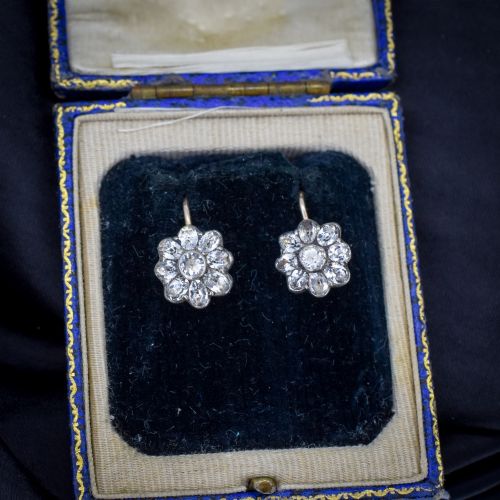
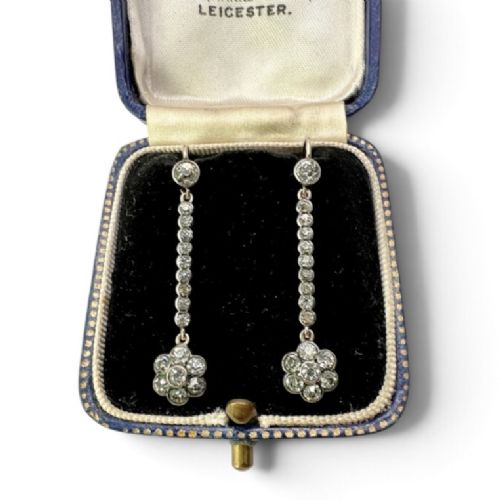
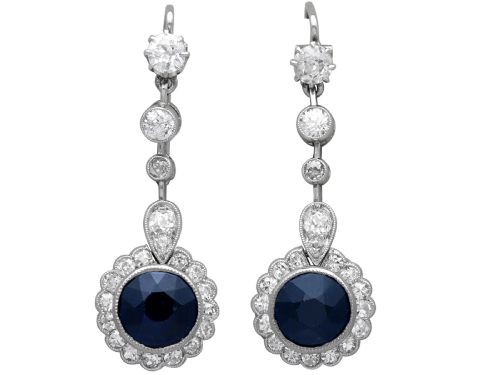
Vintage cluster drop earrings combine a central gemstone cluster with a dangling element that moves below the earlobe. The pieces seen here range from nineteenth-century turquoise and pearl flower designs to mid-century sapphire and diamond configurations.
Makers utilised various fastening methods depending on the decade, including hinge backs, screwbacks, and traditional posts for pierced ears. Common forms include daisy clusters, sunbursts, and pendant drops that hang close to the jawline.
The aesthetic shifts discernibly across the timeline represented on this page. Earlier examples favour yellow gold settings with turquoise or old-cut diamonds, while later iterations from the Art Deco and mid-century periods incorporate white gold, platinum, and aquamarines.
Materials and construction methods
Metals span standard yellow and white golds, typically marked at 9ct, 14ct, or 18ct, alongside platinum and sterling silver. Many Edwardian and Art Deco examples combine gold and silver in traditional settings to highlight diamond facets.
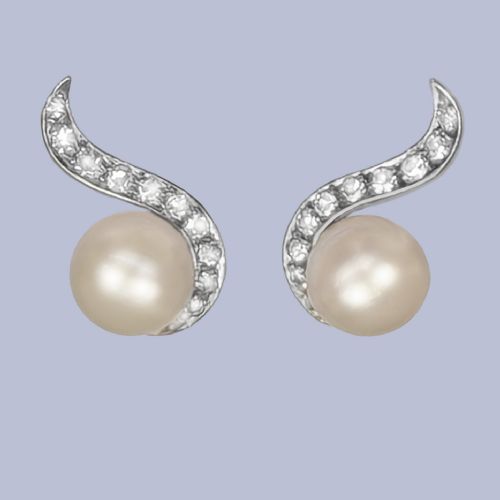
Gemstone selections include diamonds in old European, rose, or old cuts, paired with coloured stones such as turquoise, sapphires, emeralds, garnets, and natural pearls. Enamel and paste accents also appear across Victorian and later twentieth-century items.
Vintage Cluster Drop Earrings Retail Price Guide 2026
Typical asking prices for vintage cluster drop earrings among the pieces listed under this phrase on Sellingantiques today, from the lower quarter to the upper quarter. They describe what is for sale here now, not the wider market.
Listings span multiple eras from the nineteenth century through the mid-twentieth century, featuring diamonds, sapphires, turquoise, and pearls set in gold, silver, and platinum.
Distinguishing quality in cluster drops
The refinement of the stone setting dictates much of the distinction between pieces. Superior examples show precise claw or bezel work that secures complex multi-stone arrangements without excess metal obscuring the gems.
The integrity of the drop mechanism and fastening also shapes the standard. Fine construction ensures that hinges, screwbacks, or posts maintain secure movement while keeping the cluster balanced correctly against the ear.
Knoll and Pregizer
The Vintage Cluster Drop Earrings Glossary
- Cluster
- An arrangement of smaller gemstones gathered tightly around a larger central stone. This configuration is designed to maximise light return and visual impact.
- Old Cut
- A general term for diamond cuts executed before modern brilliant-cutting standards were established. These stones typically feature smaller tables and larger culets.
- Hinge Back
- A secure earring closure involving a hinged post that snaps into a notched catch. This mechanism provides stability for heavier drop designs.
- Paste
- Hand-cut glass used as a gemstone substitute in historic jewellery. Quality paste work exhibits careful faceting and foil backings to enhance colour.
- Dormeuse
- A style of earring originally intended for sleeping in comfort. In vintage contexts, it denotes a secure, low-profile backing often paired with drop stones.
Vintage Cluster Drop Earrings: Frequently Asked Questions
How do I secure vintage screwback earrings?
Vintage screwback earrings use a threaded post and a threaded paddle to adjust pressure on the earlobe. Turn the paddle gently until the finding rests comfortably without pinching.
Avoid over-tightening the screw mechanism, as excessive force can strip the delicate threads over time.
What is an old cut diamond?
An old cut diamond refers to stones faceted by hand before the twentieth century. These diamonds often display smaller tables and deeper pavilions.
Their proportions produce a softer, candlelight sparkle distinct from modern brilliant-cut stones.
Are these earrings suitable for daily wear?
Many vintage drop earrings can be worn regularly if handled with appropriate care. Designs featuring softer stones like turquoise or pearl require more caution than diamond-set platinum pieces.
Store them individually to prevent scratching between the drop elements and the central clusters.
How can I tell an Art Deco pair apart?
Art Deco earrings typically utilise platinum or white gold to create geometric, symmetrical arrangements. They frequently incorporate calibre-cut coloured stones or stepped diamond clusters.
This aesthetic contrasts with the organic flower motifs and yellow gold settings common in earlier Victorian examples.