
Vintage Clear Spirit Glass
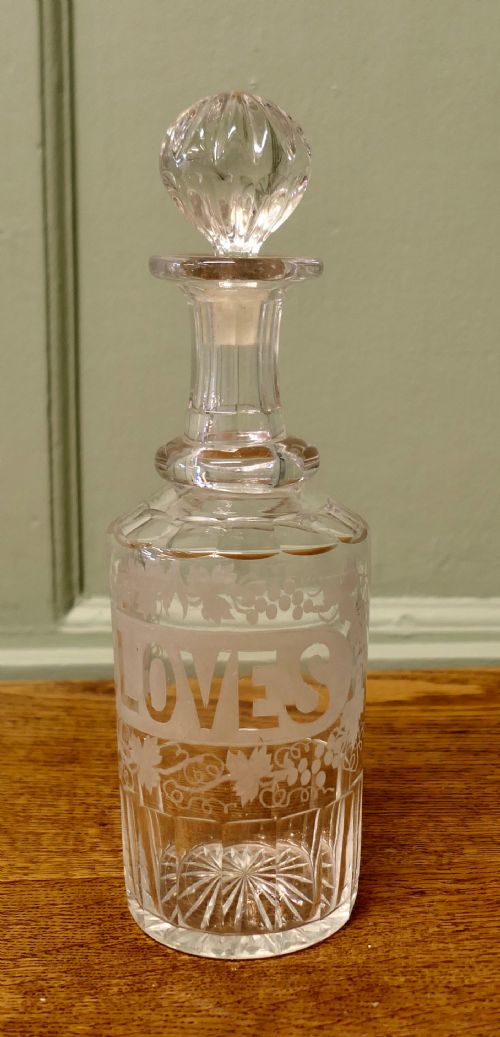
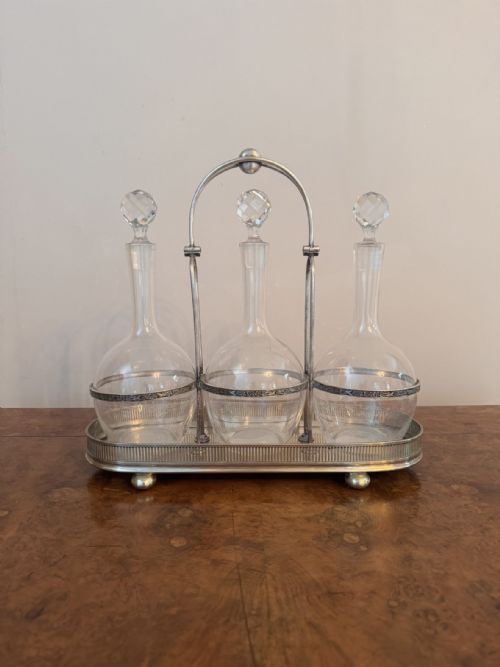
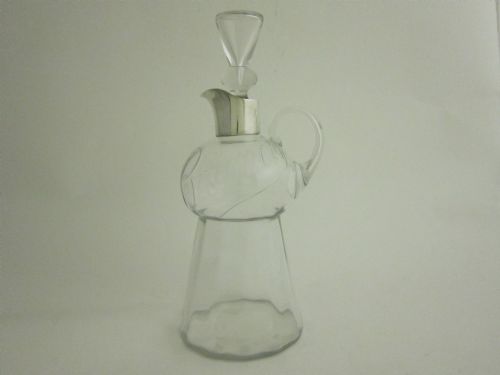
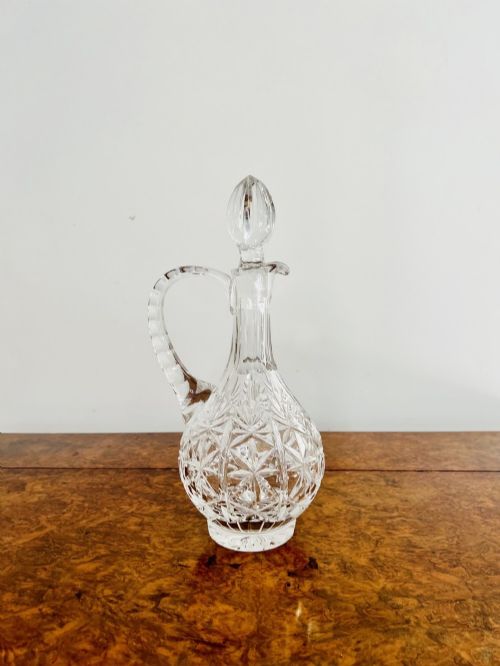
These vintage clear spirit glass pieces are lead crystal and cut glass decanters, flasks, and tumblers built to hold and pour whisky, gin, brandy, and liqueurs.
Vintage Clear Spirit Glass
When searching for vintage clear spirit glass, buyers encounter tablewares designed specifically for storing and serving alcoholic spirits across the nineteenth and twentieth centuries. These vessels include decanters, tumblers, rummers, and hip flasks originating from Victorian, Edwardian, and Georgian eras.
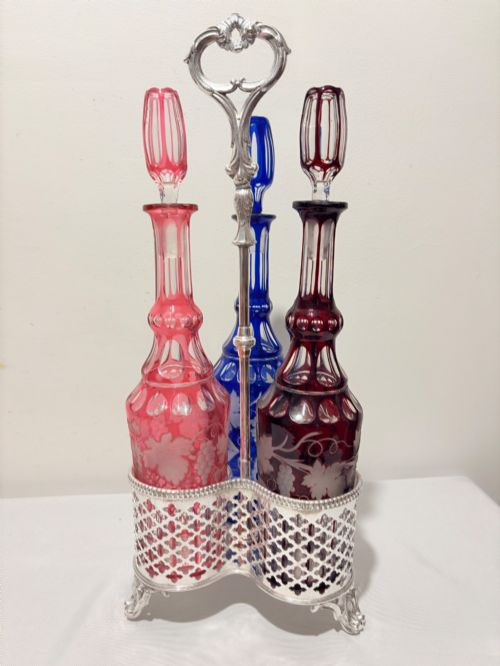
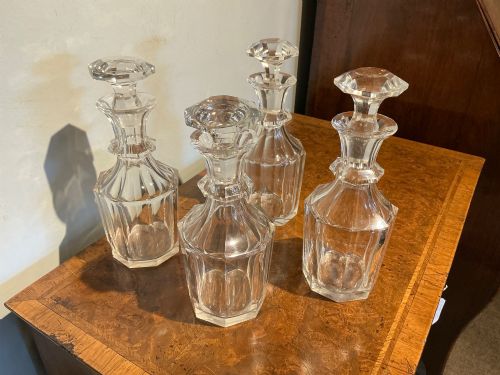
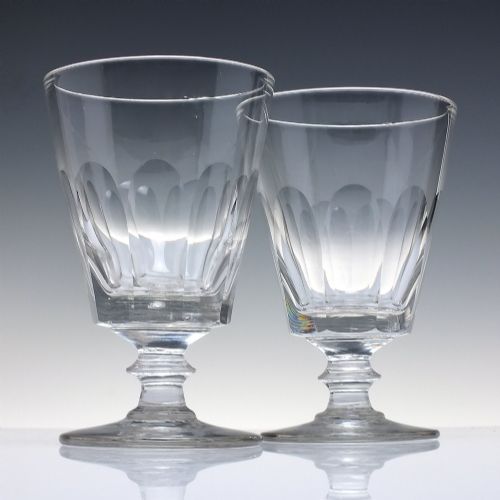
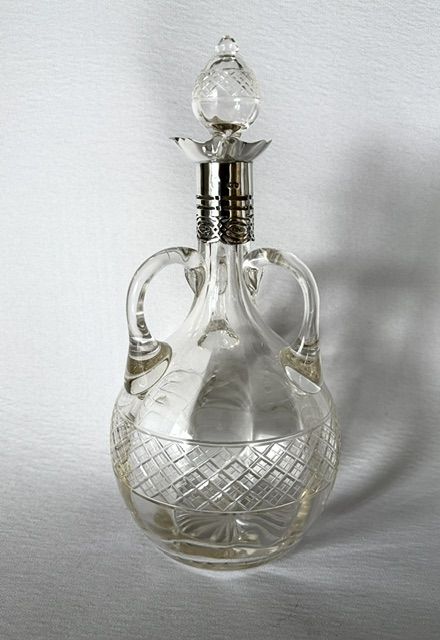
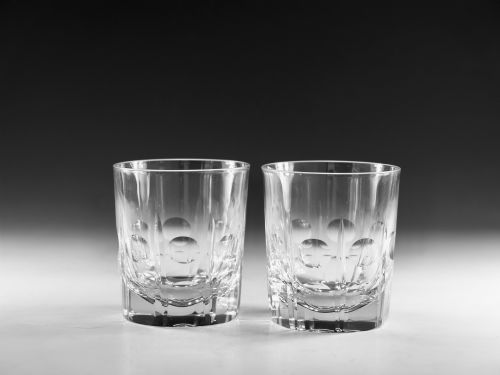
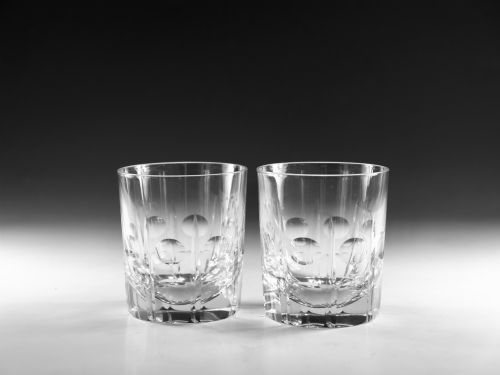
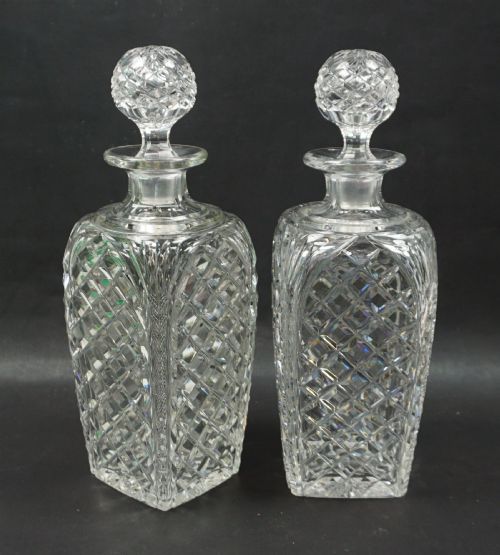
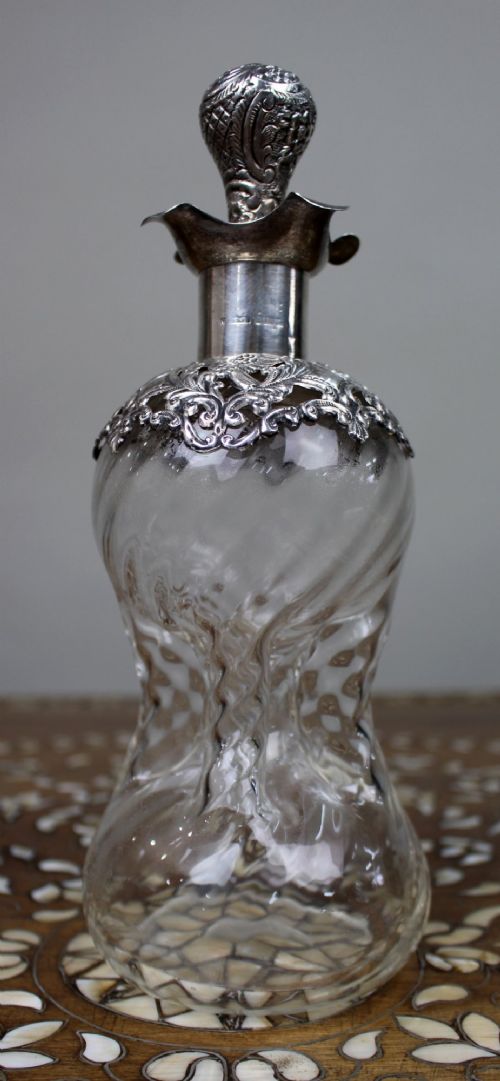
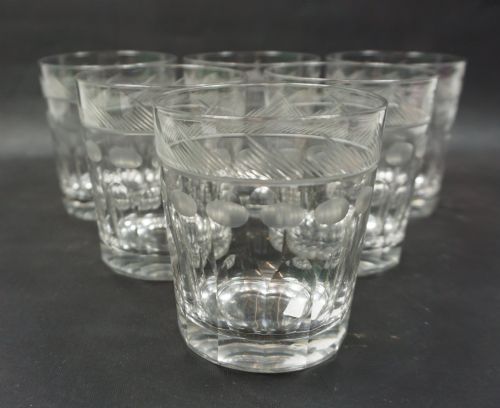
The most common forms on this page are Edwardian and Victorian cut glass decanters alongside heavy crystal spirit tumblers. Many pieces incorporate metal mounts, collars, and stoppers in sterling silver or silver plate.
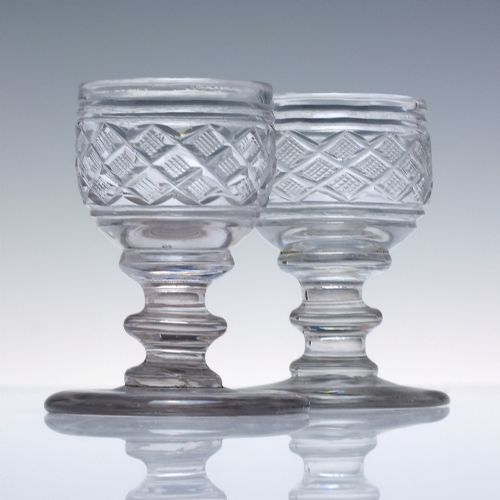
The selection ranges from small dram glasses and whisky jugs to full size square section tapered decanters and portable hunting flasks. Production spans English, Irish, Scottish, and Bohemian workshops.
How they were made
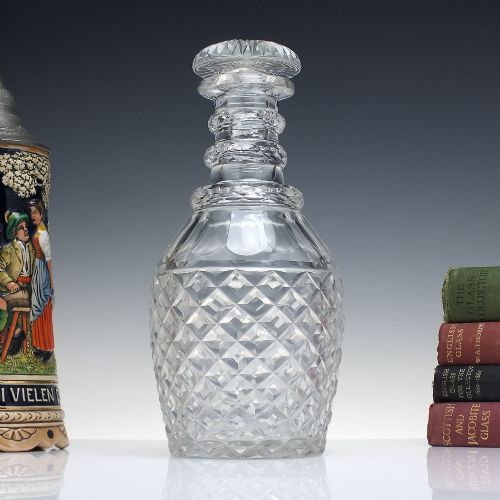
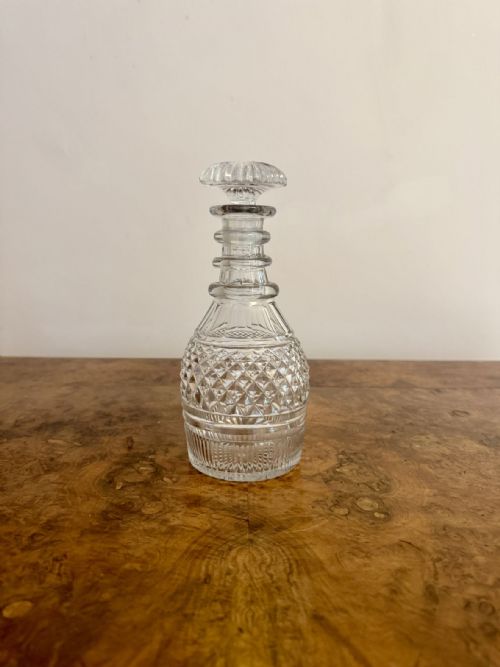
Glassmakers shaped these drinking vessels using heavy lead crystal and clear glass, employing techniques such as wheel cutting, blowing, and moulding. Decanters and heavy tumblers often display deep geometric facets, flutes, and polished panels.
Metal components utilise sterling silver and silver plate for collars, mounts, and screw caps. Silversmiths fitted these mounts directly to the glass necks, sometimes adding hinged lids or removable drinking cups.
Object forms span table decanters, spirit jugs, pocket hip flasks, and heavy drinking tumblers from English and Bohemian makers.
What varies in quality
The distinction between ordinary and superior pieces rests on the weight and clarity of the crystal and the crispness of the glass cutting. Heavy lead crystal refracts light cleanly and feels substantial in the hand.
Detailing on mounts and stoppers differentiates the standard production from the exceptional work. Matching original stoppers, hallmarked silver collars, and precise hand engraving indicate higher workshop standards.
Rene Lalique·Karl Palda·Asprey London
The Vintage Clear Spirit Glass Glossary
- Decanter
- A vessel with a stopper designed to hold and serve wine or spirits. These pieces often feature cut glass decoration and silver collars.
- Rummer
- A large heavy drinking glass popular in the nineteenth century for ale, wine, or spirits. They typically stand on a short stem with a round foot.
- Hip flask
- A small, curved container designed for carrying liquor in a pocket. Victorian examples frequently combine glass bodies with removable silver cups.
- Lead crystal
- Glass containing metal oxide that increases weight, brilliance, and refractive index. This material allows for deep and sharp wheel cutting.
- Dram glass
- A small historical drinking vessel intended for a single measure of spirits. They appear in Georgian and Victorian table settings.
Vintage Clear Spirit Glass: Frequently Asked Questions
How do I date a glass decanter?
Dating relies on the shape of the body, the style of the cut glass motifs, and the formation of the pontil mark underneath. Heavy lead crystal and square section profiles often point to the Victorian or Edwardian periods.
Matching the stopper to the neck is essential, as original stoppers fit the hand-ground interior precisely. Hallmarks on silver collars provide exact calendar years for mounted pieces.
Are these old decanters safe for daily use?
These vessels were manufactured to hold potable spirits and strong liquors for the table. Gentle hand washing preserves the clarity of the clear glass and protects any silver mounts.
Avoid thermal shock by keeping liquids at room temperature. Proper care maintains the integrity of nineteenth and twentieth century crystal.
What is the difference between crystal and glass?
Crystal contains lead oxide, which adds significant weight and allows artisans to cut deeper, sharper facets into the surface. Clear glass without lead content is typically lighter and reflects light differently.
Heavier pieces ring longer when struck gently. Both materials served distinct price points in period retail markets.
How were hip flasks used historically?
Travellers and sportsmen carried these flat containers in pockets during hunting expeditions and outdoor journeys. The curved profile fit the contour of the body for comfort.
Many examples feature a matching silver cup that slides off the bottom for drinking. Screw caps with cork seals prevented leakage during movement.