



Vintage Circular Lamp Table
These vintage circular lamp tables offer compact surfaces for illumination and display, spanning Edwardian, Victorian, and Art Deco periods.
Vintage Circular Lamp Table
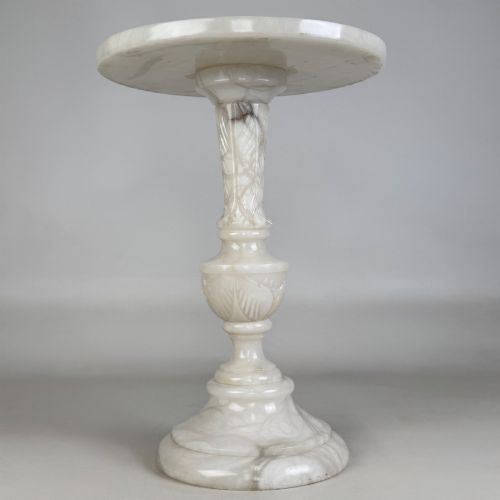
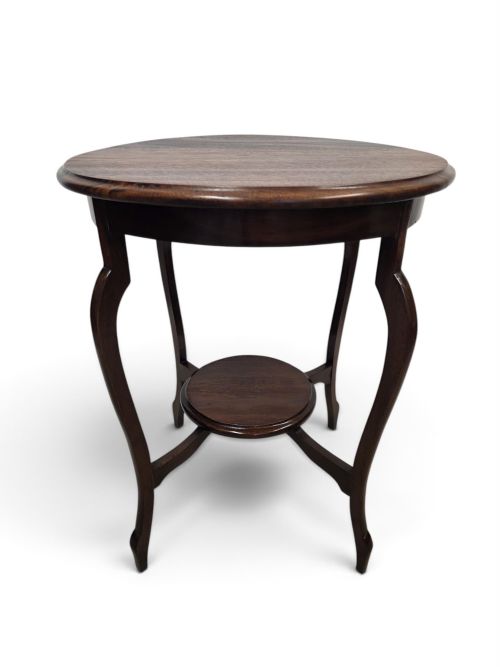
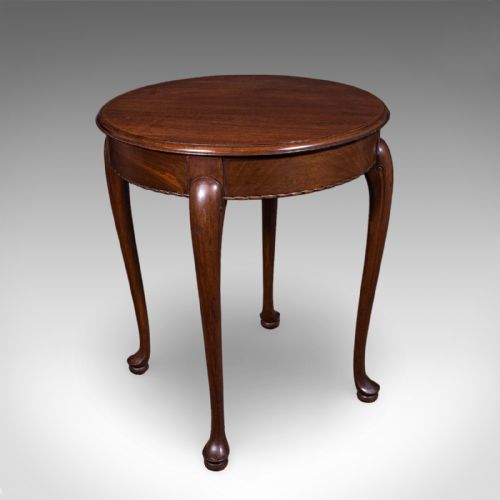
A vintage circular lamp table provides a compact surface designed for domestic illumination, seating areas, and display. The selection here ranges from nineteenth century walnut and mahogany designs to twentieth century occasional tables.
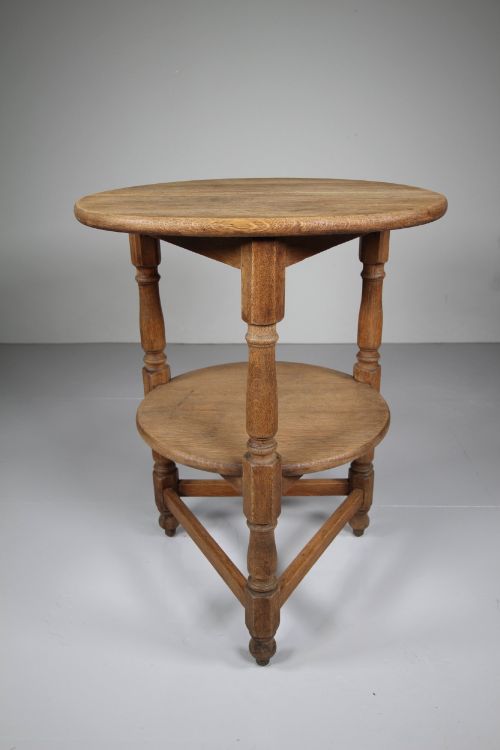
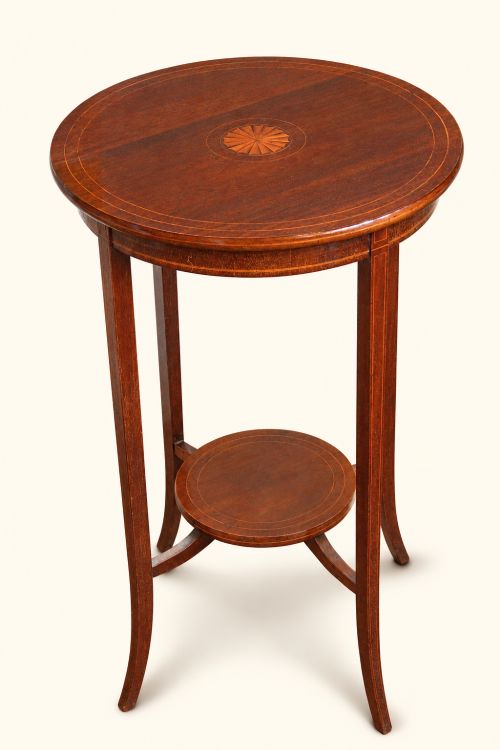
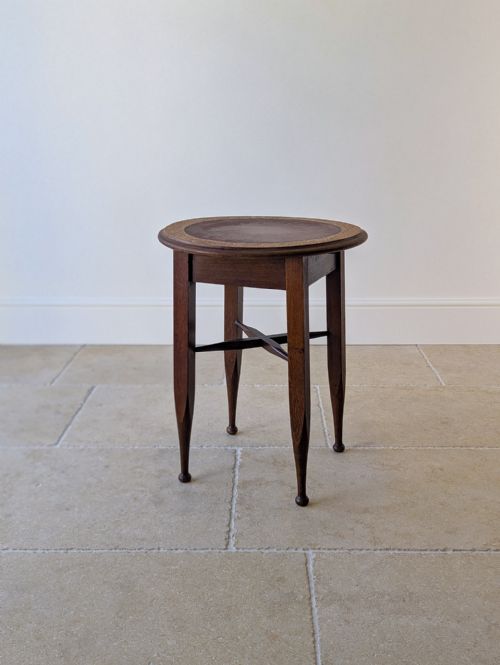
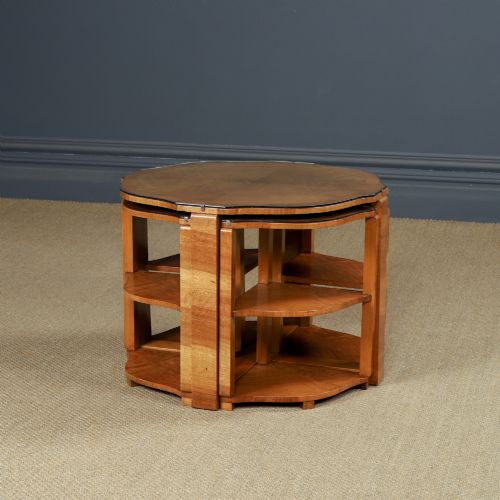
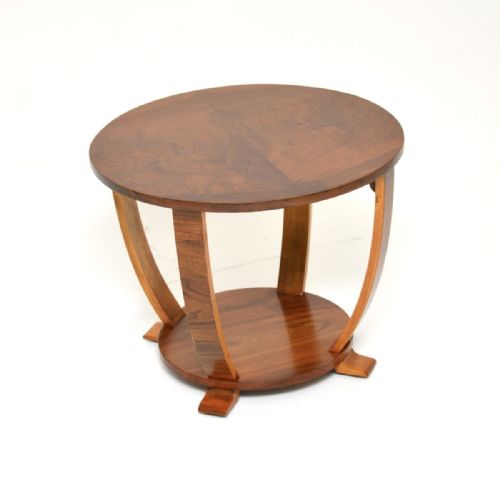
Buyers meet Edwardian mahogany wine tables alongside Art Deco walnut and chrome surfaces. Forms include two-tier models, gueridon tables, and cricket tables originating from English, French, and Italian workshops.
These pieces function primarily as bedside units, plant stands, or side tables positioned beside seating. Their round tops conserve floor space while offering practical utility in principal rooms.
Materials and construction
Cabinetmakers utilised dense timbers including mahogany, walnut, rosewood, and oak, frequently selecting figured veneers like burr walnut and birds-eye maple for decorative surfaces. Edge mouldings and turned columns demonstrate traditional joinery methods.
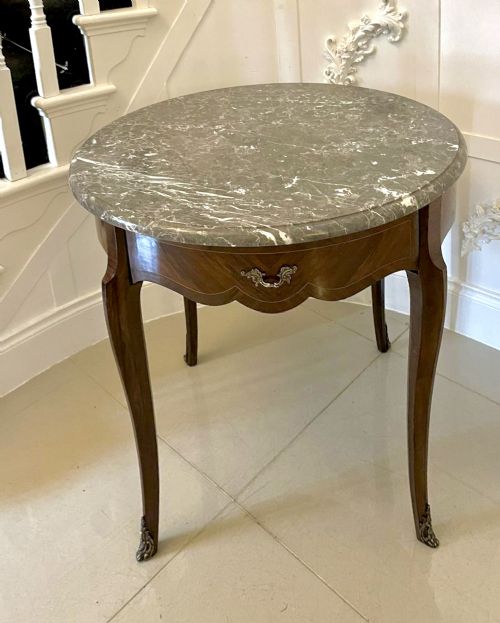
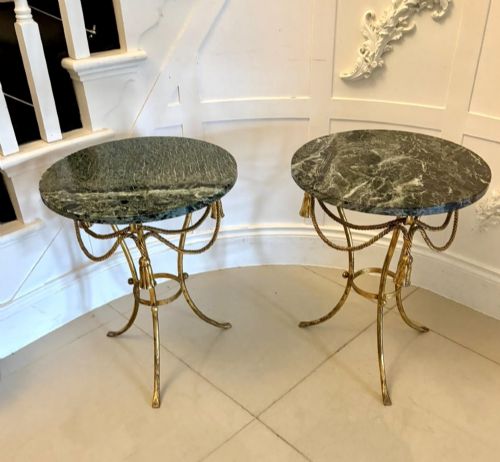
Twentieth-century examples incorporate modern industrial materials such as chrome frames and inset glass alongside traditional timber construction. Marble and gilt metal appear on French and Italian tables, adding weight and reflective surface texture.
Vintage Circular Lamp Table Retail Price Guide 2026
Typical asking prices for vintage circular lamp table among the pieces listed under this phrase on Sellingantiques today, from the lower quarter to the upper quarter. They describe what is for sale here now, not the wider market.
Listings feature timbers including mahogany, walnut, rosewood, oak, and elm alongside marble, brass, and chrome.
What separates the tiers
Quality rests upon timber selection and surface figuring, where book-matched burr veneers or substantial marble inserts elevate a design above plain softwood carcasses. The crispness of carved details, such as barley twist legs or brass mounts, distinguishes superior workshop production.
Structural integrity determines daily utility, separating sturdy pedestal bases and well-joined multi-tier tables from examples with loose joints or warped tops. The harmonious integration of contrasting materials, like walnut paired with maple or chrome, reflects design ambition.
Waring & Gillow
The Vintage Circular Lamp Table Glossary
- Gueridon
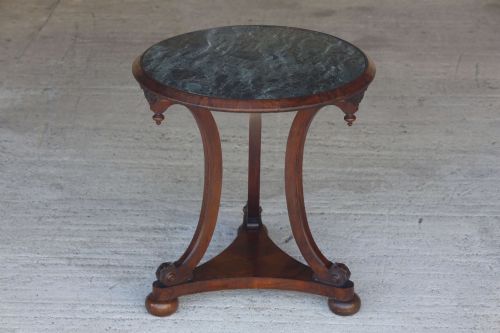
- A small French round table, often supported by a central pillar or three legs, designed for display or holding lamps.
- Cricket table
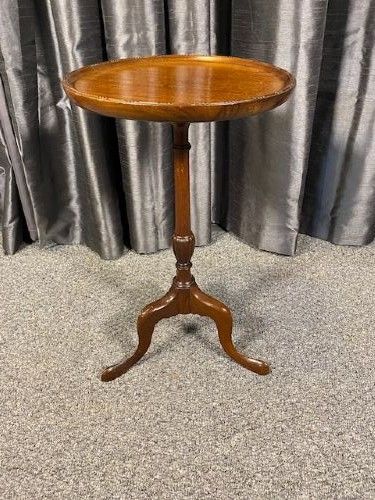
- A small three-legged round wooden table originating in the eighteenth century, known for stability on uneven floors.
- Torchiere
- A tall stand or pedestal originally intended to support a torch or candle, adapted later for electric lamps.
- Wine table
- A small occasional table with a circular top, traditionally used to hold glassware and bottles beside seating.
- Jardiniere
- A decorative stand or container designed to hold plants and flowers within interior spaces.
Vintage Circular Lamp Table: Frequently Asked Questions
Where should I place a circular lamp table?
These tables suit tight corners, narrow hallways, or spaces beside armchairs where a square table would obstruct movement.
Their round profiles allow light to distribute evenly from a lamp without sharp corners protruding into walkways.
How do I identify an Art Deco lamp table?
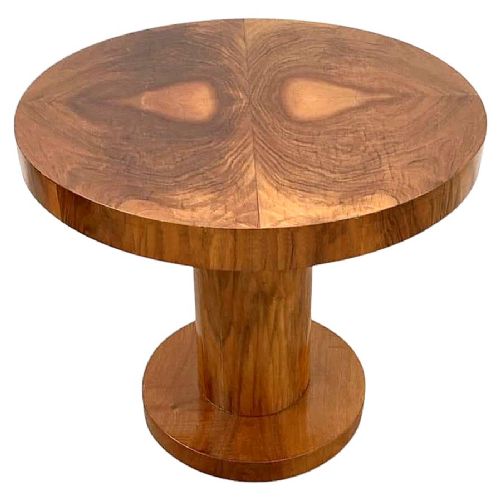
Art Deco pieces typically date around nineteen thirty and utilise geometric forms, contrasting veneers, and materials such as chrome and glass.
Look for stepped tiers, polished walnut, and modernist lines distinct from earlier Victorian or Edwardian revival styles.
Can I use these tables for plants?
Many circular tables share forms with plant stands, torchiere pedestals, and jardiniere supports designed specifically for botanical displays.
Marble and glass tops offer particular resistance to water moisture compared to polished timber surfaces.
How do I distinguish Edwardian tables from Victorian ones?
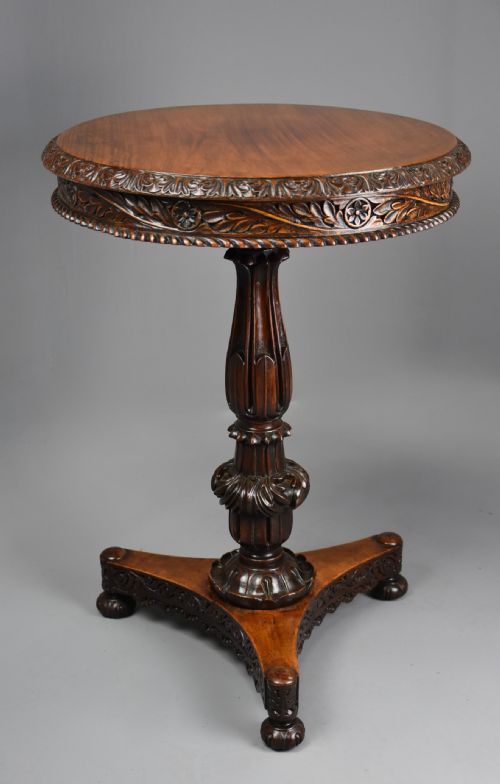
Victorian tables often feature darker timbers, heavier turned legs like barley twists, and elaborate carving dating from the mid-nineteenth century onwards.
Edwardian and early twentieth-century examples tend towards lighter polished mahogany, simpler geometry, and practical two-tier designs.