

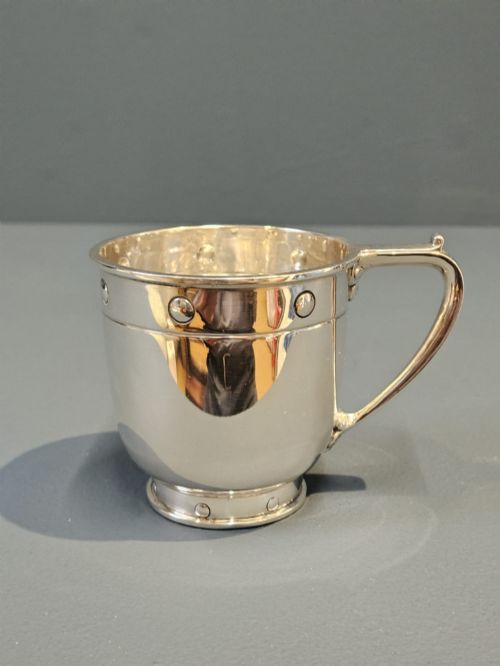
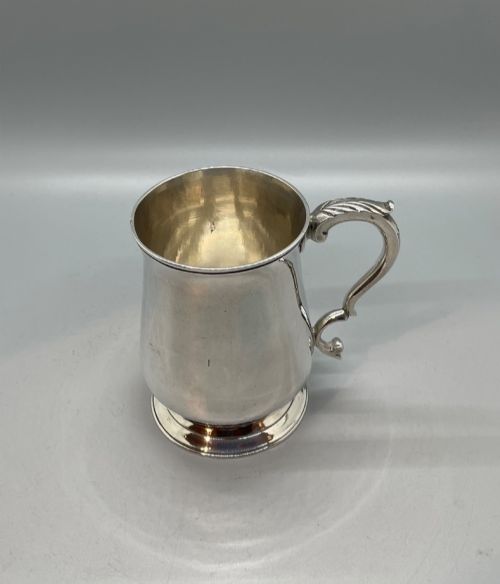
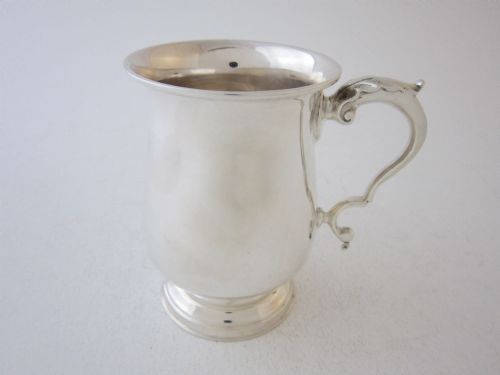
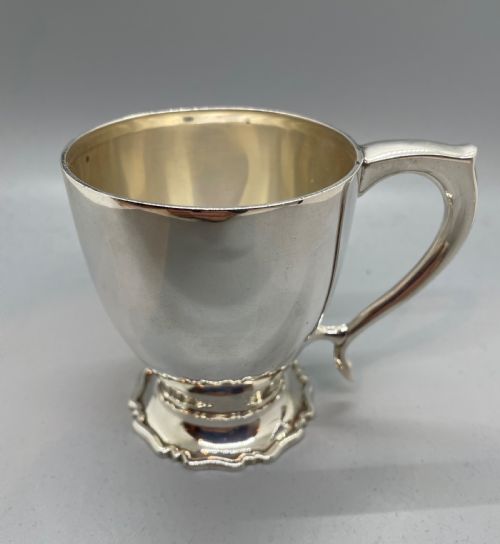

Vintage Christening Tankard
A vintage christening tankard marks an early milestone with lasting metalwork that travels well down the generations.
Vintage Christening Tankard
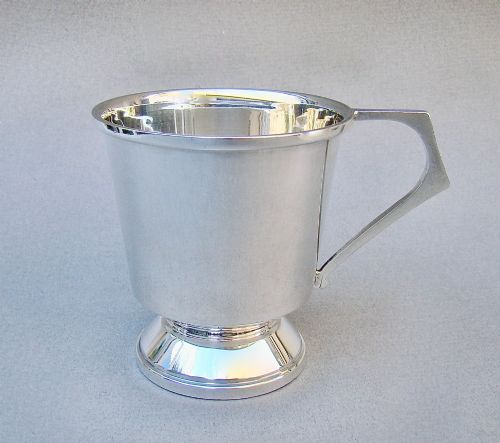
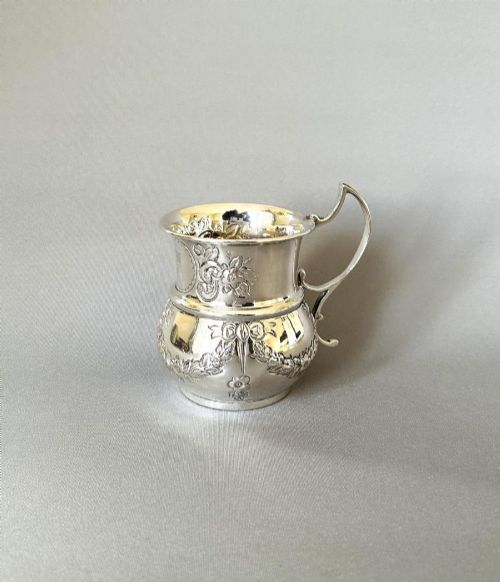
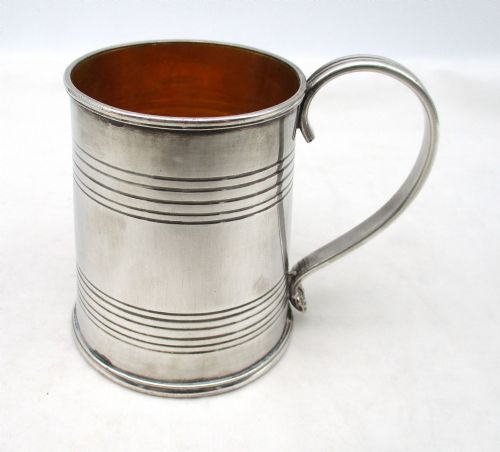
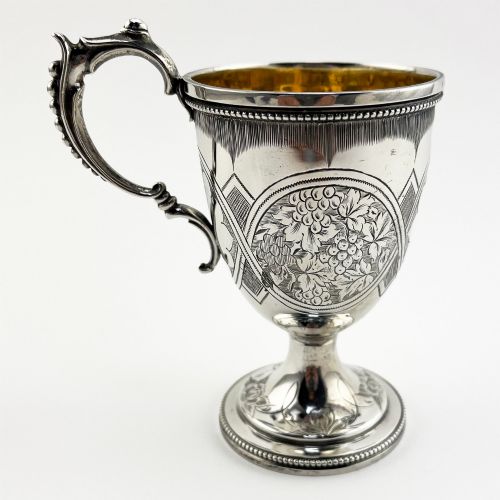
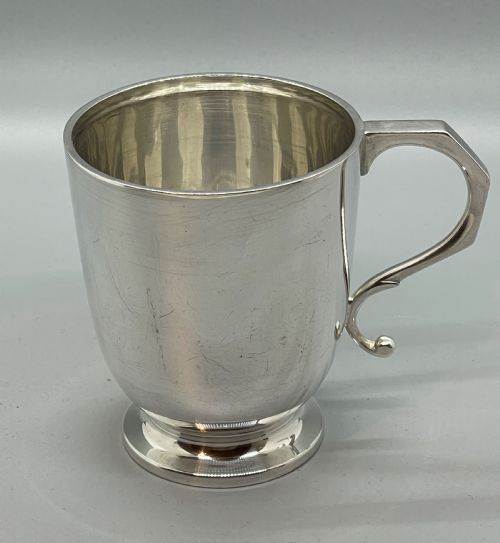
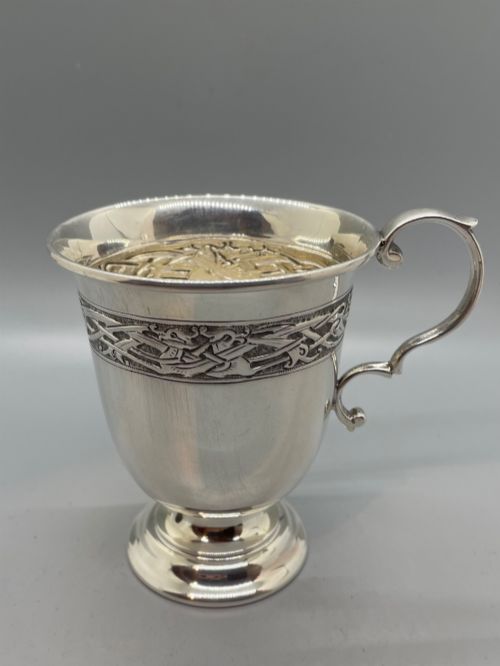
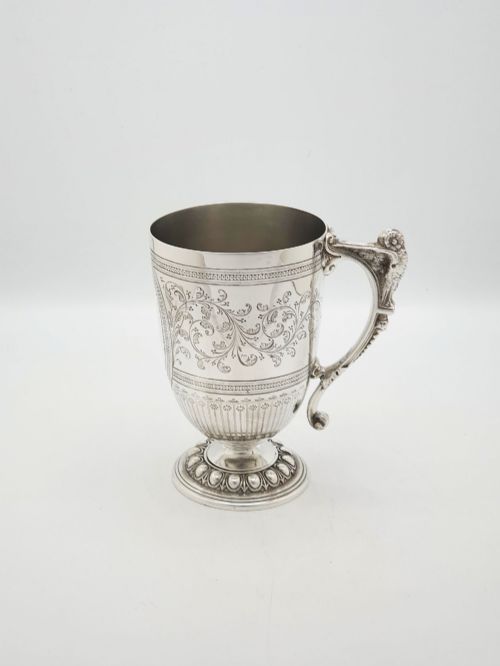
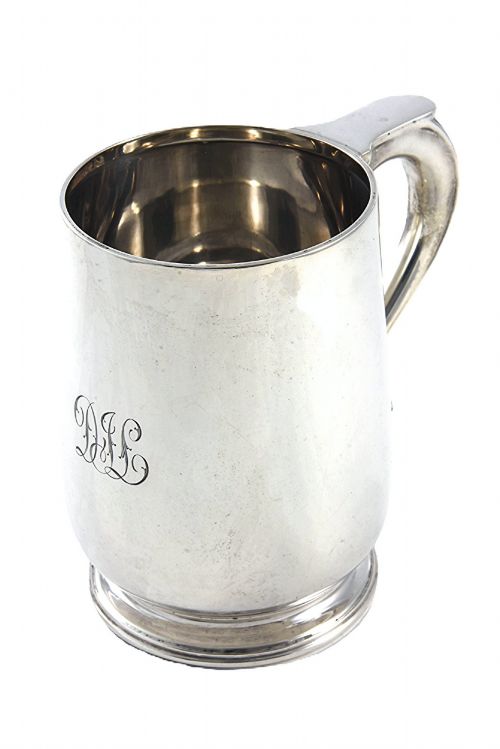
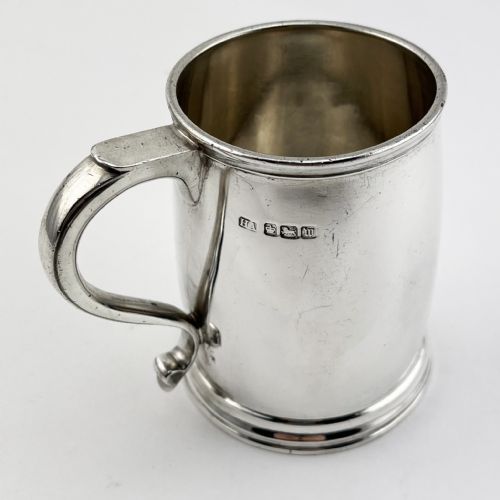
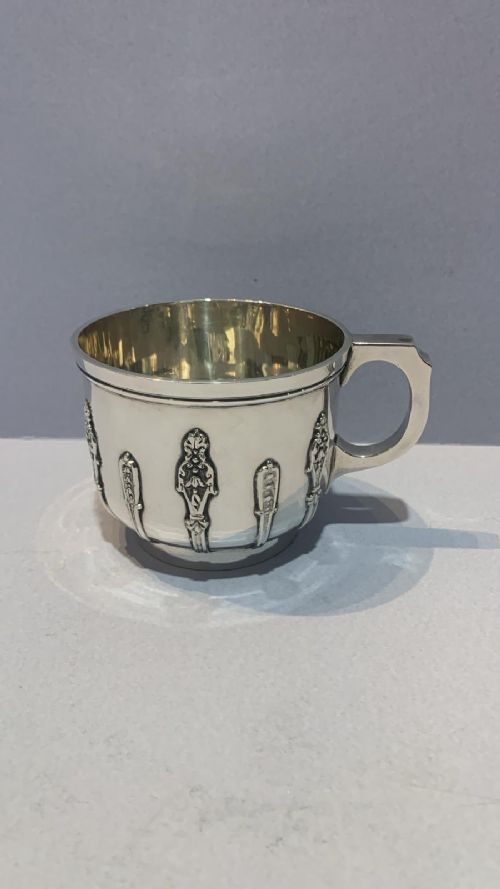
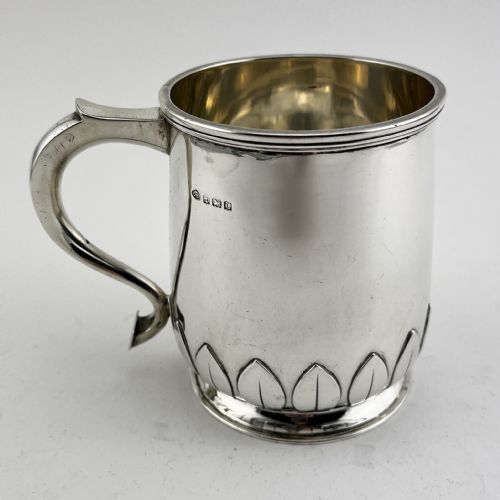
A vintage christening tankard is a small drinking vessel presented to mark a naming ceremony or infancy, appearing here across diverse forms such as christening cups, mugs, and miniature tankards. The selection spans the nineteenth century through to the mid-twentieth century, capturing domestic silver and plated ware from successive generations.
Most examples met on this page date from the Edwardian era and the George V period, rendered predominantly in sterling silver or silver plate. These pieces bridge the domestic utility of a drinking vessel with the decorative weight of a commemorative gift.
How they were made
Makers shaped these vessels largely from sterling silver, silver plate, and Old Sheffield Plate, often employing copper as a base for plated items. Surface enrichment involved chasing, embossing, and hand engraving, alongside simpler plain bodies.
Handles were cast separately and soldered securely to the main body, taking scroll forms or more whimsical shapes like owls. Assay office marks stamped into the metal recorded the town, year, and standard of purity.
Vintage Christening Tankard Retail Price Guide 2026
Typical asking prices for vintage christening tankard among the pieces listed under this phrase on Sellingantiques today, from the lower quarter to the upper quarter. They describe what is for sale here now, not the wider market.
What varies in quality
The distinction between ordinary and exceptional pieces lies in the weight of the metal and the crispness of the chasing or engraving. Substantial gauge silver maintains its integrity over decades of handling, whereas thinner walls dent more readily.
Design individuality also elevates certain pieces, such as those featuring distinct Arts and Crafts styling or unusual handle configurations by known makers. Original fitted cases preserved from the period add a further layer of distinction.
Dennison·Joseph Gloster·Barker Bros·R E Stone·William Bateman
The Vintage Christening Tankard Glossary
- Sterling silver
- A silver alloy containing 92.5 percent pure silver by weight and 7.5 percent other metals, usually copper. This standard provides the durability required for functional domestic items.
- Old Sheffield Plate
- An early fusing technique where a thin sheet of silver is fused to a thicker copper base under heat and pressure. It produces a rich dual-metal material distinguishable by a thin copper line visible at the edges.
- Hallmark
- A series of stamped official marks applied by an assay office to guarantee the purity of precious metal. These symbols typically record the maker, standard, assay town, and year of testing.
- Chasing
- A metalworking technique where a silversmith depresses the front surface using punches and hammers to create raised designs. The metal is worked from the outside rather than removed.
- Silver gilt
- Silver objects coated with a thin layer of gold applied by chemical or electrochemical means. This finish protects the silver from tarnish and gives the interior or exterior a rich golden appearance.
Vintage Christening Tankard: Frequently Asked Questions
How were christening tankards used?
These vessels functioned primarily as commemorative presentation pieces rather than daily tableware for infants. Families displayed them on mantelpieces or sideboards to mark a birth or baptism.
Over time, many served as decorative keepsakes passed down through family lines rather than practical drinking cups.
How do I date a silver mug?
Dating relies heavily on the stamped hallmarks found on the body or base of the piece. Assay office date letters correspond to specific years of manufacture.
Stylistic cues such as Edwardian proportions or Art Deco geometry also help narrow down the period when marks are rubbed.
What is Old Sheffield Plate?
Old Sheffield Plate is an early composite material made by fusing a thin sheet of silver onto a copper core. This method predates modern electroplating and creates a distinct layered structure.
Objects made this way often reveal a faint line of copper along the cut rims or worn edges.
How do I care for antique silver?
Silver requires gentle cleaning with a soft cloth and specialised polish to remove tarnish without abrading the surface. Avoiding harsh chemical dips preserves the original chased details and hallmarks.
Storing pieces in dry, stable environments prevents rapid re-tarnishing of the metal.