

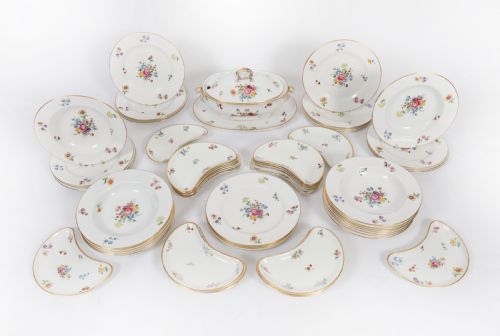


Vintage China Tureen
These vintage china tureen pieces bring a handsome, decorative service presence to the table, and collectors prize them for their robust ceramic bodies and traditional forms.
Vintage China Tureen
A vintage china tureen search brings up robust serving vessels designed for soups, sauces, and main dishes, spanning periods from the Victorian and Edwardian eras into the early twentieth century.
Buyers will most commonly encounter substantial ironstone and porcelain pieces, ranging from individual soup and sauce tureens with ladles to components of larger dinner services.
The objects originate from various traditional European, English, and French provincial workshops, displaying patterns such as Japanese basket and bamboo motifs.
Materials and construction
Makers utilised durable ironstone, earthenware, and porcelain bodies, applying smooth glazes to seal the ceramic and provide a clean surface for decoration.
Many examples feature applied enamel colours, gilt accents, and gold leaf highlights to accentuate handles, rims, and traditional patterns.
Potters shaped these vessels by hand or mould to form deep bowls, lids, and matching ladles suited for heavy dining use.
Vintage China Tureen Retail Price Guide 2026
Typical asking prices for vintage china tureen among the pieces listed under this phrase on Sellingantiques today, from the lower quarter to the upper quarter. They describe what is for sale here now, not the wider market.
Listings feature periods from the nineteenth century, including Victorian and Edwardian eras, up through nineteen-twenty.
Evaluating craftsmanship
The distinction between standard utility items and finer pieces lies in the crispness of the moulded relief and the delicacy of the painted patterns.
Gilt and enamel preservation significantly affects the character of a piece, with intact gold leaf and rich colours indicating superior care and original grade.
The completeness of a set, such as retaining an original matching ladle or cover, distinguishes more complete historical examples.
Copeland Spode·Booths·Masons Ironstone·Müller Volkstedt·Doulton·Limoges
The Vintage China Tureen Glossary
- Ironstone
- A heavy, durable type of earthenware patented in the nineteenth century. It resists chipping better than standard porcelain while maintaining a refined appearance.
- Tureen
- A deep, covered serving bowl utilised for holding soups, sauces, or stews at the dining table. They frequently include matching underplates and ladles.
- Gilt
- A thin layer of gold or gold-like material applied to ceramic surfaces. It highlights decorative borders and handles on traditional tableware.
- Porcelain
- A fine, hard ceramic fired at high temperatures until vitrified. It provides a smooth, non-porous body often decorated with enamel motifs.
Vintage China Tureen: Frequently Asked Questions
What are vintage china tureens used for?
These vessels were originally designed to keep soups, sauces, and stews warm at the dining table before being served into individual bowls.
Today, they function as striking centrepieces for dining rooms or as display items within traditional cabinet collections.
How do I identify Victorian pieces?
Victorian examples often display heavy ironstone bodies, robust handles, and transfer-printed patterns influenced by traditional European or English Chinoiserie styles.
Examining the underlying ceramic material and stylistic motifs helps anchor the object within the nineteenth century.
Can I use these tureens for daily dining?
While these ceramic pieces were built for functional use during the nineteenth and early twentieth centuries, modern dishwashers can damage historic glazes and gold leaf.
Gentle hand washing helps preserve the enamel colours and ceramic body over time.
What styles are common in these listings?
Listings frequently feature English Chinoiserie, French Provincial, and Regency styles alongside traditional European dinnerware designs.
Patterns range from naturalistic bamboo motifs to intricate basket weaves rendered in enamel.