



Vintage Chest with Mirror
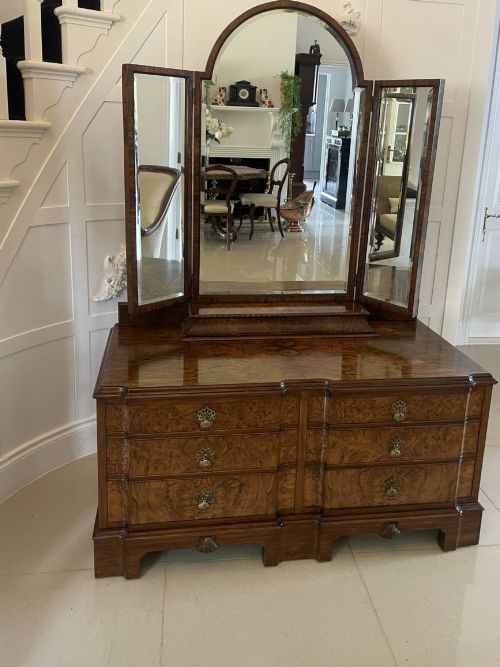
A vintage chest with mirror brings together practical drawer storage and a tilting glass, and Edwardian mahogany pieces are the ones you meet most often on this page.
Vintage Chest with Mirror
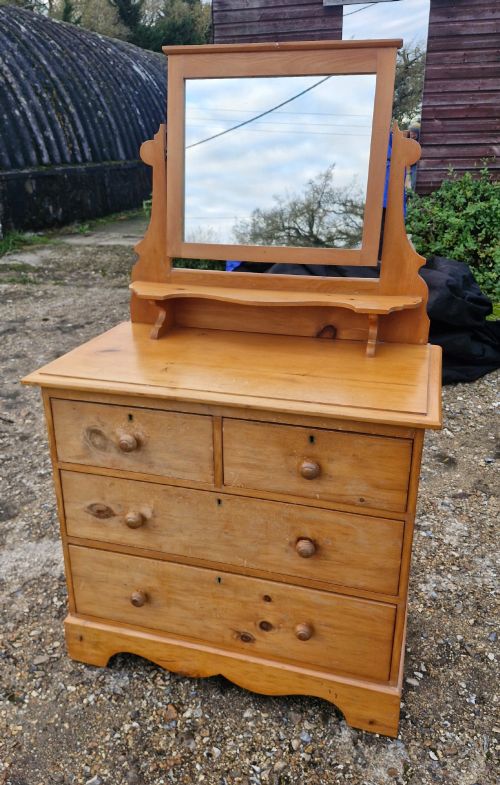
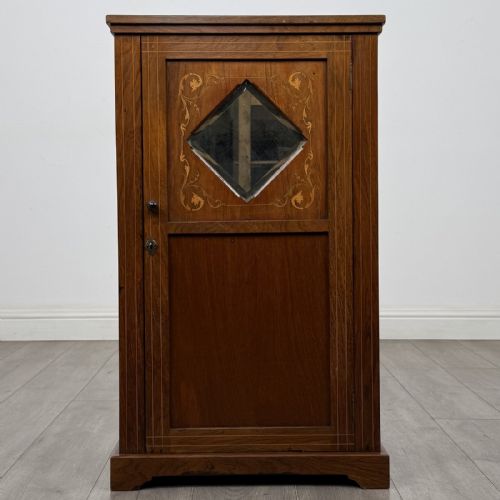
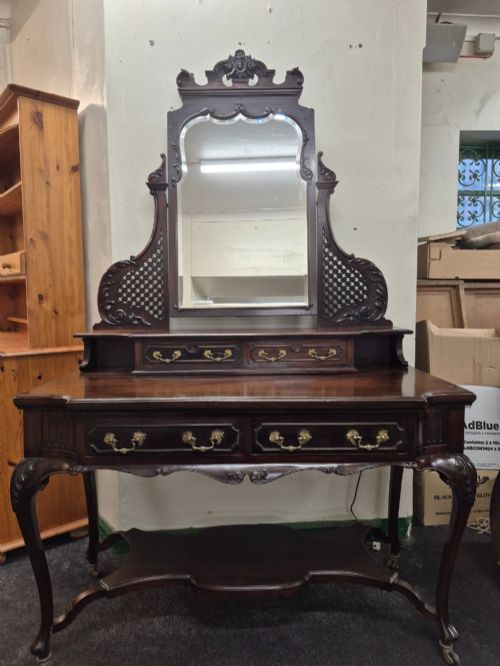
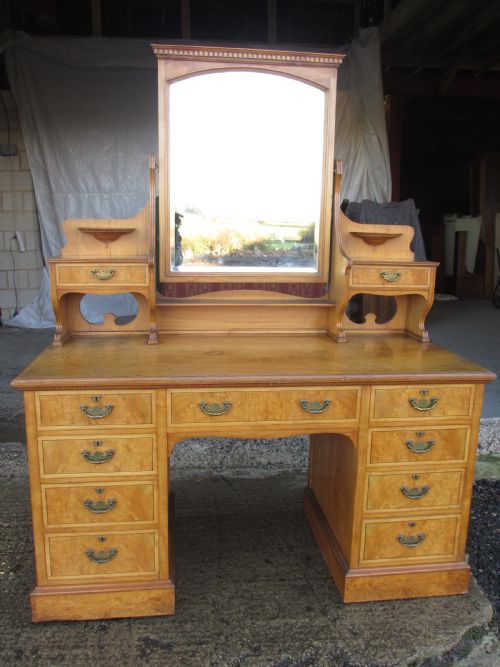
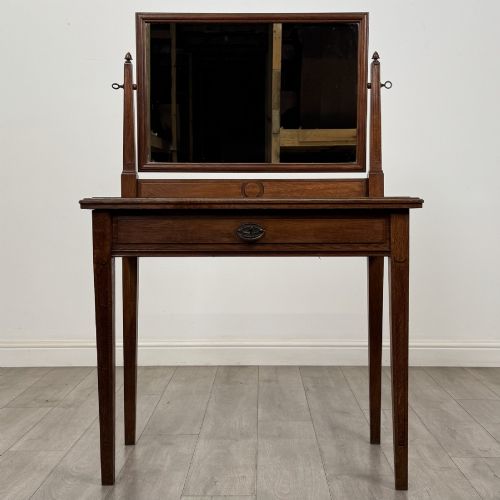
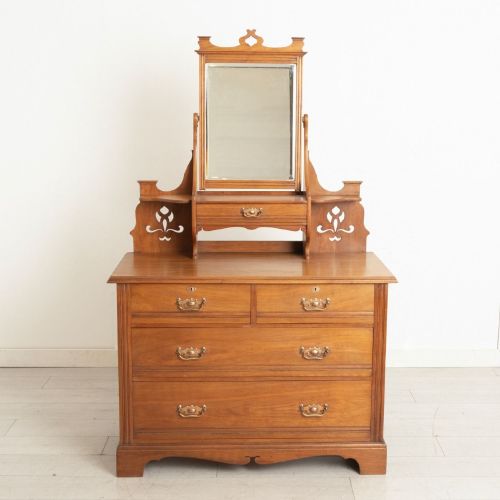
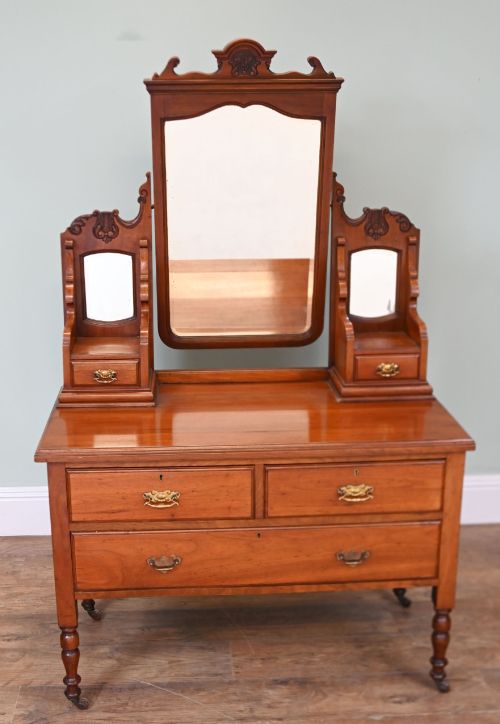
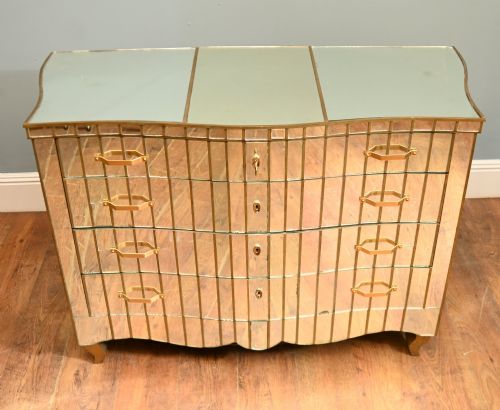
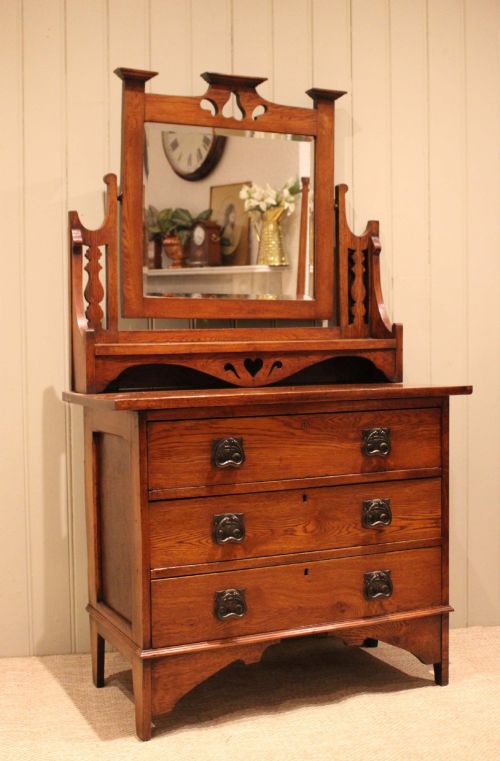
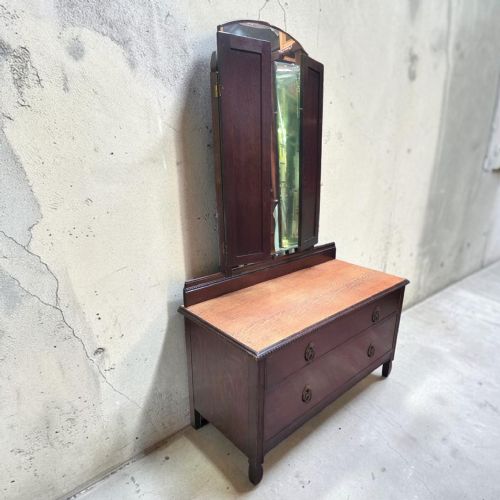
When you search for a vintage chest with mirror, you are looking at items primarily grouped as dressing tables, dressing chests, and washstands spanning from the Victorian era through the Edwardian period and into the 1920s and 1930s. These pieces combine a set of drawers with an integrated mirror, which often swings or adjusts on wooden uprights.
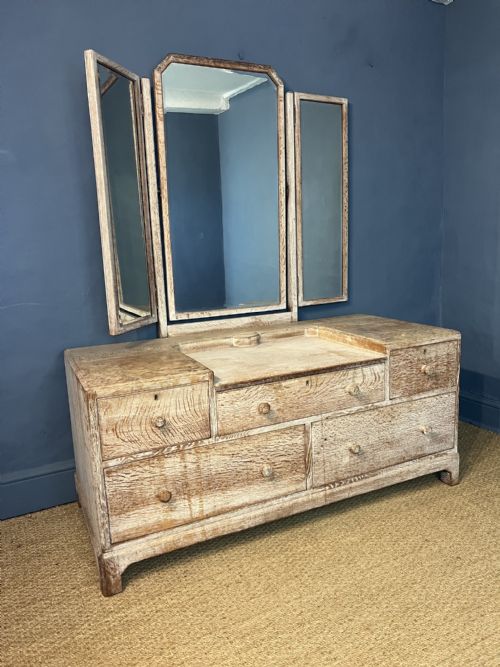
The version you are most likely to meet on this page is the Edwardian mahogany or oak dressing chest, frequently fitted with an oval, shield, or triple mirror above a low chest of drawers. Pieces stretch from late nineteenth-century Victorian walnut and pine iterations up to later Arts & Crafts, Art Deco, and French Provincial designs.
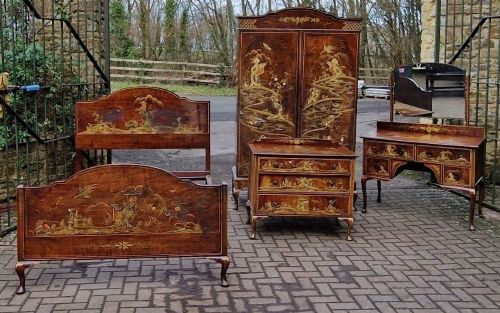
Beyond standard bedroom chests, the selection includes related forms such as dressing stands and marble-topped washstands equipped with mirror glass. Makers and retailers like Shapland & Petter, George Walton, and Harris Lebus of London appear among the heritage pieces recorded in the listings.
How they were made
Cabinet makers utilised a range of solid and veneered timbers including oak, mahogany, walnut, pine, ash, and maple, often pairing them with brass handles and fittings. Glass and mirror glass were inset into wooden frames for the swing and triple mirrors characteristic of the form.
Construction techniques combine traditional drawer joinery with decorative surface treatments such as burr walnut figuring, carved details, and scumble glazing. Marble tops also feature on specific Continental and washstand variations, mounted securely to the wooden carcasses below.
Vintage Chest with Mirror Retail Price Guide 2026
Typical asking prices for vintage chest with mirror among the pieces listed under this phrase on Sellingantiques today, from the lower quarter to the upper quarter. They describe what is for sale here now, not the wider market.
Listings feature oak, mahogany, walnut, pine, ash, and maple alongside marble and brass.
What varies in quality
The distinction between standard workshop production and top-tier output lies in the selection of timbers and the finesse of the joinery. Pieces by known makers or from specific design movements like the Cotswold School demonstrate superior grain matching in burr walnut or oak alongside more refined carving.
Hardware choice and mirror glass clarity separate ordinary items from exceptional examples. Original brass handles, secure mirror pivots, and substantial framing elevate a piece above simpler utilitarian chests.
Shapland & Petter·George Walton·Harris Lebus of London
The Vintage Chest with Mirror Glossary
- Swing mirror
- A looking glass hung on pivots within a frame, allowing the user to tilt the angle of reflection. This element sits atop the chest portion of the furniture.
- Shield mirror
- A mirror glass cut into the shape of a heraldic shield, popular during the Edwardian period. It is usually supported by shaped wooden arms.
- Scumble glaze
- A painted surface finish manipulated with combs or rags to imitate the grain of more expensive woods. It appears frequently on pine furniture from the Victorian era.
- Compactum
- A large fitted wardrobe combining hanging space and internal drawers. These items offer substantial storage capacity within a single unified carcass.
- Pedestal dressing table
- A vanity unit featuring banks of small drawers on either side of a central kneehole space. Mirrors are typically attached to the upper superstructure.
Vintage Chest with Mirror: Frequently Asked Questions
How do I date a mirror on an antique chest?
Older mirrors often display slight distortions, hand-beveled edges, or subtle oxidisation around the edges where the backing silver has aged.
Newer replacement glass is usually completely uniform, highly reflective, and lacks the historical imperfections found in Edwardian or Victorian plates.
Are the mirrors removable for transport?
Most swing and adjustable mirrors detach easily by unscrewing the side thumbscrews or lifting the upright arms out of their mounting slots on the chest top.
Triple mirrors usually separate into three distinct sections to make moving the heavier base chest safer and more manageable.
Where should I place a dressing chest in a modern bedroom?
Position the piece near a natural light source so that the mirror reflects daylight effectively across the room.
Ensure there is enough clearance in front of the drawers to open them fully without striking surrounding furniture.