



Vintage Cheese Cover
A vintage cheese cover protects the table's final course while showing off moulded clay or bright glass.
Vintage Cheese Cover
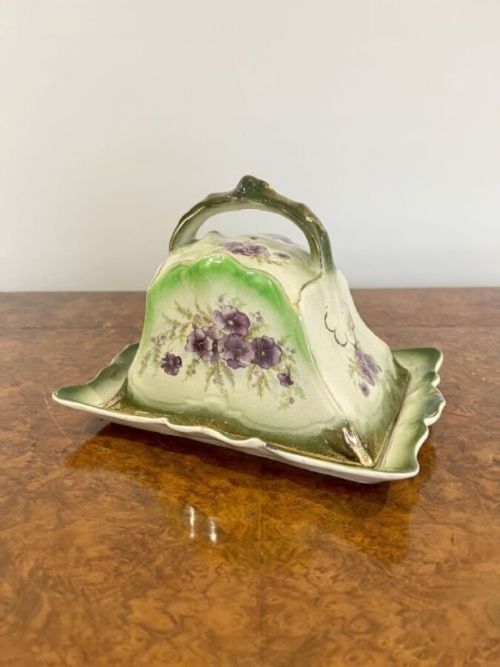
A vintage cheese cover brings together domed covers and fitted stands designed to keep a wedge of cheese fresh and presentable for the table. You will frequently encounter heavy earthenware and glazed ceramic domes, often decorated with botanical motifs or natural textures.
The pieces listed here span the late nineteenth century through to the Edwardian period and the early twentieth century. Common forms include large Victorian ironstone domes alongside distinctive Majolica pieces and coloured glass covers.
Makers utilised various regional styles, ranging from classic British earthenware to Continental glass and silver plate combinations. These serveware items reflect domestic dining habits where cheese was a prominent after-dinner course requiring proper containment.
Materials and construction
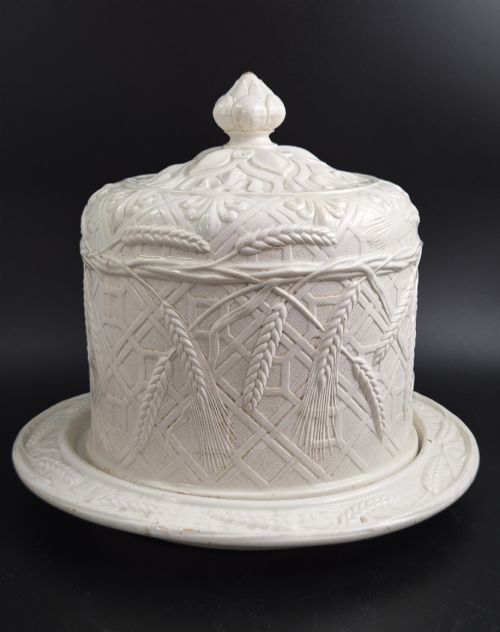
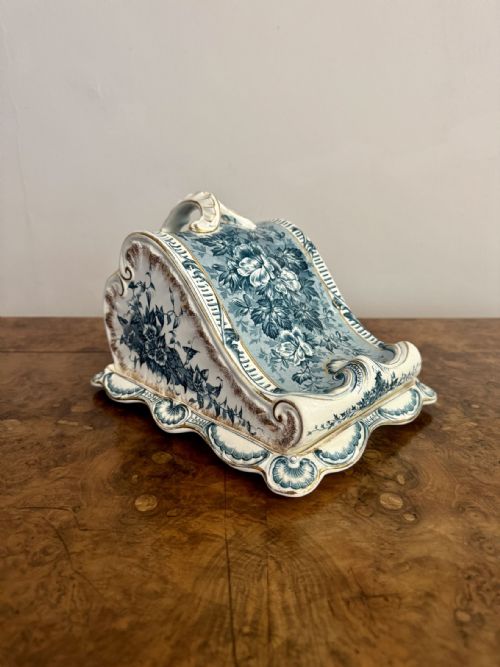
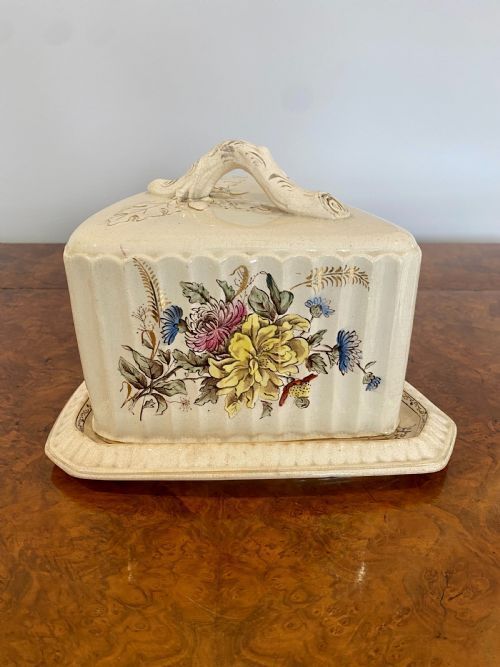
Potters shaped earthenware, ironstone, and ceramic bodies into substantial domes and matching stands, applying colourful glazes for Majolica pieces or leaving the heavy white ironstone plain with moulded details like wheat and lattice patterns.
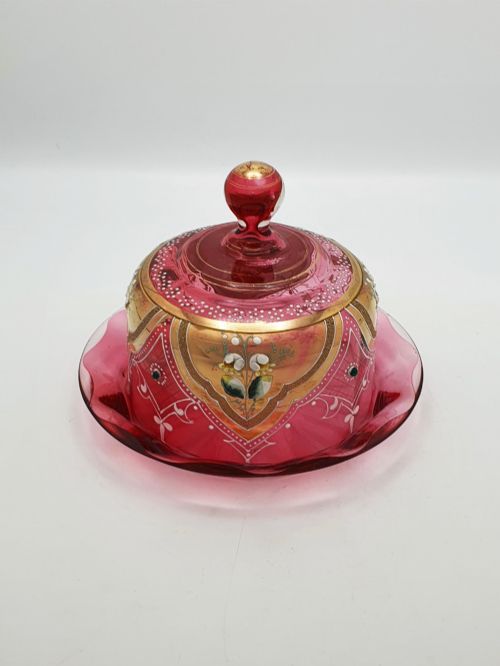
Glassmakers blew cranberry glass and clear vessels to sit within silver plate mounts, combining fragile transparency with sturdy metal frames.
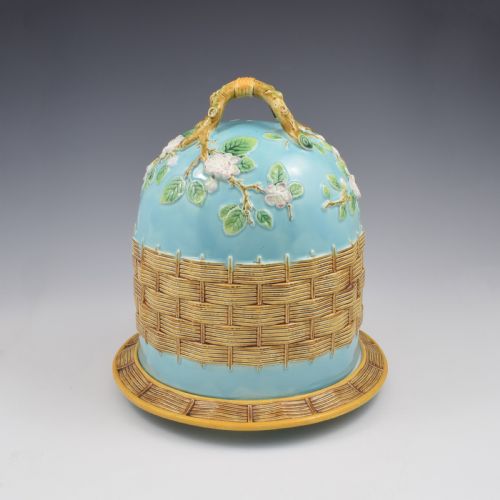
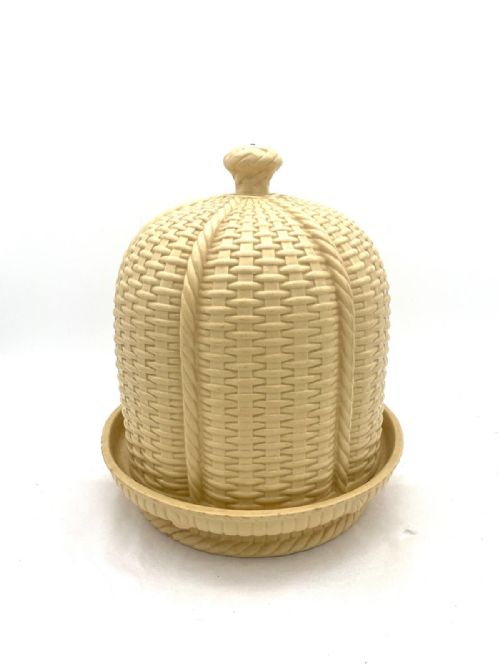
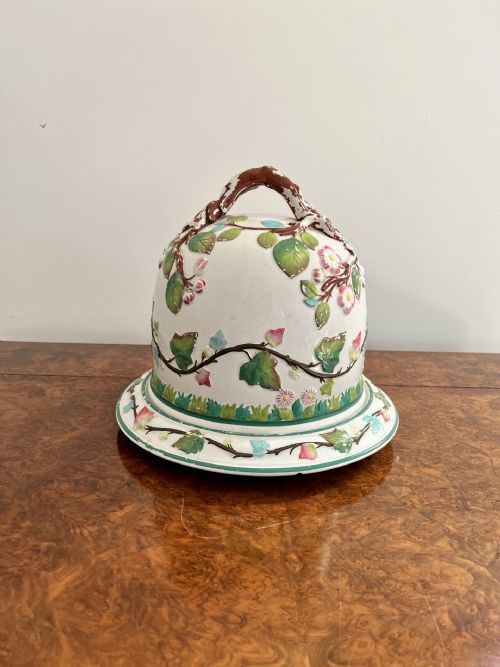
Craftsmen achieved texture through intricate moulding techniques, producing basket weave reliefs, apple blossom branches, and jasper ware surfaces.
Vintage Cheese Cover Retail Price Guide 2026
Typical asking prices for vintage cheese cover among the pieces listed under this phrase on Sellingantiques today, from the lower quarter to the upper quarter. They describe what is for sale here now, not the wider market.
Listings feature items from the Victorian and Edwardian periods, utilising earthenware, ironstone, glass, and silver plate.
Judging quality
The distinction between ordinary utility wares and exceptional pieces lies in the crispness of the moulded relief and the depth of the glaze. Heavy ironstone with sharp, detailed wheat patterns sits at a different level of refinement compared to plain, unadorned utility covers.
Majolica examples gain distinction through rich, variegated colour application where the tones pool naturally in the recesses of the apple blossom or basket weave motifs. Glass and silver plate combinations rely on the secure fit of the glass dome within its metal tray and the quality of the plating.
George Jones
The Vintage Cheese Cover Glossary
- Ironstone
- A heavy, durable type of earthenware patented in the nineteenth century. It provides a sturdy, opaque white body well suited to large kitchen and dining vessels.
- Majolica
- A type of earthenware coated with an opaque tin glaze and painted with brightly coloured metal oxide paints. It became popular in the Victorian era for decorative serving pieces.
- Drabware
- A style of unglazed or salt-glazed stoneware characterised by dull, neutral brownish-grey tones. It dates predominantly to the nineteenth century.
- Cranberry glass
- A rich red-pink transparent glass created by adding gold to the molten batch. It was widely used for decorative glassware around nineteen hundred.
Vintage Cheese Cover: Frequently Asked Questions
What is a vintage cheese cover?
A vintage cheese cover is a domed lid paired with a matching base plate, designed to keep cheese fresh on the dining table. These pieces protect the food from air and insects while presenting the dairy in an attractive ceramic, glass, or silver-plated vessel.
Most surviving examples date from the Victorian and Edwardian eras, reflecting formal dining traditions where cheese was served after the main meal. They range from heavy white ironstone to colourful Majolica and delicate cranberry glass.
How do I date a cheese dish?
Examine the base for pottery registry marks, impressed factory stamps, or specific ceramic bodies like heavy ironstone or drabware. Stylistic clues such as Art Nouveau curves or Victorian Majolica glazing also point to particular decades.
Construction details, including the weight of the ceramic and the manufacturing method of any metal mounts, help narrow down the period of production between the mid-nineteenth and early twentieth centuries.
Can I use it for cheese today?
You can certainly use a vintage cheese cover for serving cheese at room temperature during meals. The ceramic or glass dome traps moisture and helps keep the cheese from drying out.
Ensure the interior glaze is intact and free from deep crazing if storing food directly on the surface. Many collectors prefer to line the base plate with a small cloth or vine leaves.