




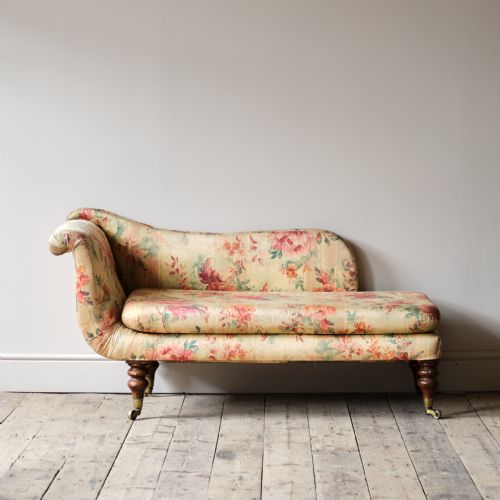


Vintage Chaise Sofa
These vintage chaise sofa pieces blend lounge comfort with classical elegance, offering a grand seating option for restful afternoons.
Vintage Chaise Sofa
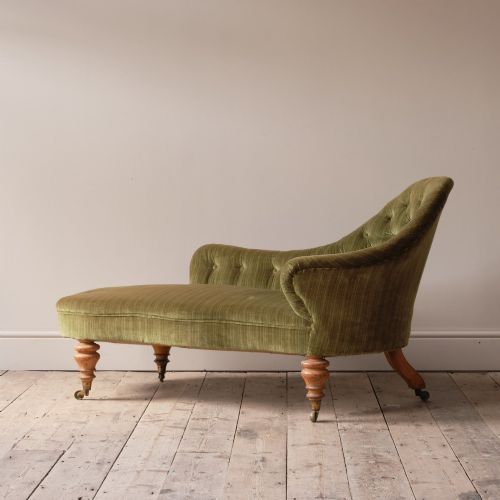
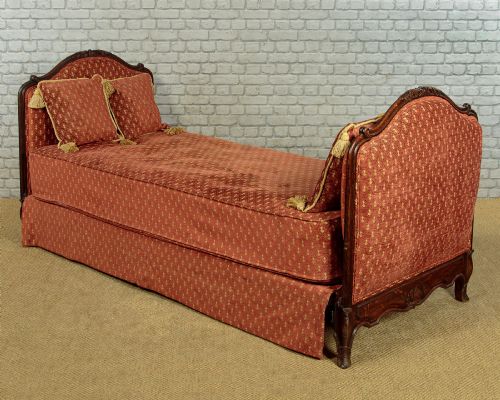
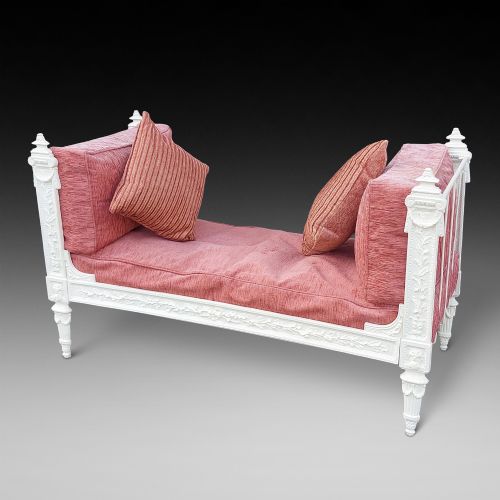
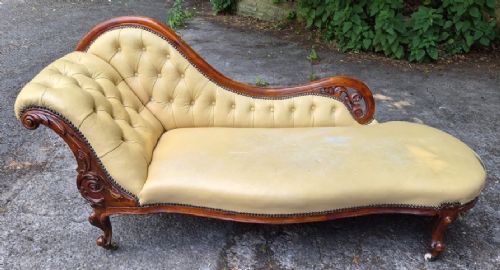
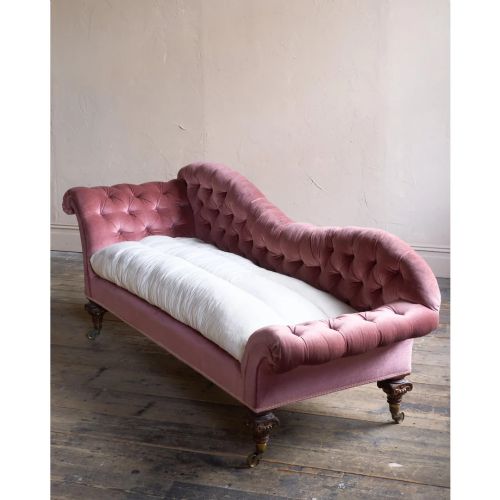
A vintage chaise sofa combines the extended seat of a daybed with the backed structure of a settee, designed specifically for reclining in seated comfort. When exploring a vintage chaise sofa, buyers encounter various historical iterations spanning the Regency, Victorian, and Edwardian eras. These seating forms range from formal mahogany frames to upholstered day beds and scroll end settees.
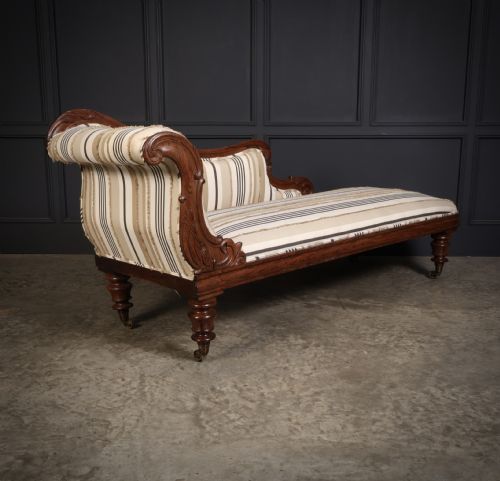
The pieces appearing on this page showcase diverse regional influences, including French Louis XVI style frameworks, French Provincial designs, and traditional English country house styles. Formats vary from iron daybeds to robust rosewood and oak frames, often featuring single scrolled ends or dropped arms for versatile placement in drawing rooms and bedrooms.
Materials and construction methods
Makers constructed these frames using dense hardwoods like mahogany, rosewood, and solid oak, occasionally employing cast iron for structural support in later Victorian examples. Woodcarvers shaped intricate details into the frames, while joiners utilised traditional techniques to secure scroll ends and ionic column legs.
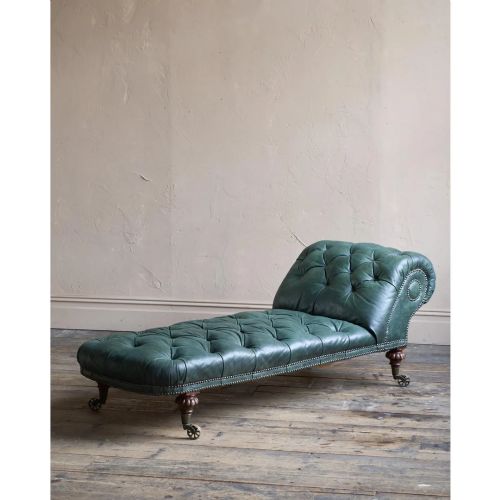
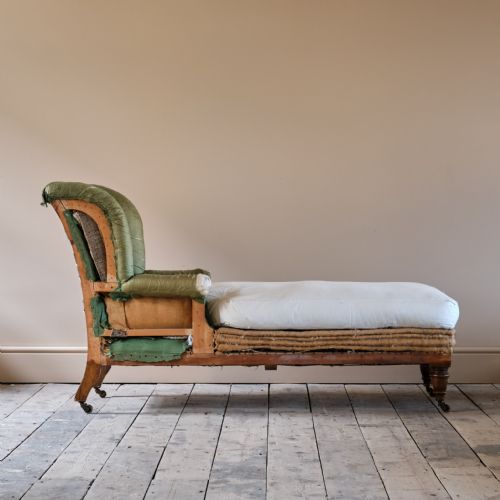
Upholstery methods relied on traditional stuffing materials such as horse hair, paired with supportive fabric coverings ranging from heavy velvet and linen to supple leather. Craftsmen finished many pieces with buttoned detailing and turned legs mounted on original castors for mobility.
Vintage Chaise Sofa Retail Price Guide 2026
Typical asking prices for vintage chaise sofa among the pieces listed under this phrase on Sellingantiques today, from the lower quarter to the upper quarter. They describe what is for sale here now, not the wider market.
The listings span from the early nineteenth century through the Edwardian period, utilising mahogany, rosewood, oak, and iron frames.
Assessing quality and craftsmanship
Quality reveals itself in the integrity of the timber frame and the crispness of the hand-carved details, distinguishing robust mahogany or rosewood structures from softer woods. Superior examples retain their original structural hardware, turned legs, and functional castors without loose joints.
Jas Shoolbred·William Birch·Hampton And Sons
The Vintage Chaise Sofa Glossary
- Chaise longue
- An upholstered long chair that allows the sitter to recline with legs extended. This French term translates literally to long chair.
- Day bed
- A couch that functions as both a seat during the day and a bed for resting. These pieces frequently feature a single raised end or partial backrest.
- Scroll end
- A sweeping, curved wooden terminal on a sofa or chaise frame. It draws inspiration from classical furniture forms.
- Canapé corbeille
- A French style of upholstered sofa or daybed with a rounded, basket-like back. This design envelopes the sitter for added comfort.
- Drop arm
- A movable or lowered armrest mechanism on a sofa or daybed. It allows the furniture to convert between an upright seat and a flat resting surface.
Vintage Chaise Sofa: Frequently Asked Questions
Where should I place a chaise sofa?
These pieces suit living rooms, large hallways, or generous bedrooms where they can sit away from walls to display their detailed backs and frames. Their elongated form works well beside a window or flanking a fireplace.
Ensure there is adequate floor space around the piece so the scroll ends and carved legs remain visible from multiple angles.
How do I distinguish Victorian from Regency styles?
Regency pieces often display cleaner classical lines, featuring mahogany frames with restrained ornamentation, scroll ends, and saber or reeded legs. Victorian examples tend to be heavier and more ornate, utilising dense rosewood or carved mahogany with deep buttoning.
Victorian upholstery frequently employs richer fabrics like velvet and leather, whereas Regency versions lean towards simpler textiles and exposed timber structures.
Can I use a daybed for sleeping nightly?
These historical seating items serve primarily as daytime resting furniture rather than permanent mattress replacements. Their internal construction focuses on decorative upholstery and supportive frames rather than modern multi-layer mattress ergonomics.
Occasional overnight guests will find them comfortable, but daily heavy sleeping may accelerate wear on the vintage upholstery and internal fillings.
How do I care for leather upholstery?
Maintain vintage leather by keeping the material away from direct sunlight and heat sources that cause drying and cracking. Apply specialised leather conditioners periodically to preserve suppleness.
Dust the surface regularly with a soft cloth and avoid harsh chemical cleaners which strip the natural finish.