


Vintage Ceramic Pot Stand
These vintage ceramic pot stands bring character to any room, combining sturdy bases with decorative bowls for plants and display.
Vintage Ceramic Pot Stand
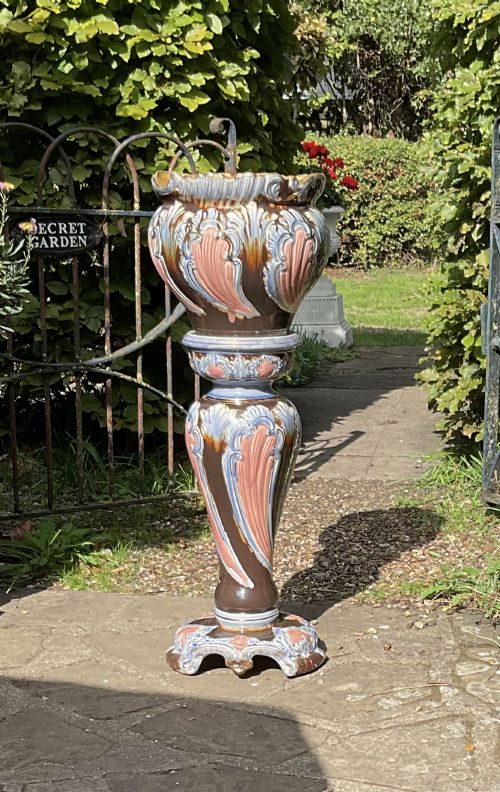
A vintage ceramic pot stand is a functional vessel designed to elevate plants, basins, or decorative pieces off the floor or furniture surface. These items appear in forms such as jardinieres, planter stands, cachepots, and trivets spanning the Victorian, Edwardian, and Arts and Crafts periods.
The pieces listed on this page range from earthenware and porcelain to glazed ceramic and terracotta constructions. Makers paired these ceramic elements with supportive frames made of oak, brass, and wood, reflecting French Country, Continental, and Art Nouveau design influences.
Buyers seeking a vintage ceramic pot stand will encounter both standalone planters with integrated stands and combination sets involving bowls resting within wooden or metal mounts. These objects served domestic utility in nineteenth and early twentieth-century interiors, functioning as plant holders or desk accessories.
How they were made
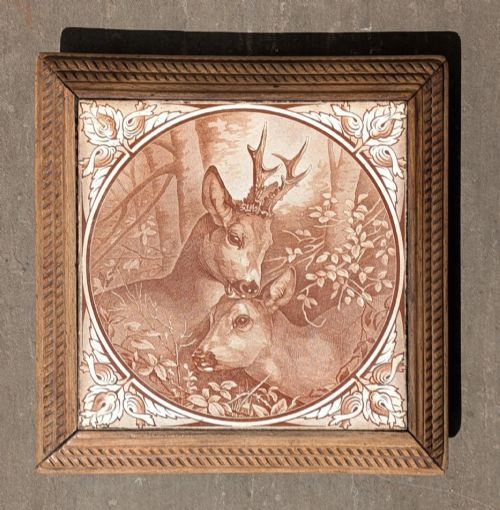
Potters shaped these vessels from earthenware, terracotta, porcelain, and standard ceramic bodies, applying coloured glazes to seal the porous clay and create decorative surfaces. Naturalistic modelling and applied tile work demonstrate the physical manipulation of wet clay before firing.
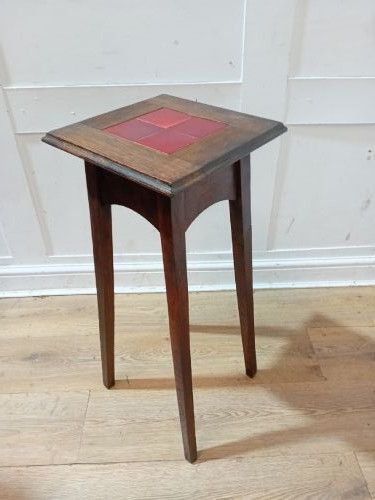
Woodworkers constructed matching stands and bases using solid oak and turned timber, frequently employing joinery techniques suited to the Arts and Crafts and Victorian eras. Metal components such as brass bases and silver-plated frames provide structural support and contrast to the fired ceramics.
An antique swan jardiniere proves that nineteenth-century makers were entirely willing to let waterfowl hold your houseplants.
What varies in quality
Quality in these pieces rests upon the precision of the ceramic modelling, the depth of the glaze, and the structural integrity of any accompanying wooden or metal stand. Pieces featuring naturalistic detailing or named pottery works demonstrate superior artistic execution compared to standard utility items.
The harmony between the ceramic vessel and its stand dictates the overall refinement of the piece. Finer examples integrate materials like porcelain and oak with considered proportions, whereas simpler items rely on basic earthenware and straightforward joinery.
Enoch Wood & Sons·Royal Worcester·Staffordshire
The Vintage Ceramic Pot Stand Glossary
- Jardiniere
- A large decorative pot or stand designed to hold a plant or flower arrangement. These vessels often sit upon dedicated stands or feet.
- Cachepot
- An ornamental container used to conceal an ordinary flowerpot. It lacks drainage holes, requiring a saucer or liner inside.
- Earthenware
- Pottery fired at relatively low temperatures, resulting in a porous body that requires glazing to hold water. This material appears frequently across nineteenth-century items.
- Terracotta
- Unglazed or glazed fired clay of a brownish-red colour. It forms the body of many traditional garden jars and olive pots.
Vintage Ceramic Pot Stand: Frequently Asked Questions
What is a vintage ceramic pot stand?
A vintage ceramic pot stand is a decorative vessel and supporting mount designed to elevate plants or basins in a home.
These pieces combine fired clay bodies such as terracotta or porcelain with timber, brass, or iron frames.
How were these stands used originally?
Victorian and Edwardian households utilised these stands to display indoor plants, palms, and floral arrangements off the floor.
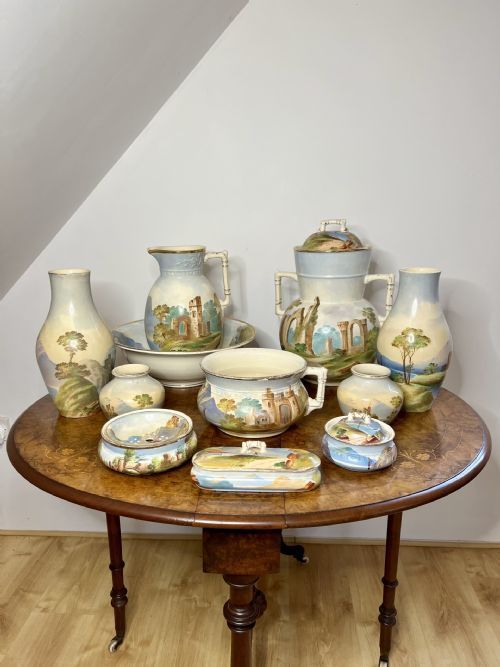
Some configurations functioned as wash sets or desk accessories, holding inkwells alongside ceramic bowls.
How do I care for a ceramic pot stand?
Protect the glazed ceramic surfaces by wiping them gently with a soft cloth and avoiding harsh chemical cleaners.
Treat wooden or brass stands with appropriate furniture or metal care to preserve the original finish.
What periods do these stands come from?
The available pieces originate from the nineteenth and early twentieth centuries, spanning Victorian, Edwardian, and Arts and Crafts eras.
Design styles reflect aesthetic movements such as Art Nouveau, French Country, and Continental traditions.