




Vintage Ceramic Inkwell
These vintage ceramic inkwell pieces bring desk accessories from the nineteenth and early twentieth centuries into modern spaces.
Vintage Ceramic Inkwell
A vintage ceramic inkwell serves as a practical desk accessory from earlier centuries, designed to hold wet ink for writing with nib pens before ballpoint pens took over everyday use. When searching for a vintage ceramic inkwell, buyers encounter various forms ranging from simple desktop containers to elaborate figural designs and fitted stands.
The pieces on this page span the nineteenth century, the Edwardian era, and the early twentieth century, reflecting domestic and continental writing habits. Common iterations include blue and white Dutch Delft faience, Staffordshire animal figures such as greyhounds, stoneware novelty shapes, and porcelain models mounted on brass bases.
Makers and regional potteries created these items in styles that include Victorian novelty, Chinoiserie, Rococo, and the Aesthetic Movement. Buyers are most likely to meet ceramic vessels paired with contrasting brass or enamel elements, often showing hand-painted blue and white decoration or polychrome glazes.
Materials and construction
Potters shaped these desk pieces using earthenware, stoneware, and fine porcelain, applying tin glazes or transparent glossy coatings over the clay bodies. Tin-glazed earthenware and faience provided a smooth white surface suitable for hand-painted cobalt blue and polychrome pigments.
Metal components frequently complement the ceramics, with makers incorporating brass bases, hinged brass lids, and enamel details to secure the ink reservoirs. Figural inkwells combined moulded pottery animals or human figures with functional ink compartments designed for daily use on writing desks.
Vintage Ceramic Inkwell Retail Price Guide 2026
Typical asking prices for vintage ceramic inkwell among the pieces listed under this phrase on Sellingantiques today, from the lower quarter to the upper quarter. They describe what is for sale here now, not the wider market.
The listings show ceramic inkwells spanning the nineteenth century through the Edwardian period, utilising earthenware, porcelain, and tin-glazed faience.
Distinctions in quality
The finesse of the hand-painted decoration separates standard production pieces from finer works, particularly in Dutch Delft and Chinese style blue and gold examples. Crisp moulding on figural models like Staffordshire greyhounds or singing boys indicates superior craftsmanship compared to softer, worn impressions.
The integration of mixed media, such as porcelain securely mounted to substantial brass bases with intact hinged lids, elevates the execution. Preservation of the original glaze sheen and the clarity of painted details without excessive rubbing determine the standing of each piece.
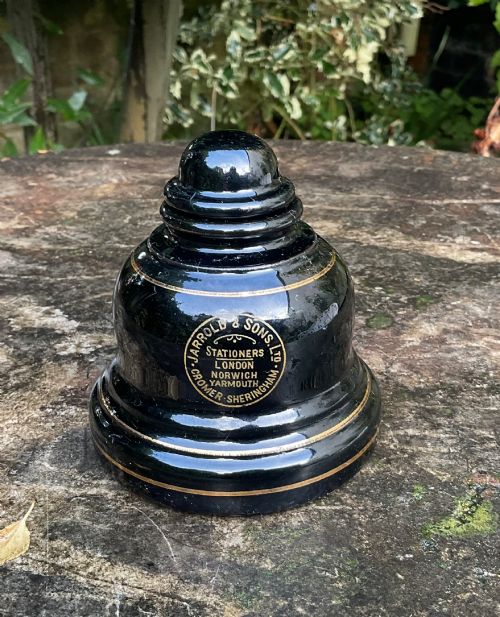
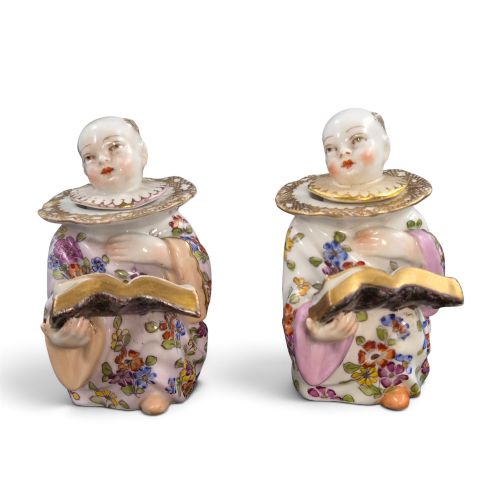
JARROLD & SONS·Edmé Samson·Meissen
The Vintage Ceramic Inkwell Glossary
- Faience
- Tin-glazed earthenware produced in Europe, noted for its opaque white surface that accepts painted decoration before firing.
- Inkstand
- A complete desk stand that holds an inkwell alongside pen trays and sometimes sanders or stamp boxes.
- Stoneware
- A heavy, dense ceramic fired at high temperatures until vitrified, making it waterproof and durable for everyday desktop utility.
- Staffordshire
- Pottery manufactured in the English county of Staffordshire, famous for nineteenth-century figures and novelty desk wares.
- Tin-Glazed Earthenware
- Pottery coated with a glaze containing tin oxide, which turns opaque white during firing and provides a ground for painted pigments.
Vintage Ceramic Inkwell: Frequently Asked Questions
What is a vintage ceramic inkwell?
A vintage ceramic inkwell is a desk container made from earthenware, porcelain, or stoneware, used to hold liquid ink before the invention of modern pens. These items date primarily from the nineteenth and early twentieth centuries.
They reflect the prevalent writing styles and ceramic techniques of their respective periods, combining practical utility with decorative appeal for writing desks.
How were inkstands used?
Inkstands served as the central station for correspondence on nineteenth-century desks, holding the ink reservoir alongside accessories like pen rests. Writers dipped their steel or quill nibs directly into the central well.
These desk sets kept ink contained and accessible while adding a decorative element to home and office libraries.
How do I date a ceramic inkwell?
Dating relies on observing the ceramic body, glaze characteristics, and stylistic influences such as Victorian novelty or Aesthetic Movement design. The materials used, like tin-glazed earthenware or brass mounts, often point to specific manufacturing eras.
Reference markers include period stamps, named makers in the ceramic body, and the typical forms associated with nineteenth-century or Edwardian production.
How do I display an inkwell?
These pieces fit naturally on wooden writing desks, bookcases, or mantelpieces where their compact forms and hand-painted glazes can be appreciated up close. They require stable surfaces away from heavy foot traffic.
Collectors often group them with other desk accessories like letter openers and stamps to recreate a period writing station.