
Vintage Carved Book Stand
A vintage carved book stand brings tactile presence to a desk, holding volumes upright through periods from the Victorian era to the 1930s.

Vintage Carved Book Stand
A vintage carved book stand encompasses table-top reading stands, extending book slides, and folding book pedestals produced across the nineteenth and early twentieth centuries. These pieces reflect the periods in which they were made, spanning Victorian, Edwardian, and Art Deco eras.
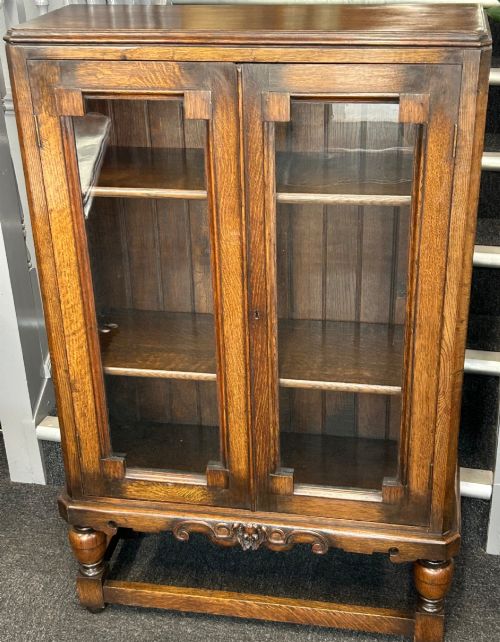
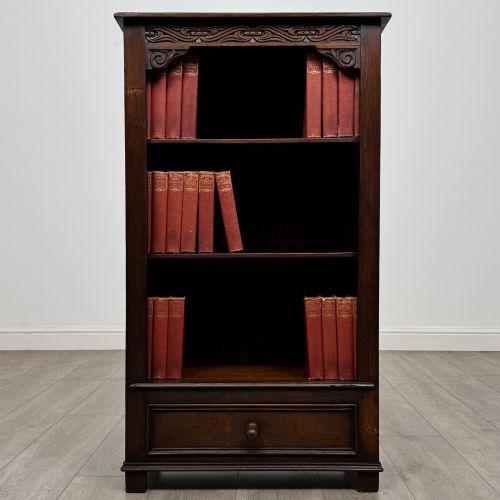
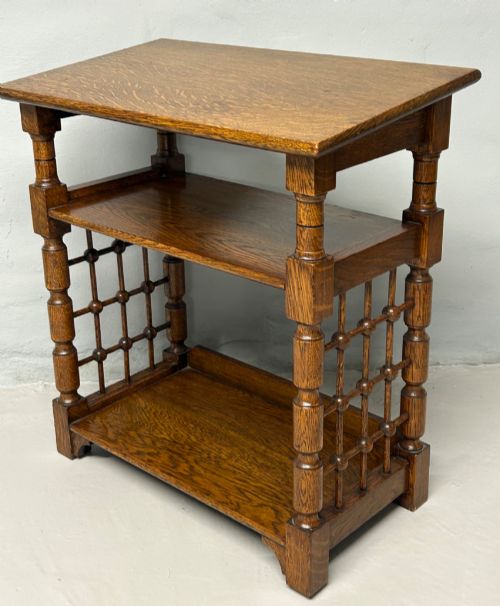
The version most commonly encountered in this selection is constructed from oak or walnut, often featuring carved ornamentation or adjustable sides. Forms range from small desk rests to revolving table stands and church lecterns.
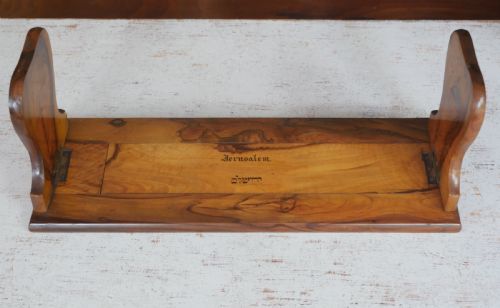
Makers and workshops utilised dense hardwoods alongside softer deal and olive wood to support working libraries. Stylistic influences include Gothic Revival, Arts and Crafts, and Black Forest animal carvings.
Materials and construction methods
Makers relied principally upon solid oak and mahogany for structural stability, shaping the timber with hand tools to form sliding mechanisms and hinged book rests. Walnut and linden wood appear frequently where intricate relief carving was required.
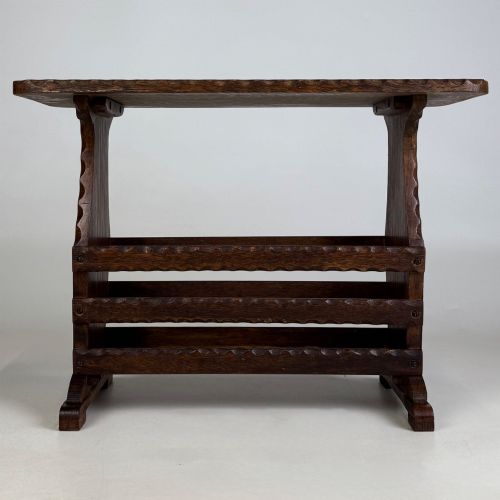
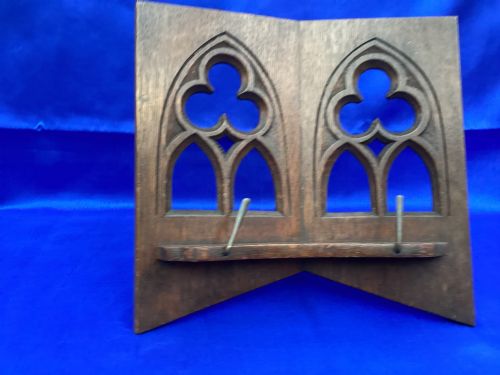
Surface decoration frequently involves chip carving, surface mouldings, or applied mother of pearl inlay, particularly on Victorian and Arts and Crafts examples. Brass hinges, screws, and fittings provide mechanical support for extending slides and rotating platforms.
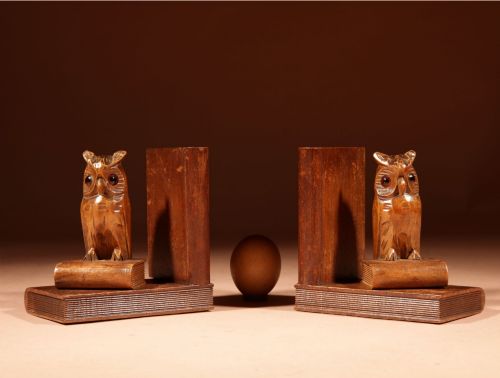
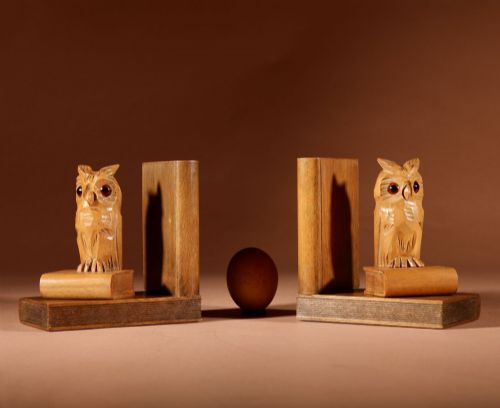
Several Victorian reading stands double as resting spots for sleepy carved owls.
Distinctions in manufacture and material
The quality of a carved book stand is determined by the depth and precision of the hand-carved detail, particularly in Black Forest animal studies and floral motifs. Crisp lines in the timber separate standard production pieces from finer studio work.
Mechanical longevity depends upon the integrity of extending wooden tracks and brass hardware, ensuring smooth movement without binding. Timber selection also dictates grade, with quarter-sawn oak showing superior ray figure compared to plain deal.
The Vintage Carved Book Stand Glossary
- Book slide
- An extending wooden desktop stand fitted with hinged or static ends to hold volumes upright. These incorporate brass ratchets or simple friction fits.
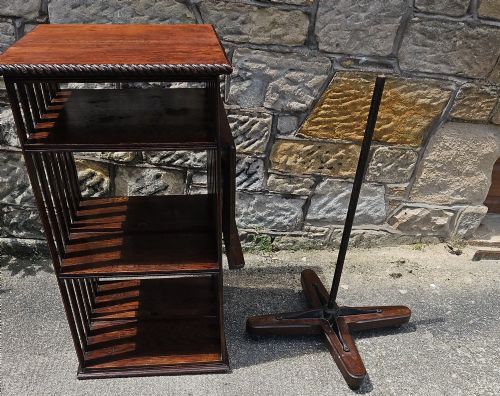
- Revolving bookcase
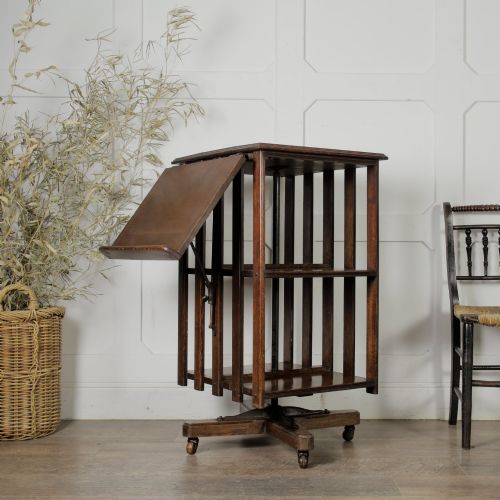
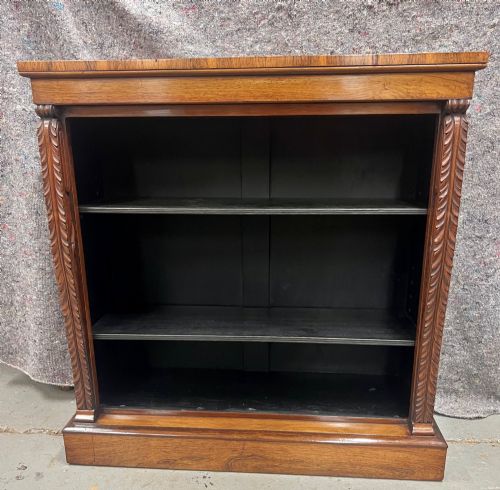
- A rotating table-top or floor-standing unit designed for easy access to reference volumes. They utilise a central pivot mechanism hidden beneath the base.
- Black Forest
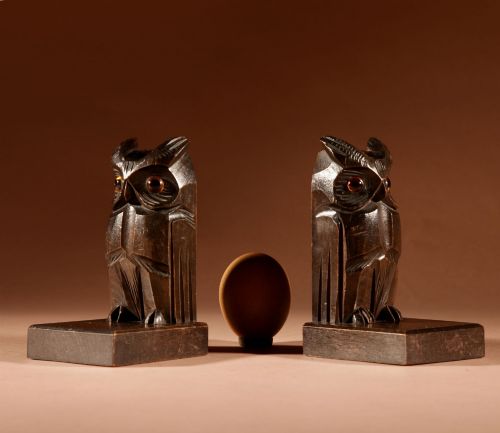
- A style of wood carving originating in Central Europe characterised by naturalistic animal figures. Owls and foliage dominate these decorative table pieces.
- Lectern
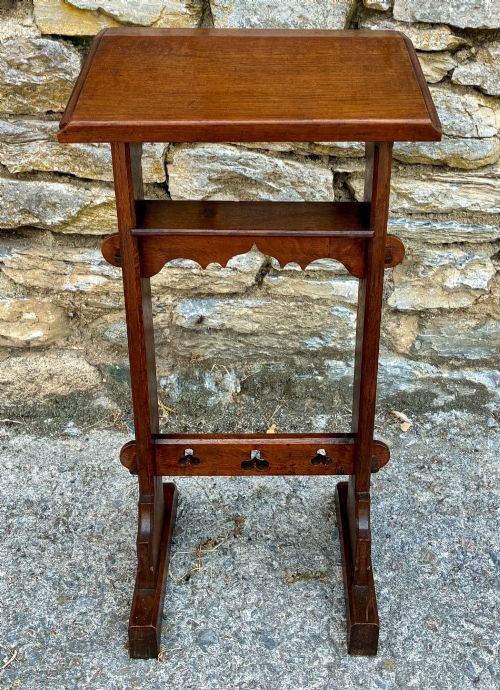
- A tall reading stand designed for church or study use, often featuring a sloping desk surface. Examples are constructed from solid oak, pine, or walnut.
Vintage Carved Book Stand: Frequently Asked Questions
How do I use a book slide?
Extend the wooden sides to fit the desired number of volumes between the terminal ends. The design supports the books securely on a desk or table.
Ensure the sliding mechanism moves freely without forcing the timber runners. Regular use helps keep working libraries organised in a study.
What is a revolving bookcase?
A rotating stand that allows multiple volumes to be housed within arm's reach on a desktop or floor base. The internal pivot enables the tiers to turn smoothly.
These pieces suit smaller spaces where traditional shelving takes up too much wall room. They were widely produced during the Edwardian period.
How are Black Forest stands carved?
Carvers used linden wood and walnut to create deep relief figures of animals and foliage, particularly owls. The work involves hand chiseling to achieve realistic feather and fur textures.
These decorative objects often double as letter stands or small bookends on a library table. The style gained popularity around nineteen hundred.
What timber was used most often?
Oak and mahogany form the majority of surviving stands, chosen for their strength and durability. Walnut and olive wood appear on more decorative continental examples.
Deal and pine were occasionally utilised for simpler pieces intended for everyday utility. Each material dictates the weight and colour of the finished stand.