



Vintage Caricature Print
These vintage caricature print pieces capture social and political satire through Victorian, Edwardian, and later works.
Vintage Caricature Print
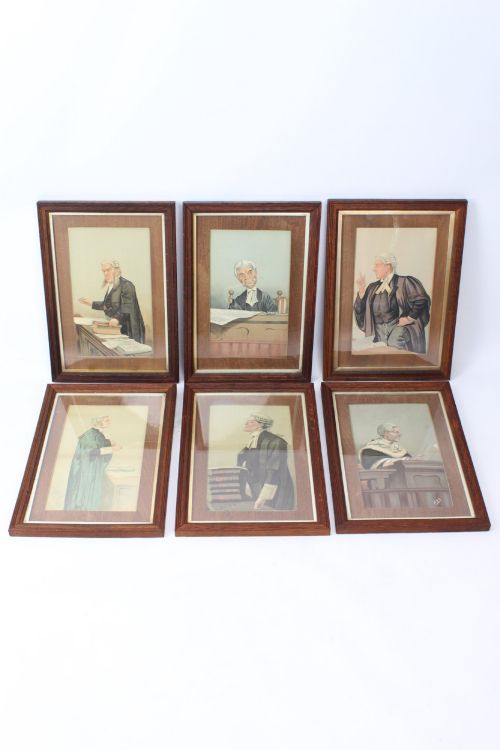
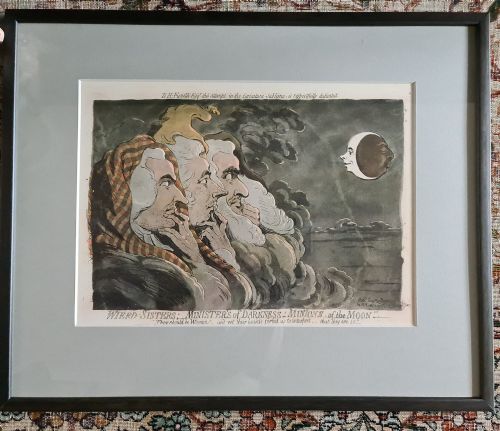
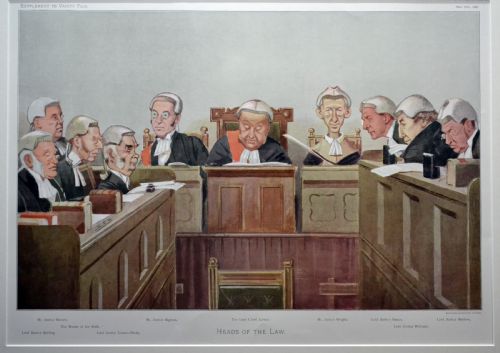
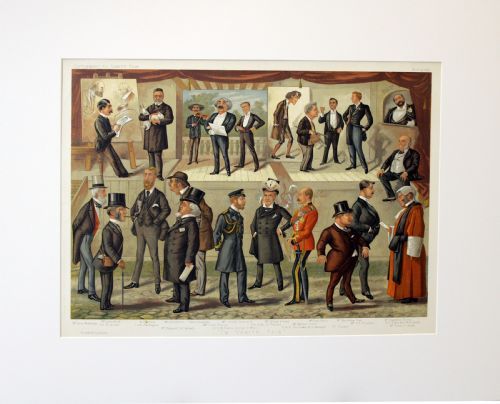
A vintage caricature print brings together satirical artwork and portraiture from periods spanning the eighteenth century to the mid-twentieth century. Buyers searching this phrase encounter framed prints, wall art, and original watercolours depicting political figures, military personnel, and societal types. Vanity Fair chromolithographs dominate the selection alongside individual cartoon watercolours and nineteenth-century American political prints.
The material presentation typically involves paper set within wood frames and protected by glass, often mounted on cardboards. Pieces range from single sheets and double-page formats to sets numbering up to twelve. Subjects span legal figures, royalty, racing scenes, and wartime generals, reflecting British and international illustration styles.
Materials and methods
Makers utilised paper as the primary support medium, applying ink and watercolour pigments to create detailed illustrations. Chromolithography served as a prominent technique for producing multi-coloured periodical prints, yielding vibrant hues across double-page formats. Watercolour paintings provided bespoke, hand-painted alternatives executed directly on paper surfaces.
Framing involved wood mouldings complemented by mount boards and glass to protect the delicate paper works. Early pieces relied on traditional paper pressing and hand-colouring methods before industrial chromolithography standardised multi-plate printing processes.
Vintage Caricature Print Retail Price Guide 2026
Typical asking prices for vintage caricature print among the pieces listed under this phrase on Sellingantiques today, from the lower quarter to the upper quarter. They describe what is for sale here now, not the wider market.
Listings feature works across eight distinct periods, from the 18th century through to 1930.
Judging the range
Quality separates mass-produced illustrative impressions from hand-finished watercolours and scarce double-page chromolithographs. The sharpness of the ink lines and the preservation of the original pigments dictate the visual impact of each piece. Complete sets and original framing elevate the standing of works compared to isolated, trimmed pages.
The reputation of the illustrator and the historical importance of the subject matter drive distinction across the selection. Well-preserved paper free from heavy fading retains the intended contrast of the satirical compositions.
Gilray·Snaffles·Thomas Worth
The Vintage Caricature Print Glossary
- Chromolithography
- A planographic printing process that uses multiple stone plates to apply distinct colours in register. This technique created the rich tones seen in nineteenth-century periodical plates.
- Spy
- The pseudonym of illustrator Leslie Ward, whose caricature portraits defined British satirical magazine culture. His works form a large portion of framed prints from the period.
- Watercolour
- A painting method where fine pigment is suspended in a water-based solution on paper. These handmade works offer unique brushwork distinct from printed illustrations.
- Mount board
- A stiff paperboard placed around the artwork within the frame to separate the paper from the glass. It provides structural support and prevents moisture accumulation.
- Double page format
- A publication layout where an illustration spans across two adjacent pages of a periodical. These wider sheets often require careful unfolding.
Vintage Caricature Print: Frequently Asked Questions
What periods do these prints cover?
The selection spans multiple eras, beginning with eighteenth-century works and moving through Victorian, Edwardian, and early twentieth-century pieces. Later examples reach into the 1930s with mid-century modern influences.
Each period brings distinct printing techniques and subject matter, from Georgian satire to Edwardian periodical illustration.
How were Vanity Fair prints issued?
Vanity Fair prints were originally published as weekly inserts in the eponymous Victorian and Edwardian magazine. They often appeared as single or double-page chromolithographs featuring prominent public figures.
Many survive today preserved in sets or framed individually for wall display.
Are these works original?
The selection includes original period productions, such as hand-painted watercolours and genuine nineteenth-century chromolithograph plates. Artists executed these pieces using traditional media on paper rather than modern reproduction methods.
Items frequently retain their historical context through contemporary framing and period mounts.
How should I display them?
These framed paper artworks suit wall display in studies, hallways, or living spaces. Keeping them away from direct sunlight protects the delicate watercolour pigments and printed inks from fading.
Glass and wood frames safeguard the paper substrates from environmental moisture and physical wear.