




Vintage Cane Reading Chair
A vintage cane reading chair offers a deep seat and woven support, bringing period craft and restful comfort to any room.
Vintage Cane Reading Chair
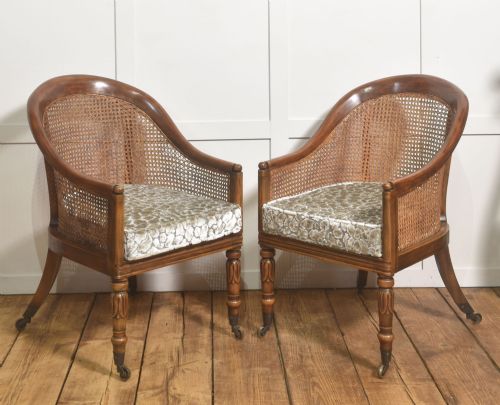
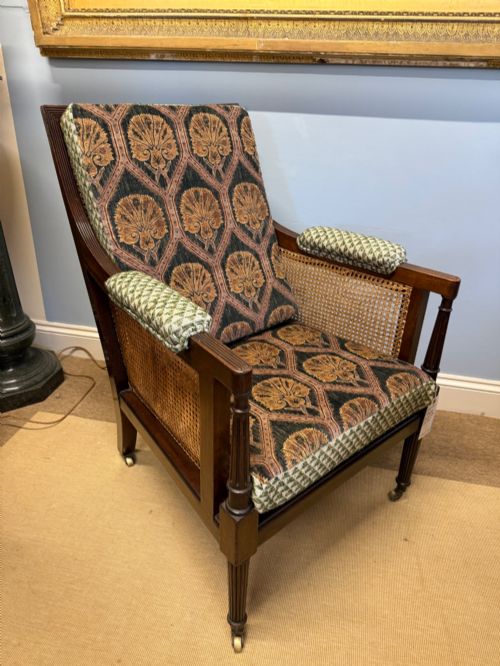
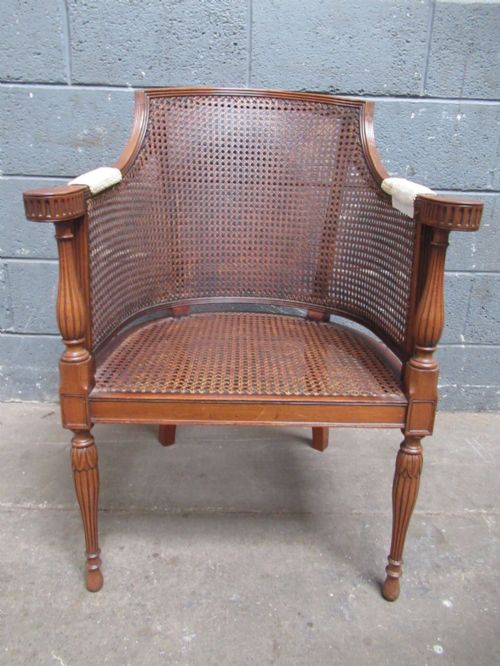
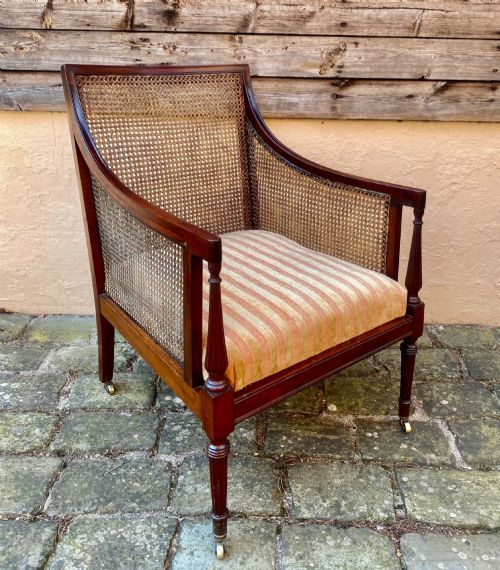
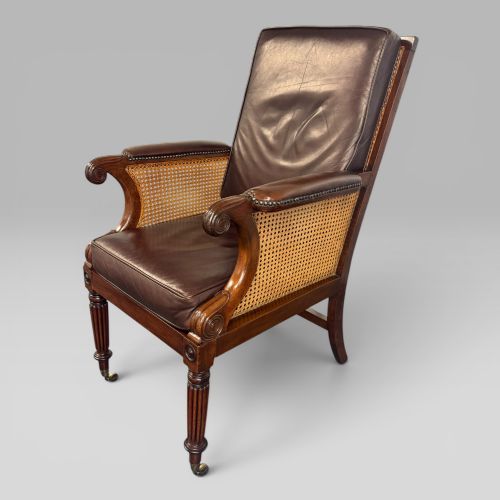
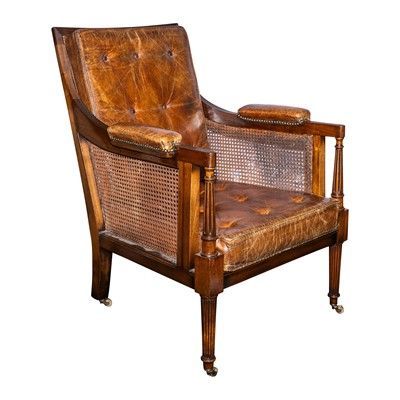
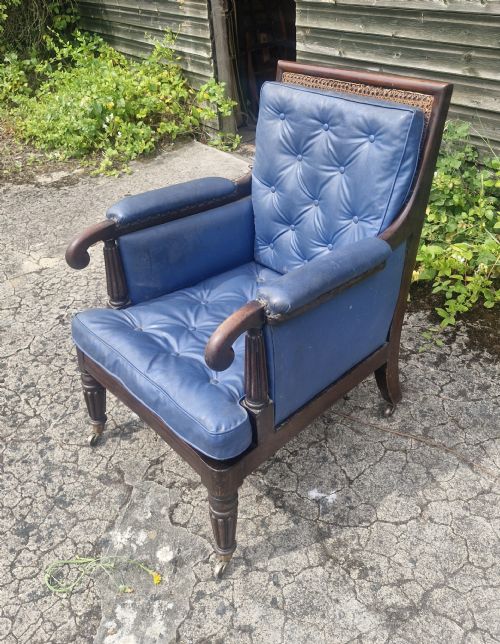
When buyers search for a vintage cane reading chair, they encounter substantial armchairs designed for long hours of study or repose. These pieces mostly take the form of library bergères, tub chairs, and spacious armchairs originating across the nineteenth and early twentieth centuries.
The versions most commonly met on this page span the Regency, Victorian, Edwardian, and Art Deco periods. Mahogany frames dominate the selection, alongside oak and satinwood, paired with woven cane seats and backs.
Makers and workshops built these items for libraries and drawing rooms, often incorporating leather upholstery or loose cushions for added comfort. The forms range from compact tub shapes to generous, well-drawn library chairs with sweeping arms.
Materials and construction
The framework of these armchairs relies heavily on dense hardwoods such as mahogany and oak, shaped into curved backs and sturdy legs. Cabinetmakers utilised traditional joinery to ensure the structural integrity of the frame under daily weight.
Caning and rattan cane are woven tightly through holes drilled into the frame channels, creating a flexible yet supportive mesh. Brass accents, leather pads, and fabric or velvet cushions frequently supplement the wooden and woven elements.
Vintage Cane Reading Chair Retail Price Guide 2026
Typical asking prices for vintage cane reading chair among the pieces listed under this phrase on Sellingantiques today, from the lower quarter to the upper quarter. They describe what is for sale here now, not the wider market.
Some nineteenth-century readers apparently required quite robust armchairs to survive their afternoon study sessions.
Factors of quality
Quality rests upon the proportion of the frame and the precision of the woodwork, where well-drawn curves and generous proportions distinguish finer examples from standard seating. The tightness and uniformity of the cane weave also indicate the level of craftsmanship invested in the piece.
The choice of primary timber influences the standing of the chair, with finely figured mahogany or satinwood commanding greater regard than plain secondary woods. Original surfaces and retained secondary materials like brass castors contribute further to the integrity of the piece.
Dryad of Leicester
The Vintage Cane Reading Chair Glossary
- Bergère
- An enclosed upholstered armchair with a wooden frame, where the sides and back often feature cane work. This French style became popular in British libraries during the Regency period.
- Caning
- A technique of weaving rattan or cane splits through frame apertures to form a resilient mesh panel. It provides breathable support for the back and seat.
- Tub chair
- An armchair featuring a continuous curved back and arms that form a single semi-circular enclosure. The design wraps around the sitter for security and warmth.
- Regency
- A British design period spanning the early nineteenth century, noted for classical restraint and inspiration from ancient Greece and Rome. Mahogany and brass inlay feature prominently in these items.
- William IV
- A transitional decorative style from the 1830s characterised by heavy proportions and robust classical detailing. Pieces from this era display substantial mahogany frames.
Vintage Cane Reading Chair: Frequently Asked Questions
What is a bergere chair?
A bergère chair is an upholstered armchair with wooden framing and woven cane panels forming the back and sides. These seats were designed for comfortable lounging in libraries and drawing rooms.
They usually include a loose seat cushion upholstered in leather or fabric. The style evolved through various nineteenth-century revivals.
How do I identify a Regency armchair?
Regency armchairs typically feature dark mahogany frames, sweeping arm supports, and classical proportions. Cabinetmakers drew inspiration from antiquity, resulting in clean lines and disciplined ornamentation.
Caned panels and library bergère forms are common characteristics of this era. The timber often exhibits deep colour and fine grain.
What is the difference between oak and mahogany frames?
Oak frames generally appear in Arts and Crafts or revival pieces, showing a pronounced grain and sturdy build. Mahogany offers a smoother, denser surface that takes a deep polish and allows for finer carved details.
Both woods provide exceptional durability for structural framing. The choice of timber often reflects the prevailing style of the manufacturing period.