



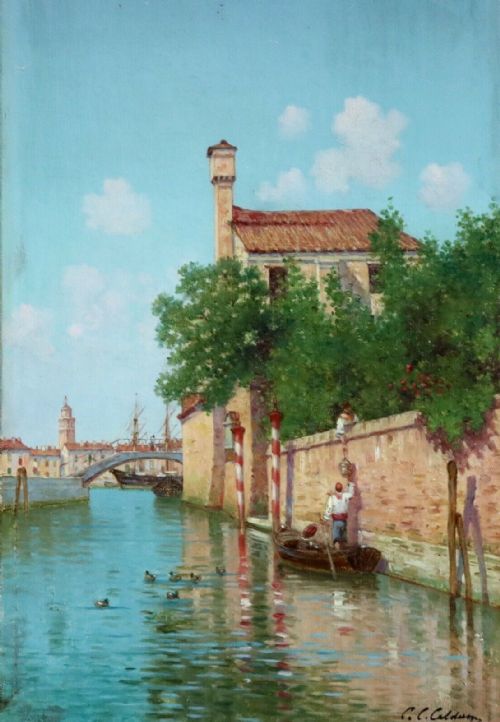
Vintage Canal Scene
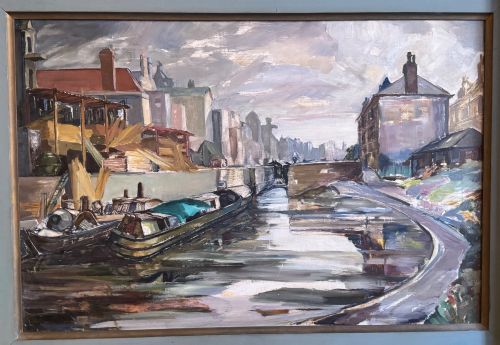
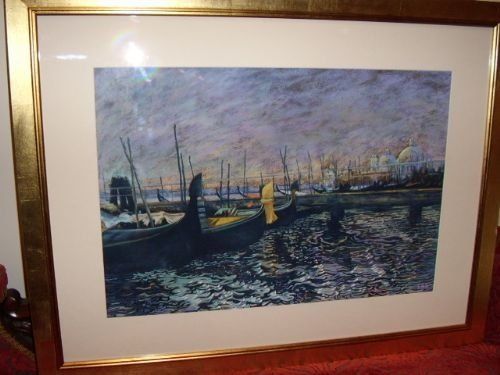
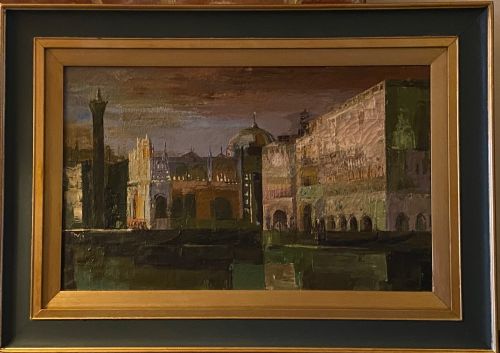
A vintage canal scene captures the atmospheric waterways and historic architecture of Venice, Flanders, and Britain through the eyes of early twentieth-century painters.
Vintage Canal Scene
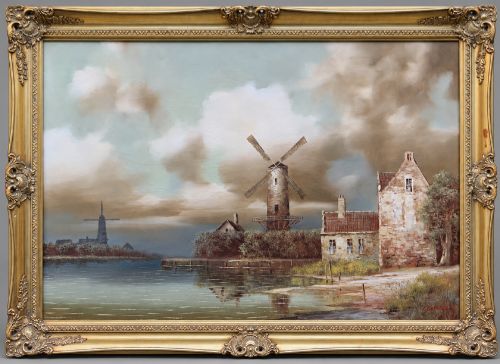
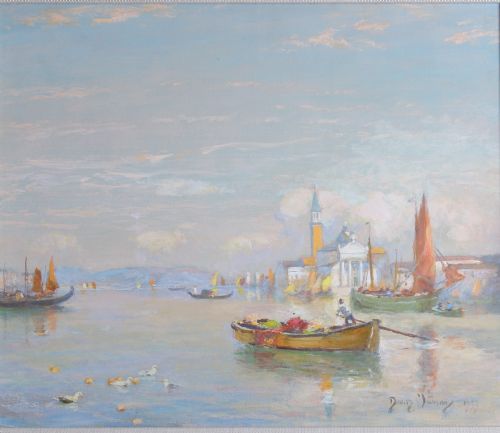
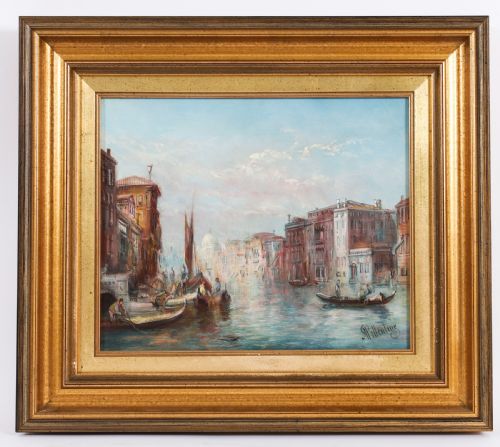
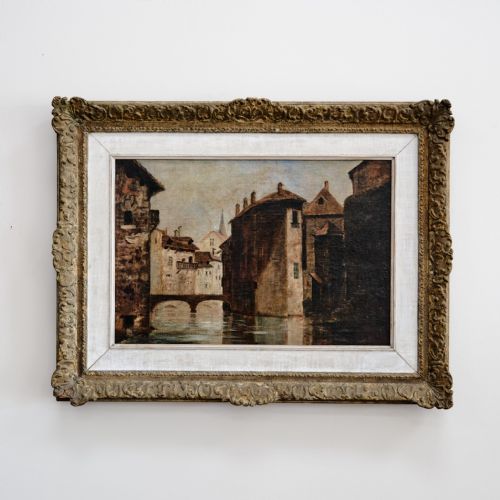
A vintage canal scene brings together waterways, barges, and urban quaysides painted across the nineteenth and twentieth centuries. Buyers search for these works to find historic depictions of Venice, Dutch windmills, and British canals rendered in oil and watercolour.
The pieces on this page span from nineteenth-century Victorian works to mid-century impressionism. Most frequently, you encounter oil paintings on canvas and delicate watercolours executed by continental and British artists.
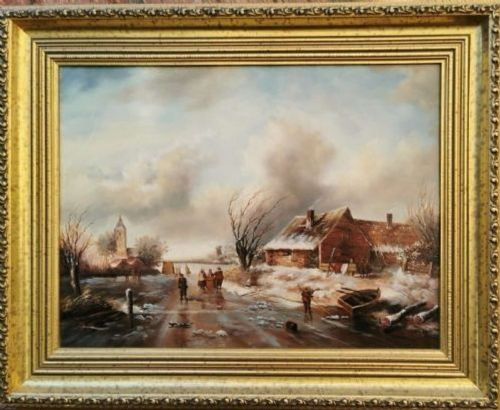
Subjects range from grand Venetian palaces and gondolas beneath the Bridge of Sighs to quiet Flemish riverscapes and winter scenes with ice skaters. Each format records a specific topographical tradition, whether Dutch, French, or English.
Materials and technique
Artists relied primarily on oil paint applied to stretched canvas or board, alongside watercolour and gouache on paper. These traditional media allowed painters to capture the shifting light on water and the texture of old masonry.
Framing often involves period wood mouldings finished with gesso and gilt. The interaction of oil pigments and paper supports defines the physical survival of these works across different decades.
Vintage Canal Scene Retail Price Guide 2026
Typical asking prices for vintage canal scene among the pieces listed under this phrase on Sellingantiques today, from the lower quarter to the upper quarter. They describe what is for sale here now, not the wider market.
Several canvases manage to make freezing Flemish ice skaters look entirely unbothered by the winter chill.
Assessing quality
Quality rests on the confidence of the brushwork and the artist's handling of atmospheric light upon the water. Stronger works demonstrate accomplished perspective in complex architectural settings such as Venetian canals.
The integrity of the original canvas, paper support, and surface preservation dictate the standing of each painting. Finer examples maintain their original pigment saturation without excessive retouching or structural degradation.
Alfred Pollentine·Antonio DeVity·Antoine Bouvard Senior·William Dommersen·Frank Wasley
The Vintage Canal Scene Glossary
- Impressionism
- A nineteenth-century painting style focusing on accurate depiction of light and its changing qualities. Artists often used visible brushstrokes and unblended pigments.
- Gouache
- An opaque water-based medium producing a heavier, more saturated finish than traditional watercolour. It permits highlights and solid blocks of colour.
- Gesso
- A plaster-like mixture applied to wood frames to create a smooth surface for gilding. It forms the base layer for decorative period framing.
- Canvas
- A heavy woven fabric used as a surface for oil painting. It is typically stretched tightly over a wooden frame before painting.
- Gondola
- A traditional flat-bottomed Venetian rowing boat frequently depicted in canal artwork. It serves as a central compositional element in scenes of Venice.
Vintage Canal Scene: Frequently Asked Questions
How do I identify the age of a painting?
Examine the canvas preparation, stretcher bars, and framing materials for period characteristics. Signatures and inscriptions often provide direct links to active dates.
Stylistic cues such as impressionistic brushwork or mid-century palettes also help narrow down the decade of execution.
Where should I hang these watercolours?
Watercolours require placement away from direct sunlight to prevent fading of the paper and pigments. Glass-fronted framing protects the delicate surface from airborne moisture and dust.
Position them on interior walls with stable ambient temperature and humidity levels.
What is the difference between Dutch and Venetian scenes?
Dutch scenes typically feature flat landscapes, windmills, and frozen canals with figures skating on ice. They emphasise muted northern light and rural waterways.
Venetian scenes showcase grand palazzos, bridges, and gondolas under warmer Mediterranean light. The architectural complexity defines the urban composition.
How do I care for oil paintings on canvas?
Keep oil paintings away from extreme heat sources that can dry and crack the canvas or paint layers. Dust the surface gently with a soft, dry brush without applying pressure.
Avoid using water or cleaning solvents directly on the painted surface to preserve the original varnish.