



Vintage Canal Painting
A vintage canal painting captures the atmosphere of historic waterways, bringing European cities and quiet rural navigations into a room.
Vintage Canal Painting
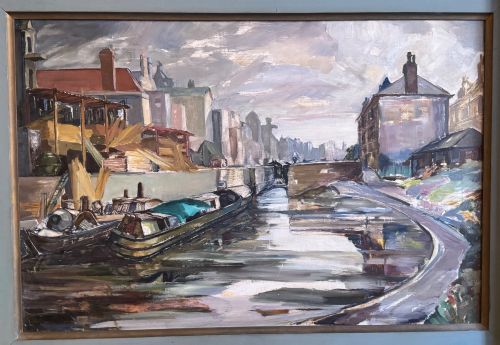
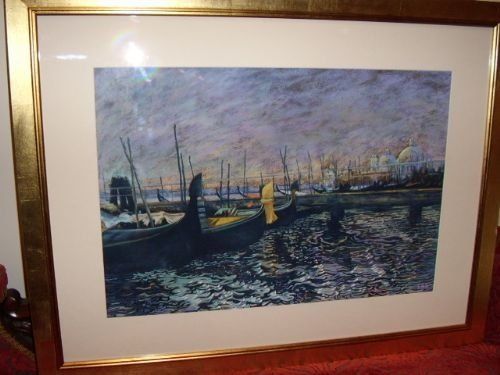
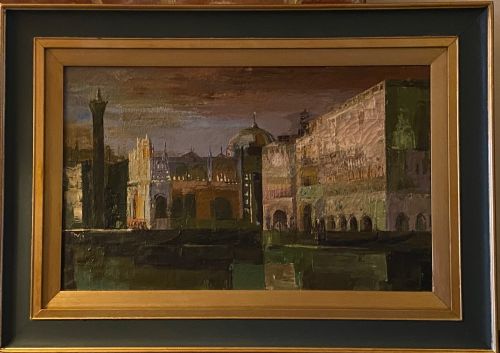
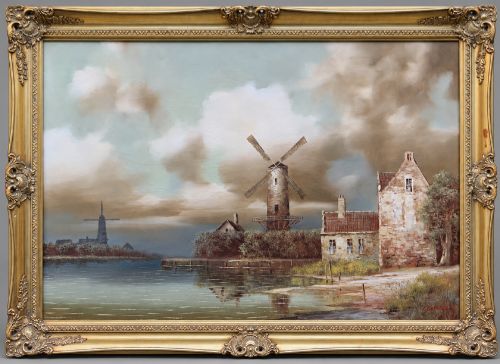
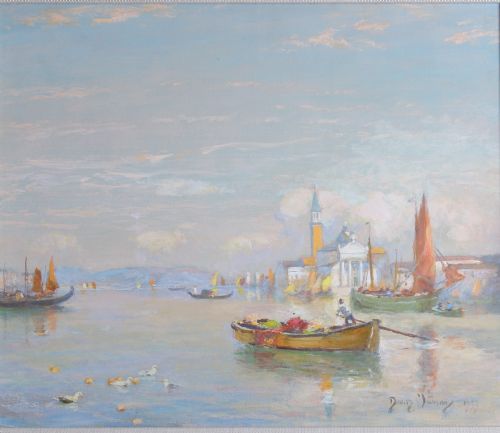
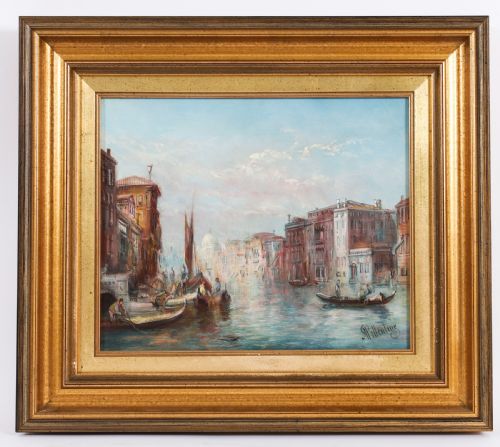
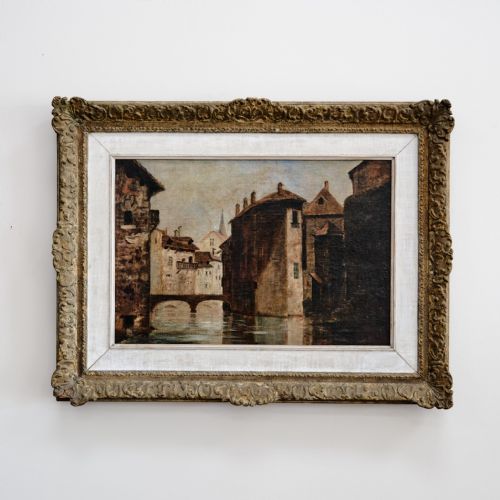
A vintage canal painting typically depicts urban waterways in Venice, Dutch landscapes with windmills, or British and French river scenes. The examples gathered here span from the nineteenth century through the mid-twentieth century, capturing changing industrial and domestic water life.
Most pieces on this page are oils on canvas or detailed watercolours on paper, framed to preserve their surfaces. Subjects range from grand Venetian palaces to humble barges moored along rural banks.
Makers recorded in the evidence range from named European artists working in impressionist and traditional styles to anonymous hands painting continental townscapes.
Materials and techniques
Artists painted primarily with oil on canvas or watercolour on paper, sometimes employing pastel, gouache, and ink pen to build texture and fine detail. Gesso and giltwood frames often accompany the canvases, providing structural support and period framing.
Techniques vary from the loose brushwork of Dutch and French impressionism to the precise architectural rendering found in Victorian topographical watercolours.
Vintage Canal Painting Retail Price Guide 2026
Typical asking prices for vintage canal painting among the pieces listed under this phrase on Sellingantiques today, from the lower quarter to the upper quarter. They describe what is for sale here now, not the wider market.
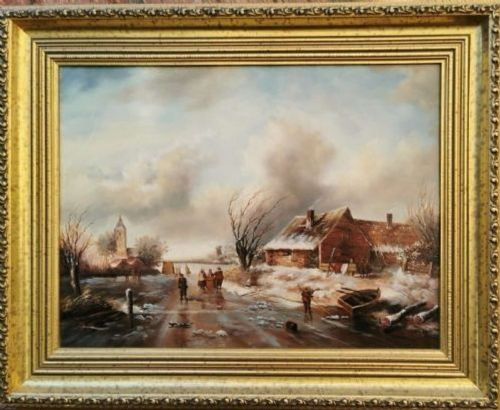
Children ice skating on frozen Dutch canals remind viewers that even chilly winter waterways provided lively community gathering spaces.
Assessing the execution
Quality rests in the handling of light on water and the accurate perspective of surrounding buildings and bridges. Stronger works demonstrate confident brushwork and depth, whereas lesser examples rely on flat application and stiff compositions.
The distinction between a standard topographical record and a superior piece lies in the artist's ability to evoke atmosphere through colour and tone.
Sir David Murray RA·Sushila Singh·Alfred Pollentine·Antonio DeVity·Richard Henry Wright·Fred Lawson·Claude Jousset·Hein Hoppmann·Marc Aldine·Antoine Bouvard Senior·E Perez Senet·Vittore Zanetti Zilla·Herbert Royle·Frank Wasley·David Law·William Knox·Wilfred Knox·GH Thompson·Ludwig Hermann·John D Walker·William Dommersen·Maud Raphael Jones
The Vintage Canal Painting Glossary
- Oil on Canvas
- Pigment mixed with a drying oil applied to a stretched woven fabric support. This combination allows for rich colour blending and textured brushwork.
- Watercolour
- Paint made with water-soluble pigments applied to paper. It produces transparent washes of colour that rely on the white of the paper for luminosity.
- Gesso
- A plaster-like mixture applied to wood or canvas as a base for painting or gilding. It creates a smooth surface for the application of gold leaf or paint.
- Giltwood
- Wood that has been coated with a thin layer of gold leaf or gold paint. It is commonly found on traditional picture frames.
- Impressionism
- A nineteenth-century art movement characterised by relatively small, thin, yet visible brush strokes and an emphasis on accurate depiction of light. Artists focused on transient effects of weather and time.
Vintage Canal Painting: Frequently Asked Questions
What periods do these paintings cover?
The works span from the nineteenth century through the mid-twentieth century, including Victorian and Edwardian examples.
Later pieces reflect mid-century impressionist approaches to urban and rural waterways.
How should I frame an antique canvas?
Many pieces retain their original gesso and giltwood frames, which suit the period of the artwork.
When replacing a frame, select one that complements the depth and weight of the canvas without overpowering the subject.
Where were these scenes painted?
Subjects focus heavily on Venetian canals, Dutch windmills, and French or British river navigations.
Artists frequently travelled to continental Europe to capture bustling quays and quiet bridges.
Are watercolours as durable as oils?
Watercolours use paper supports and require protection behind glass to prevent moisture and light damage.
Oil paintings on canvas are more robust but still benefit from stable indoor environments away from direct sunlight.