



Vintage Cafe Seating Set
These vintage cafe seating set pieces are practical dining chairs, stools, and bistro sets designed for daily hospitality and domestic use.
Vintage Cafe Seating Set
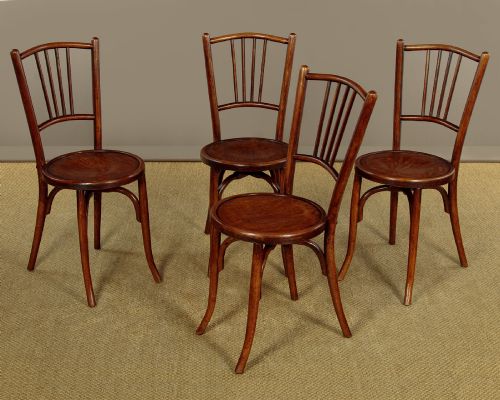
A vintage cafe seating set brings together tables and chairs intended for public dining, spanning periods from the nineteenth century through the nineteen-thirties. Buyers searching for a vintage cafe seating set will frequently encounter arrangements of bentwood dining chairs paired with tables.
The forms originate in European cafe and bistro traditions, including French bistro styles alongside Austrian and Vienna bentwood designs. Dining chairs, bistro sets, and stools form the primary object types available in this category.
How they were made
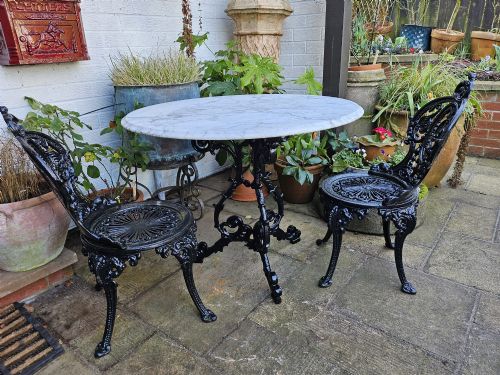
Construction relies heavily on beech, beechwood, and bentwood techniques where solid timber is steamed and pressed into curved frames. Plywood is utilised for seat panels, while robust cast iron provides the structural bases for tables.
Additional surfaces incorporate marble tops, and certain seating examples feature fabric upholstery. These materials combine to create durable furniture suited to the heavy demands of commercial hospitality environments.
Vintage Cafe Seating Set Retail Price Guide 2026
Typical asking prices for vintage cafe seating set among the pieces listed under this phrase on Sellingantiques today, from the lower quarter to the upper quarter. They describe what is for sale here now, not the wider market.
The inventory includes dining chairs, stools, and complete bistro table sets dating from the nineteenth century to nineteen-thirty.
What varies in quality
Quality separates through the purity of the steam-bent timber curves and the integrity of the original joints. Sets bearing maker attributions from established workshops command greater interest than anonymous workshop output.
The refinement of cast iron table bases and the selection of marble grades dictate the overall finish of the set. Consistency across matched groupings alters the desirability of the arrangement.
Codina·Thonet·J & J Kohn
The Vintage Cafe Seating Set Glossary
- Bentwood
- Wood softened by steam and bent into curved structural forms. This technique defines the lightweight yet sturdy frames characteristic of traditional cafe furniture.
- Bistro set
- A matched combination of a small table and supporting chairs designed for compact dining. These configurations trace their origins to French café culture.
- Cast iron
- Iron poured into a mould to create rigid, heavy structural components. This material provides stable pedestal bases for cafe tables.
- Art Nouveau
- A decorative style characterised by fluid, organic plant lines. Pieces from this period exhibit graceful, curving motifs in their woodwork.
Vintage Cafe Seating Set: Frequently Asked Questions
How many chairs come in a set?
Sets vary in size from small groupings of three or four chairs up to larger collections of ten or twelve pieces. Tables are typically included with matched seating.
Buyers should check individual listings to confirm the exact quantity of chairs supplied with each specific table.
Are these sets suitable for outdoor use?
Cast iron and certain treated timbers endure occasional outdoor conditions, but historical materials require careful protection from moisture. Most pieces were built for interior cafe environments.
Using vintage seating outdoors demands sheltered placement to preserve the wood and marble surfaces.
What periods do these pieces date from?
The available pieces span the nineteenth century, Edwardian era, Art Nouveau, and Art Deco periods up through the nineteen-thirties. Victorian country and bistro styles also appear across the inventory.
Design characteristics and maker marks help distinguish the exact manufacturing decade of each set.
How do I identify a Thonet set?
Thonet pieces display characteristic steam-bent beech construction with stamped manufacturer marks on the underside of the seats. The framing utilises minimal hardware through advanced wood-bending methods.
Comparing the curvature and joint construction against known nineteenth-century catalogues confirms authenticity.