


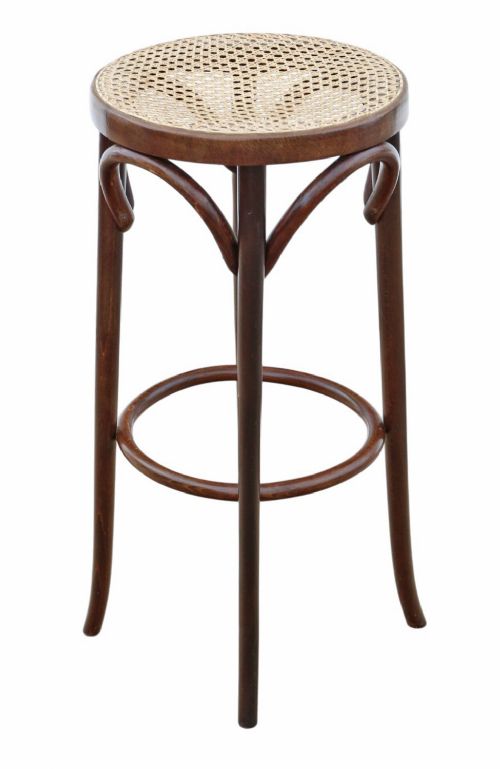


Kitchen Island Bar Stools
Kitchen island bar stools are practical high seating options offering robust timber or metal construction for domestic culinary spaces.
Kitchen Island Bar Stools
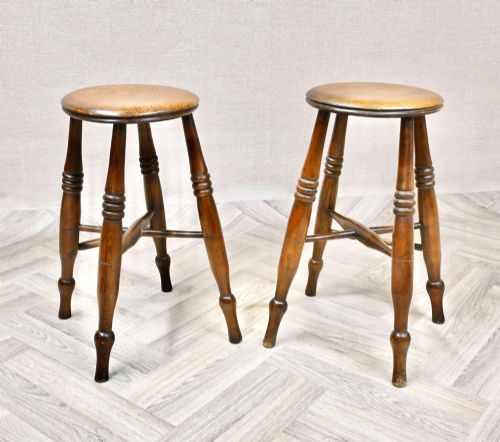
Kitchen island bar stools bring elevated seating into domestic spaces, drawing on designs originally built for utilitarian and commercial settings. When searching for kitchen island bar stools, buyers encounter tall forms designed specifically for raised counters and breakfast bars.
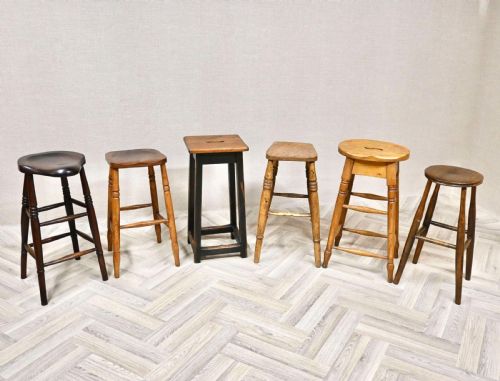
The selections on this page span the nineteenth century through the 1930s, encompassing industrial metal work and traditional timber construction. Most examples lean towards rustic country, farmhouse, and industrial aesthetics, reflecting their practical origins.
How they were made
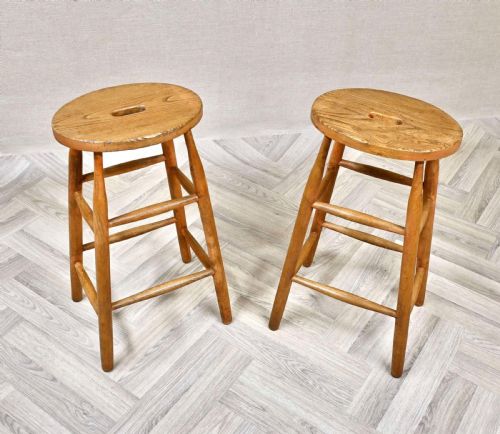
Makers utilised solid timbers such as beech, pine, elm, and oak to construct the wooden frames, often shaping seats for comfort and turning legs on a lathe. These woods provided the necessary durability for daily use in domestic and workshop environments.
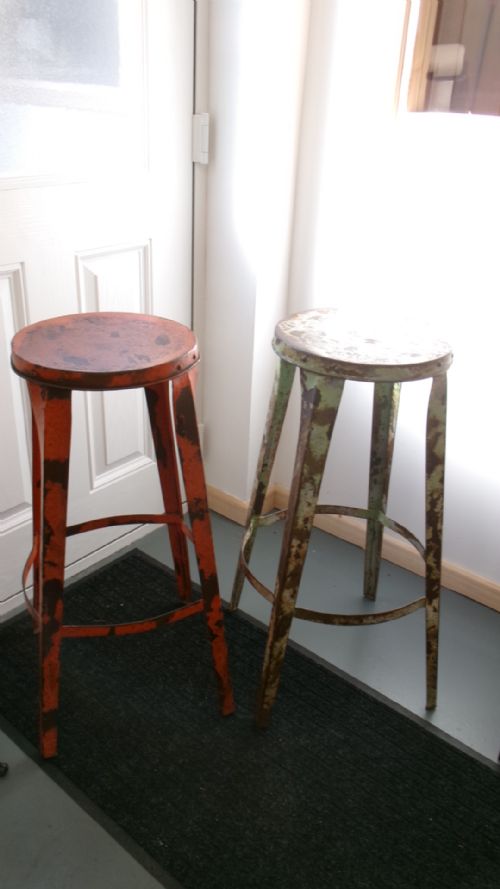
Industrial variants incorporate steel and iron, featuring riveted joints that demonstrate robust engineering suited to heavy commercial tasks. Bentwood techniques also appear, employing steam to bend timber into curved profiles for Vienna-style seating.
Kitchen Island Bar Stools Retail Price Guide 2026
Typical asking prices for kitchen island bar stools among the pieces listed under this phrase on Sellingantiques today, from the lower quarter to the upper quarter. They describe what is for sale here now, not the wider market.
Listings feature items spanning the nineteenth century up to the 1930s, using beech, pine, elm, oak, steel, and iron.
What varies in quality
Quality rests in the integrity of the construction, where tightly joined joints and well-seasoned timbers determine whether a stool remains stable under regular use. Heavy-gauge iron and steel rivets indicate sturdier industrial manufacturing compared to lighter, purely decorative alternatives.
The distinction between ordinary utility items and finer pieces lies in the subtlety of the turning on wooden legs and the careful shaping of solid wooden seats. Patina accumulated through decades of honest use adds character that newly manufactured replicas cannot replicate.
The Kitchen Island Bar Stools Glossary
- Bentwood
- A technique where strips of wood are steamed and bent into curved shapes. This method creates lightweight yet resilient frames.
- Vernacular
- Everyday objects designed for practical utility by local makers rather than following strict high-style academic rules. These pieces prioritise function above ornament.
- Riveted
- A method of joining metal plates or components using metal bolts hammered flat at the end. This provides permanent strength in industrial furniture.
- Patina
- The surface sheen and colour developed over years of handling, polishing, and natural wear. It serves as a visual record of an object's age.
Kitchen Island Bar Stools: Frequently Asked Questions
Are these stools comfortable for daily dining?
Many feature shaped wooden seats designed for extended sitting.
Industrial metal versions offer sturdy platforms but often benefit from custom cushions.
How do I match them to my counter height?
Measure the height from the floor to the underside of your counter before selecting.
Tall bar stools require adequate leg clearance beneath the surface.
Can I mix different wood types together?
Combining pine, beech, and oak creates an eclectic, collected interior look.
Shared utilitarian forms help unify disparate pieces around an island.
How do I clean antique wooden stools?
Use a soft dry cloth to remove dust and apply occasional beeswax to nourish the timber.
Avoid harsh chemical cleaners that strip the historic surface finish.