

Vintage Cabochon Dress Ring
A vintage cabochon dress ring sets a smooth, unfaceted stone in gold, silver, or platinum to command attention on the hand.
Vintage Cabochon Dress Ring
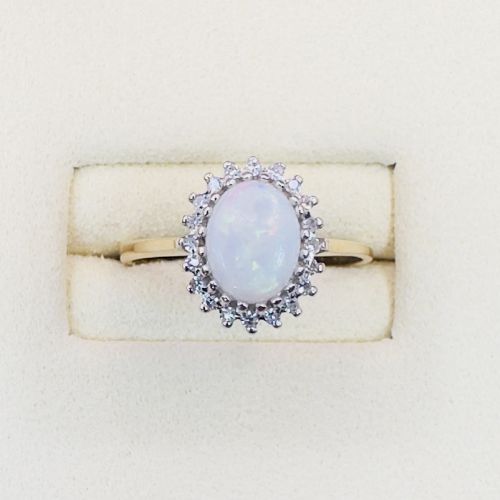
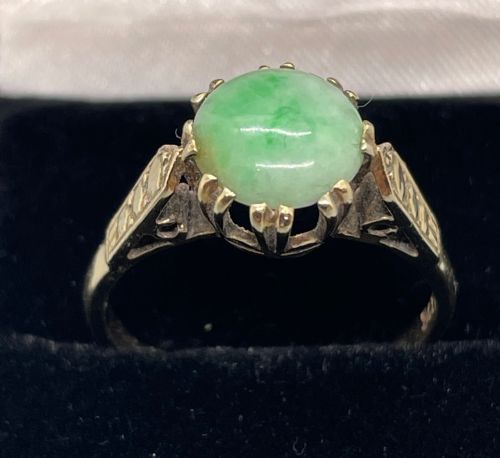
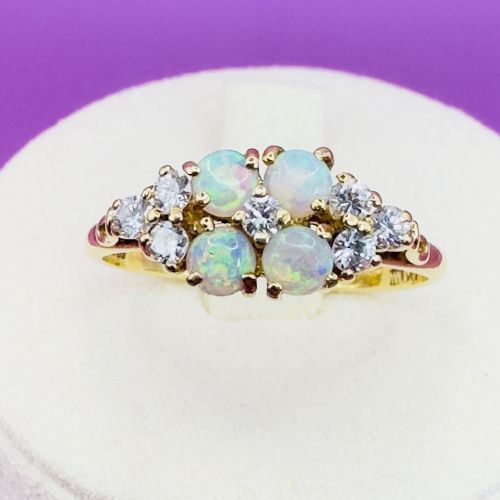
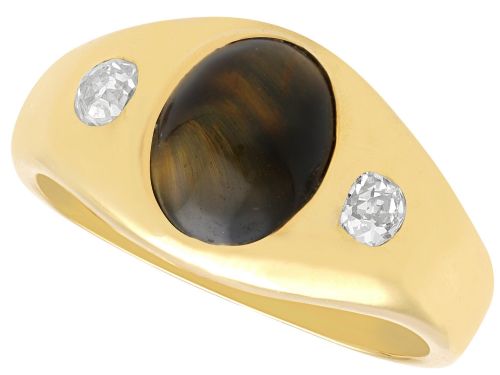
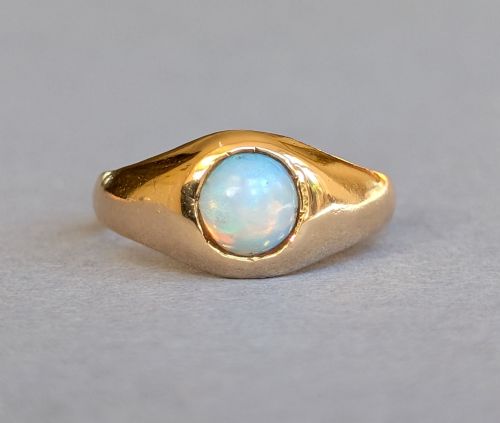
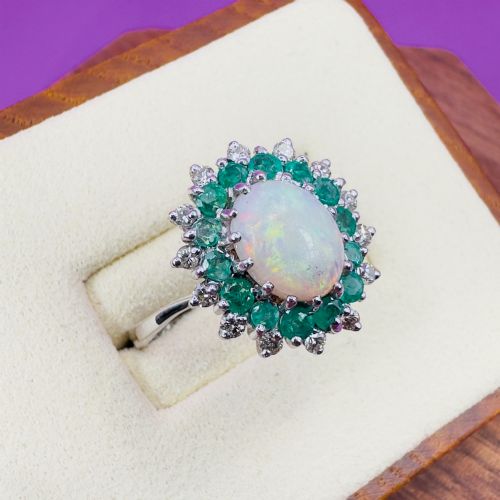
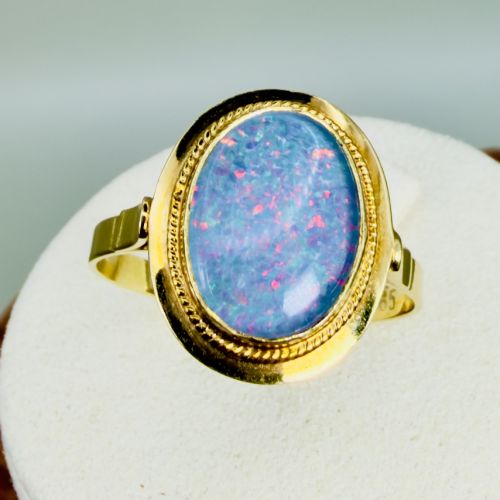
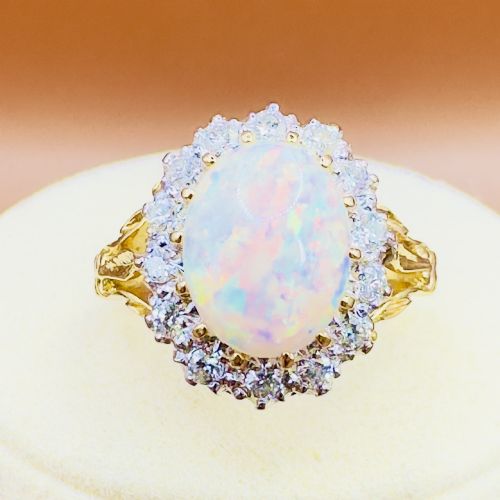
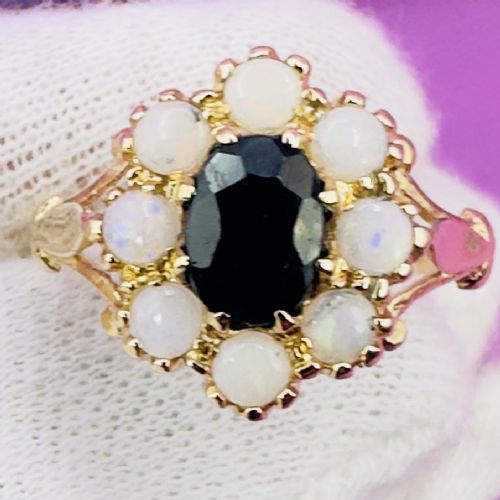
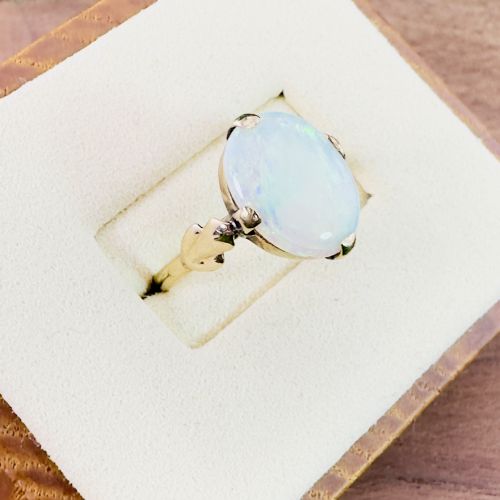
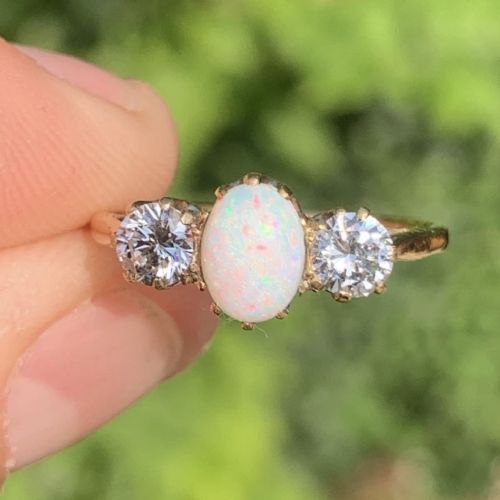
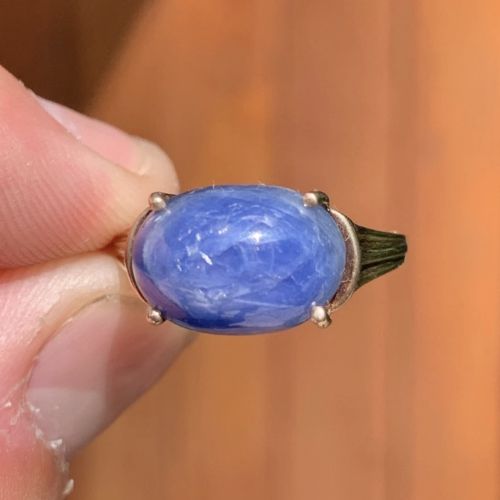
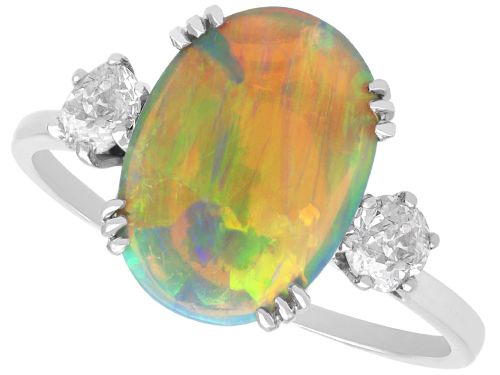
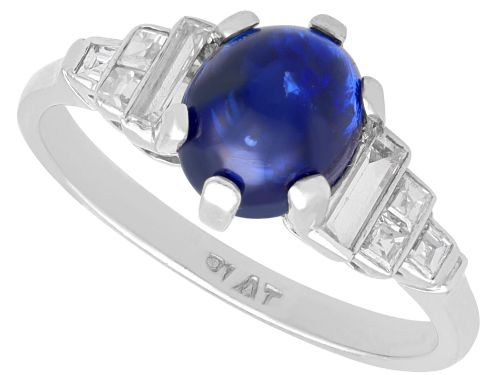
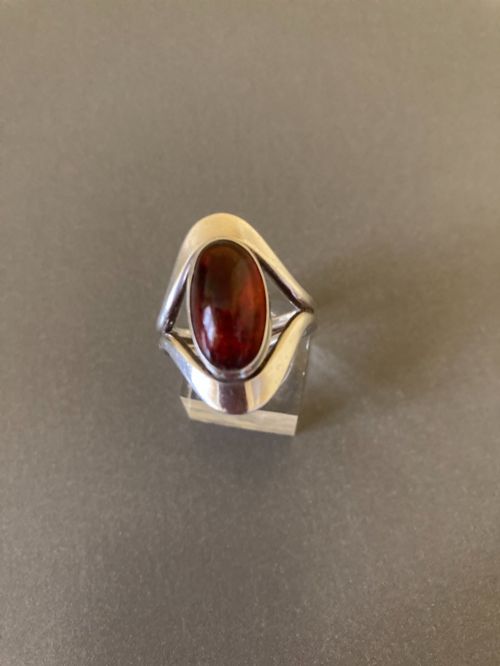
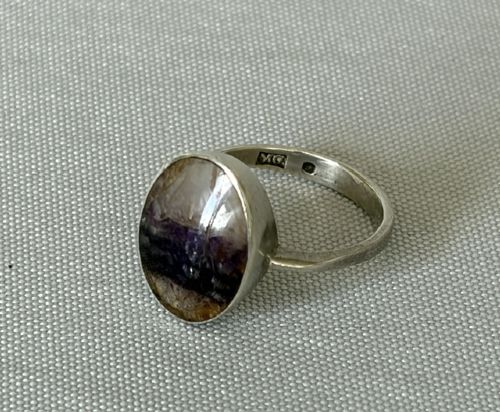
A vintage cabochon dress ring uses a polished, rounded gemstone rather than a faceted cut, highlighting the natural optical phenomena of the material. These pieces appear across Victorian, Edwardian, Art Deco, and mid-century periods, taking forms from simple solitaires to elaborate multi-stone clusters and boat rings.
Opal, moonstone, turquoise, jade, and star sapphire dominate the selections here, often paired with supporting diamonds in platinum or gold settings. Buyers encounter everything from delicate Edwardian turquoise pieces to substantial mid-century cocktail rings bearing large amethyst or boulder opal centre stones.
Materials and construction
Goldsmiths set smooth-domed stones into bezels, claws, or robust gold and platinum mounts, frequently employing 9ct and 18ct yellow, rose, or white gold. The construction balances the physical demands of high-domed cabochons with intricate decorative work like gallery wire and diamond shoulders.
The technique relies on shaping and polishing the gemstone into a smooth convex form that maximises internal colour play or asterism. Metalwork frames these organic contours securely, utilising yellow gold for warmer historical aesthetics and platinum or white gold for mid-century brightness.
Vintage Cabochon Dress Ring Retail Price Guide 2026
Typical asking prices for vintage cabochon dress ring among the pieces listed under this phrase on Sellingantiques today, from the lower quarter to the upper quarter. They describe what is for sale here now, not the wider market.
Listings span periods from Victorian craftsmanship through to mid-century modernism, utilising opal, turquoise, jade, and star sapphire.
Variations in quality
Quality rests in the optical character of the cabochon itself, such as the play of colour in an opal or the sharp light ray of a star sapphire. Superior examples display vibrant internal depth and secure, well-balanced settings that complement the stone's natural profile.
Construction weight and the harmony between the central stone and surrounding diamonds distinguish finer specimens from standard production. Substantial gold or platinum weights and careful bezel work elevate a piece above simpler commercial mounts.
The Vintage Cabochon Dress Ring Glossary
- Cabochon
- A gemstone shaped and polished with a smooth, rounded dome rather than faceted edges. This ancient cutting style suits opaque or translucent stones to display internal patterns or light effects.
- Boat ring
- A ring featuring a curved, navette-shaped setting that resembles the hull of a boat. This silhouette often accommodates a central cluster of stones flanked by smaller gems.
- Asterism
- An optical phenomenon displayed by certain stones, such as star sapphires, where light creates a star-shaped pattern across the cabochon surface. This effect requires precise cutting aligned with the crystal structure.
- Solitaire
- A mounting designed to hold a single gemstone as the focal point of the ring. It allows the character of the cabochon to remain uninterrupted by secondary stones.
Vintage Cabochon Dress Ring: Frequently Asked Questions
How do I care for my ring?
Care depends entirely on the specific gemstone set into the mounting, as softer stones require gentle handling. Many cabochons, such as opals and turquoise, are porous and sensitive to harsh chemicals or ultrasonic cleaners.
Store your ring separately from harder jewellery to prevent scratching, and clean it gently with a soft, damp cloth when needed.
How do I date a vintage dress ring?
Dating relies on a combination of stylistic clues, metal types, and hallmark evidence where present. Edwardian and Victorian pieces often feature delicate filigree or yellow gold boat settings, while mid-century designs frequently utilise white gold or platinum with bolder geometric lines.
Examining the claw work, gallery construction, and any assay office stamps helps narrow down the decade of manufacture.
Are all opals the same?
Opals vary widely in their body colour, transparency, and internal play of colour. The listings feature white opals, black opals, and boulder opals, each originating from different geological environments.
Some display flashes of red and green across a dark matrix, while others present soft milky blues and greens with subtle fire.