

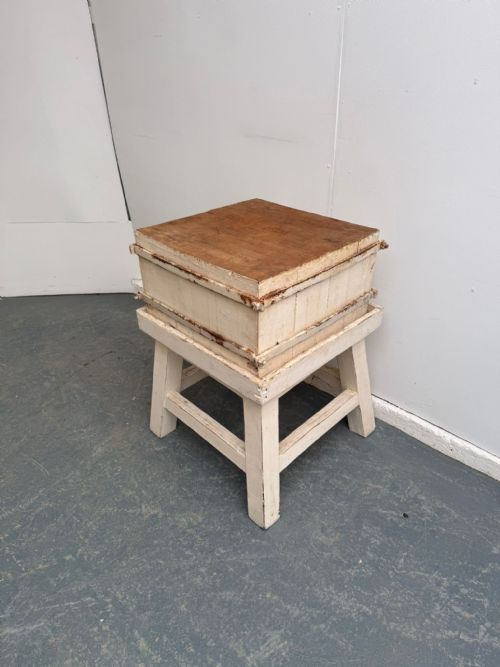


Vintage Butchers Chopping Table
A vintage butchers chopping table brings heavy timber utility and working heritage straight into a modern kitchen space.
Vintage Butchers Chopping Table
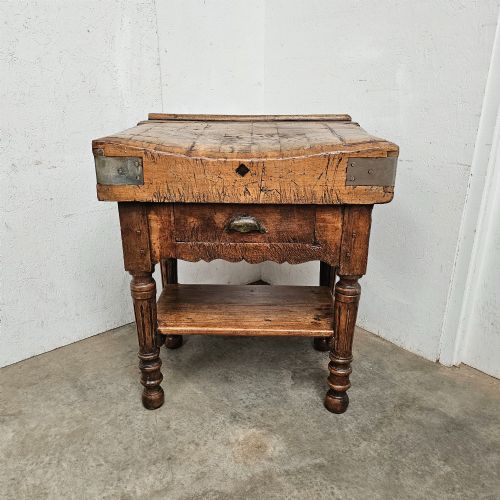
A vintage butchers chopping table combines industrial practicality with honest domestic utility, serving as a striking kitchen island, side table or central workspace. These pieces emerge primarily from the nineteenth century and the early twentieth century, spanning Victorian, Edwardian and mid-century eras.
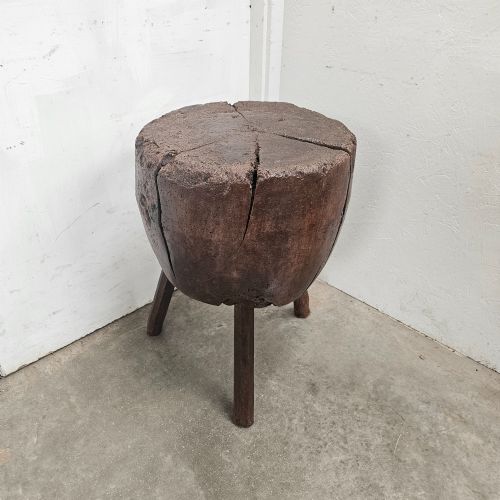
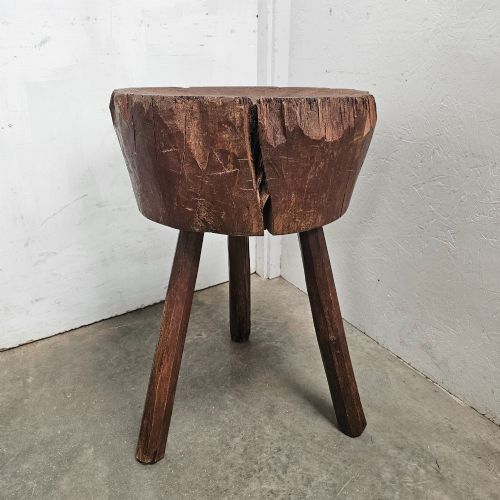
Most examples found here hail from French provincial workshops or Hungarian origins, presenting as solid tree trunk chopping blocks, game blocks or freestanding kitchen islands. They appear both as heavy standalone blocks and on decorative bases, stands or tripod frames.
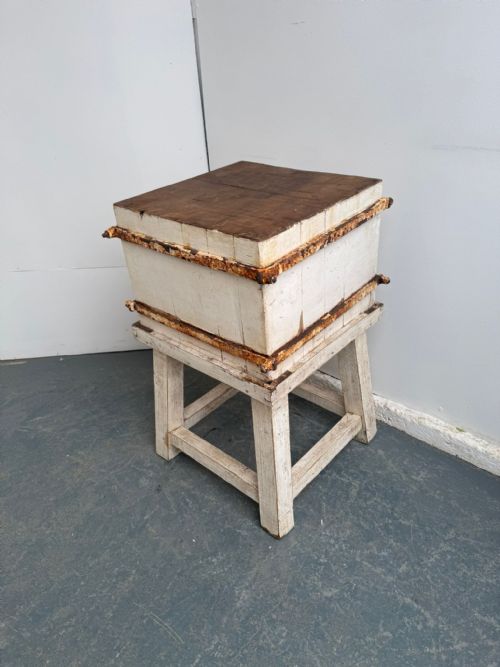
Buyers will encounter various forms, from simple primitive country blocks to large painted Victorian tables fitted with metal or iron mounts. They reflect genuine working origins rather than decorative reproduction efforts.
Materials and construction
Makers built these pieces using dense hardwoods such as beech, oak, elm and general hardwood alongside softer timbers, metal, iron and paint. Beech and oak predominated for the heavy tops, able to endure the constant force of a cleaver.
Construction relies on sheer mass and straightforward joinery, often utilising thick end-grain timber bound together or fashioned straight from a substantial tree trunk. Bases range from simple wooden legs to decorative cast iron or bronzed mounts.
Some French game blocks preserve the exact axe marks left by nineteenth-century country butchers preparing venison.
Assessing quality and character
Quality rests in the density of the timber, the integrity of the original base and the depth of the working patina accumulated over decades. Heavy tree trunk sections and thick beech tops demonstrate superior heft.
The distinction between a standard workshop block and a finer piece often lies in the base, whether a simple timber stand or an elaborate decorative iron frame with bronze mounts.
Hennes France
The Vintage Butchers Chopping Table Glossary
- Game block
- A specialised heavy chopping block traditionally used for preparing game birds and venison in French country kitchens. These often feature thick tree trunk construction.
- End-grain
- The surface formed when timber is cut across the growth rings, providing a self-healing chopping surface that resists deep knife scars. This is standard for heavy blocks.
- Tripod base
- A three-legged support structure sometimes fitted beneath circular hardwood blocks for stability on uneven stone floors.
- Primitive country
- A style designation denoting vernacular furniture made by local craftsmen for utility rather than adherence to formal design canons.
Vintage Butchers Chopping Table: Frequently Asked Questions
How do I clean a vintage butchers chopping table?
Maintain the surface by scraping away debris and wiping with a damp cloth and mild soap. Avoid soaking the timber in water to prevent splitting.
Treat the wood periodically with food-safe mineral oil to nourish the dry grain and preserve the historic finish without sealing it unnaturally.
Are these tables suitable for daily food preparation?
Most pieces retain their original thick timber working surfaces, which can be sanded and oiled for food use. Consider whether the patina and age fit your culinary habits.
Many buyers choose to use modern boards on top of historic game blocks to protect the original surface while enjoying the visual presence in the kitchen.
How do I date a vintage butchers chopping table?
Dating relies on construction methods, tool marks, timber shrinkage and the style of any supporting base or iron mounts. Nineteenth-century examples often show hand-hewn surfaces.
Mid-century pieces from the nineteen-fifties typically feature standardised hardware and cleaner machine-cut lines compared to earlier French provincial or Victorian variants.
Can I place a heavy block on normal kitchen flooring?
These tables possess immense weight due to the solid hardwood construction, so check your floor load capacity if placing an exceptionally large tree trunk block. Use protective felt pads under iron bases to prevent scratching timber or tile floors when positioning the piece.