
Vintage Bureau
A vintage bureau provides a compact workspace that folds away neatly when the writing is done.
Vintage Bureau
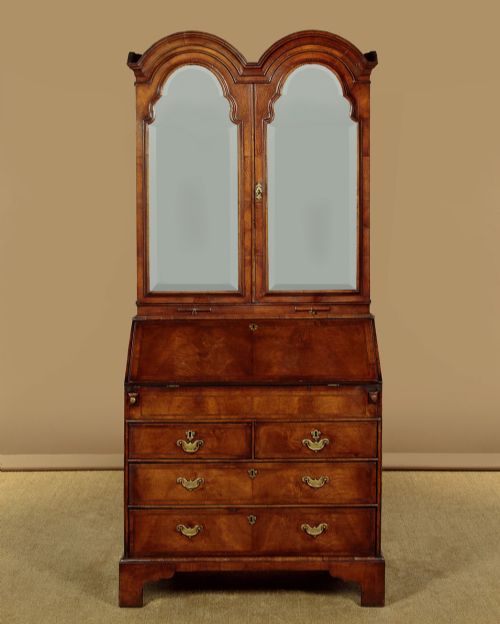
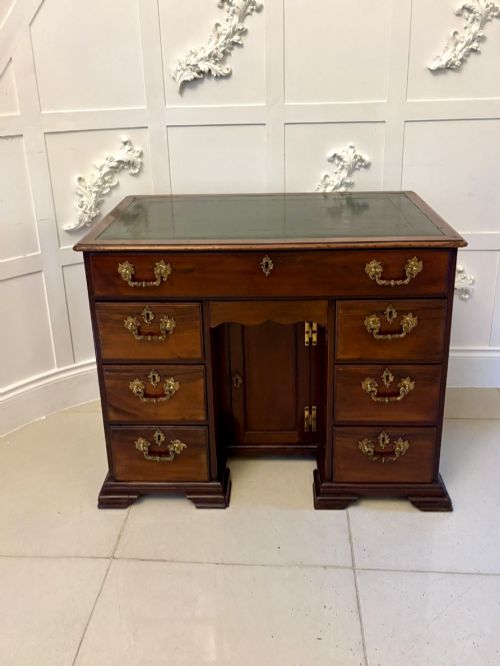
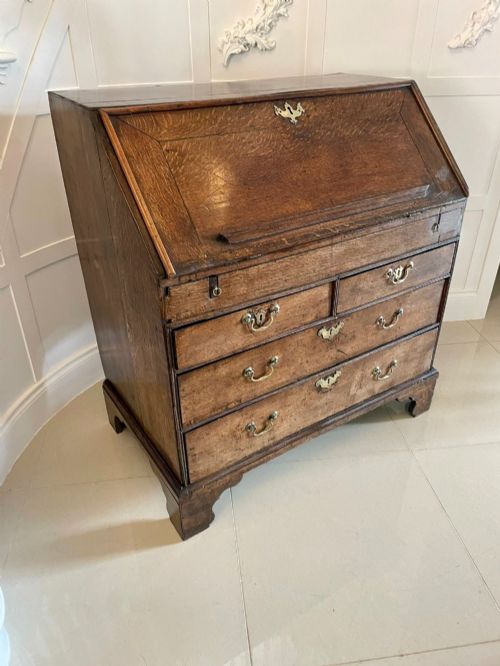
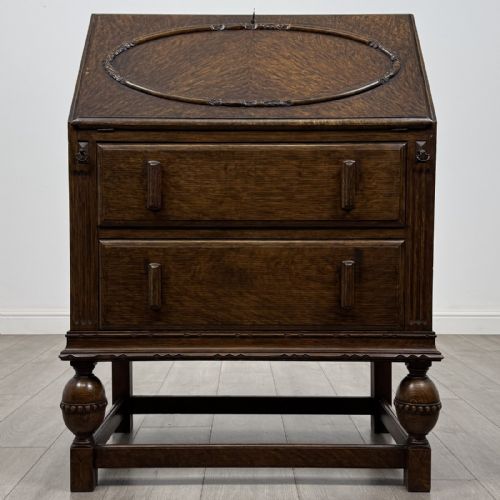
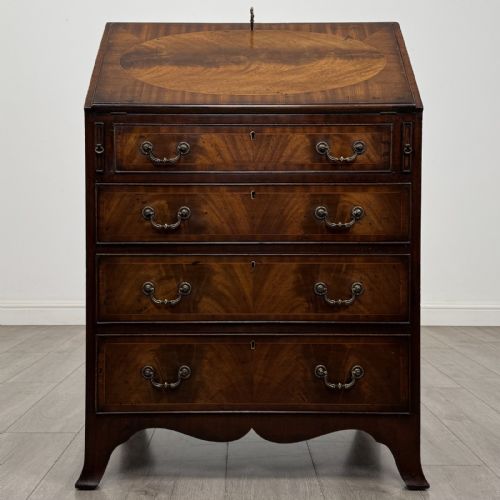
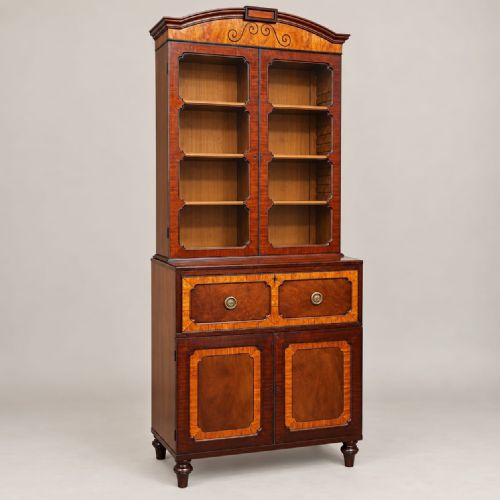
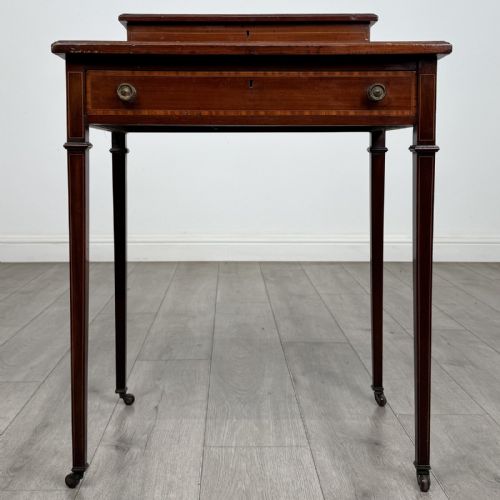
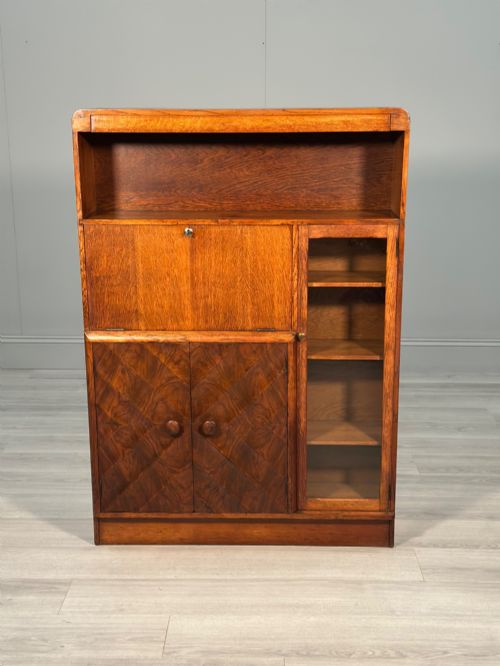
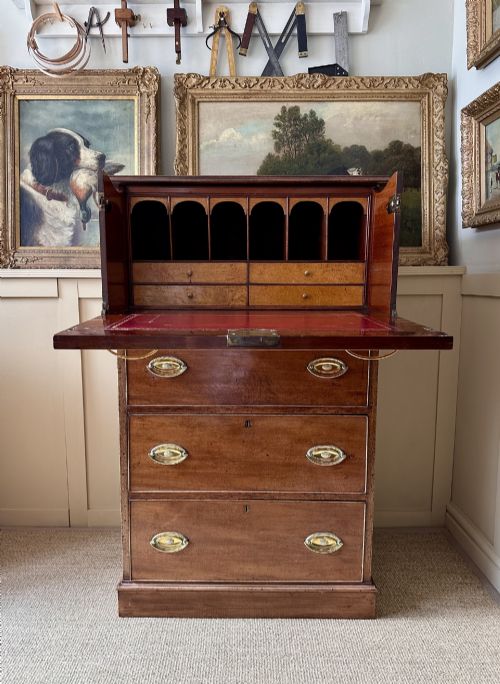
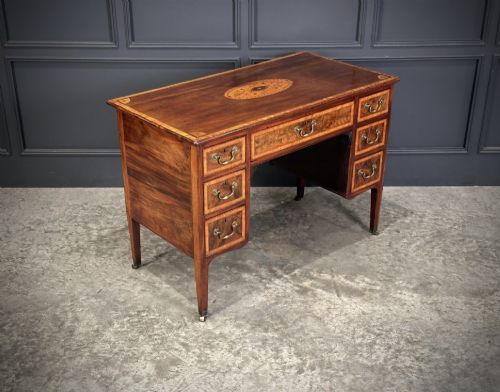
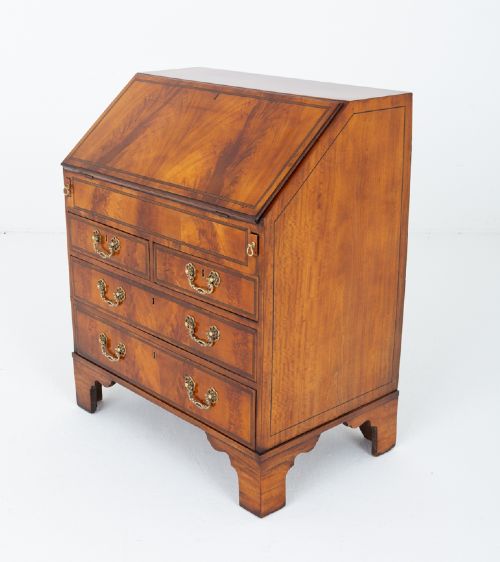
When you search for a vintage bureau, you are looking at fitted writing furniture that combines a sloped fall-front flap with internal pigeon holes and drawers. These pieces range from substantial bureau bookcases to compact writing desks designed for domestic studies and parlours.
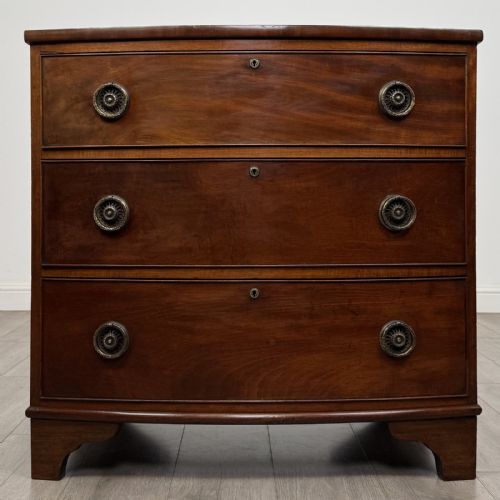
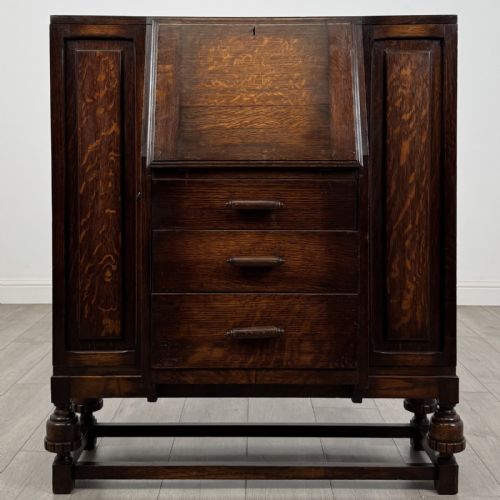
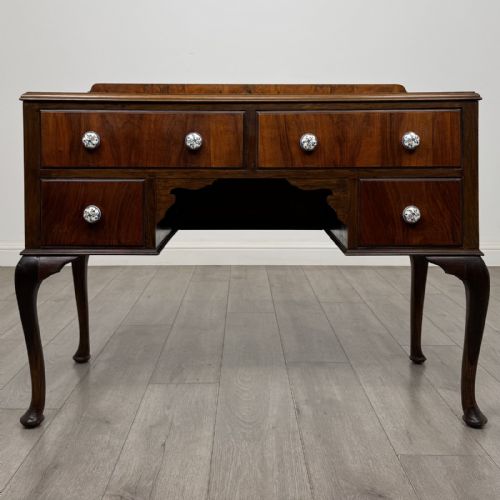
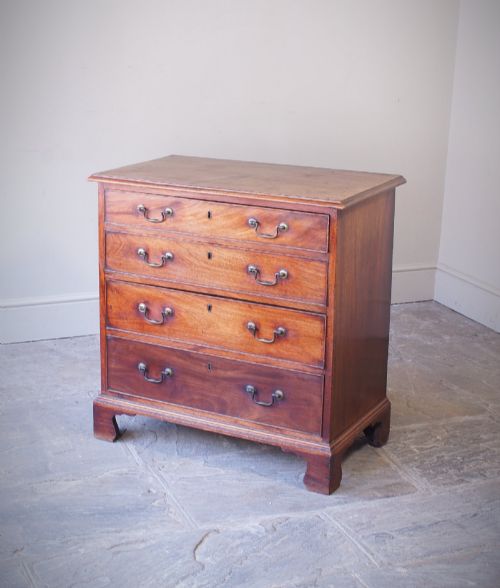
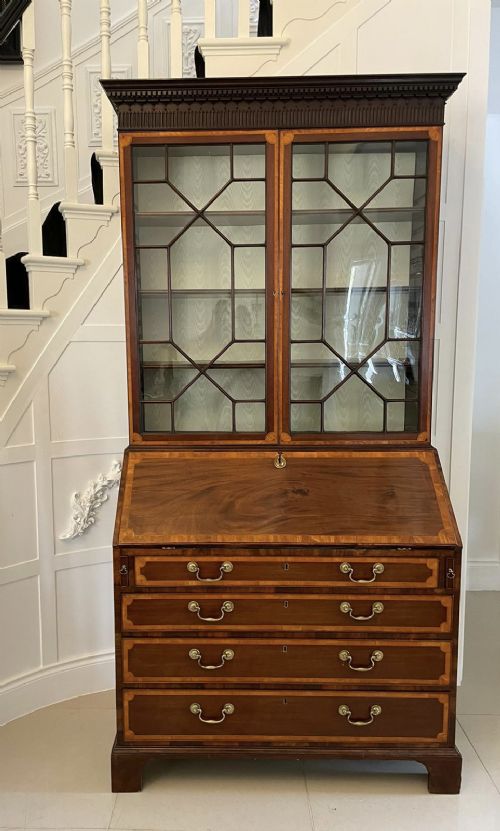
The versions you are most likely to meet on this page date from the Edwardian era, the Victorian period, and the 1930s, constructed in oak, mahogany, and walnut. Many feature fitted interiors with small drawers, while others incorporate side cupboards or upper bookcase sections with glass doors.
Makers and designers of various periods adapted these writing cabinets into regional forms, from golden oak Arts and Crafts examples to inlaid satinwood and mahogany pieces influenced by Georgian and Sheraton styles.
How they were made
Cabinet makers utilised solid timbers alongside veneered surfaces, applying mahogany, walnut, oak, and satinwood over secondary woods. Marquetry and string inlay added decorative contrast to drawer fronts and writing flaps.
Structural hardware relied on brass handles, key escutcheons, and hinges to secure drop-front desks and pigeon hole compartments. Glazed upper sections used wooden astragal bars to hold individual panes of glass in place.
Carved detailing, claw and ball feet, and cabriole legs appeared on Edwardian and Victorian iterations, reflecting period revivals of earlier stylistic traditions.
Listings feature oak, mahogany, walnut, and satinwood across periods from the 18th Century through the Art Deco era.
What varies in quality
The selection of timber grain largely separates standard production from superior pieces, particularly in figured walnut, flame mahogany, and matched satinwood veneers. Finer items display continuous grain patterns across drawer banks and fall-front panels.
Internal joinery and secondary wood selection indicate the standard of construction, visible in the dovetailing of small stationery drawers and the fitting of pigeon hole partitions. Superior examples incorporate secondary woods like oak or mahogany throughout the interior framework.
The precision of inlaid details, brass hardware quality, and the stability of drop-front hinges distinguish workshops of high repute from more utilitarian commercial outputs.
E Gomme·Edwards & Roberts·Gillows
The Vintage Bureau Glossary
- Bureau
- A writing desk featuring a sloping fall-front flap that opens to reveal a fitted interior of small drawers and pigeon holes. They often sit atop a chest of drawers or a cupboard base.
- Fall-front
- The hinged writing flap on a bureau that drops down to a horizontal position to provide a surface for penmanship. When closed, it conceals the inner compartments.
- Pigeon hole
- A small, open compartment within a bureau interior used for sorting letters, papers, and stationery. They form part of the fitted wooden nest behind the fall-front.
- Secretaire
- A cabinet or chest of drawers containing a pull-out writing drawer or drop-front desk compartment. These hybrid forms combine storage capacity with a dedicated workspace.
- Astragal
- A moulded wooden strip used to divide panes of glass within a bookcase door. They create geometric patterns across upper cabinet sections.
- Parquetry
- Geometric wood mosaic work used for decorative surface patterns on tabletops and desk panels. Artisans arrange contrasting timber veneers to form repeating motifs.
Vintage Bureau: Frequently Asked Questions
How do I use a bureau?
Lower the hinged fall-front flap to rest horizontally on its support arms, revealing the internal writing surface and pigeon holes. This provides an enclosed area for correspondence that can be shut away when not in use.
Papers and writing instruments store neatly within the internal compartments behind the closed flap, keeping domestic workspaces tidy.
How do I date a bureau?
Examine the secondary timbers inside the drawers, the style of the brass hardware, and the construction methods used for the dovetails. Hand-cut dovetails and solid primary woods often point to earlier craftsmanship, while machine production indicates later periods.
Stylistic markers such as Edwardian inlaid stringing, Art Deco veneer choices, or Georgian bracket feet help assign pieces to specific decades.
Where should I place a bureau?
Position your bureau against a sturdy wall with adequate clearance in front for the drop-front flap to open fully. Ensure the writing surface receives sufficient natural or artificial light from the side.
Avoid placing antique wooden furniture in direct sunlight or near active heat sources to protect the polished timber and veneer surfaces.