
Vintage Buffet
These vintage buffet selections bring robust dining room storage and surface utility into domestic spaces.
Vintage Buffet
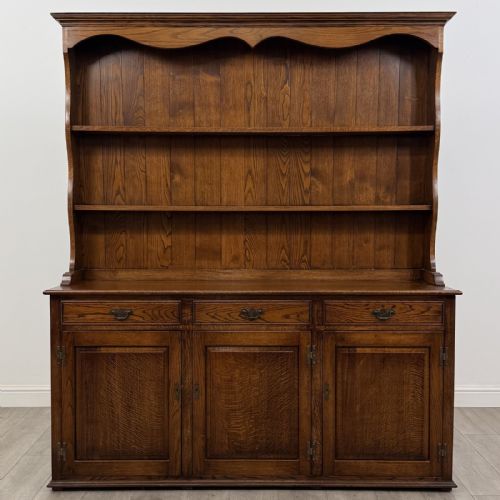
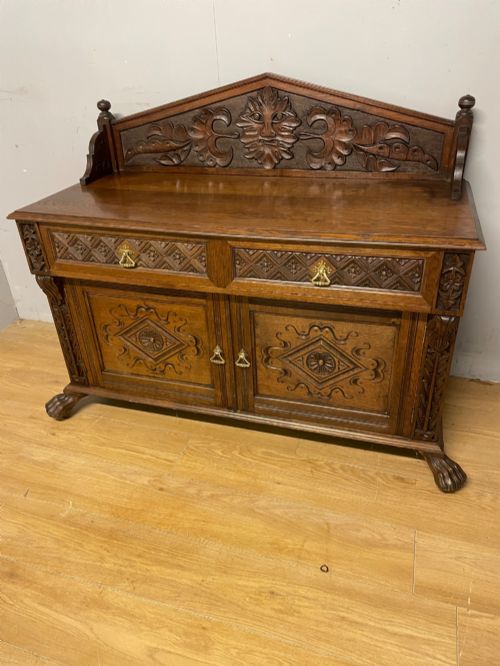
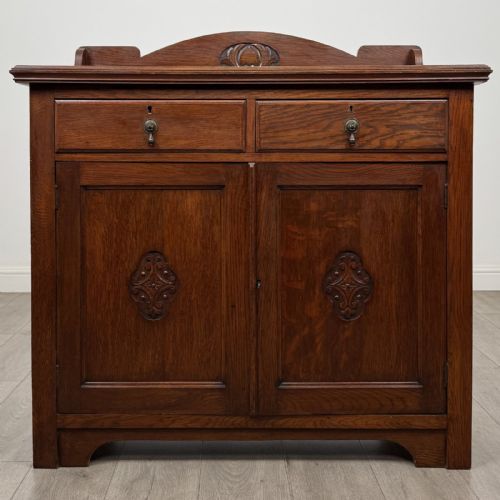
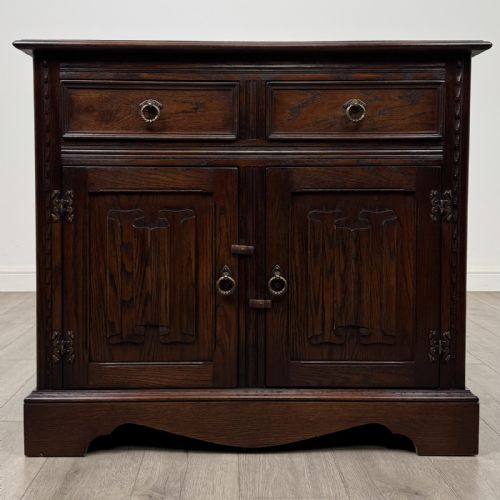
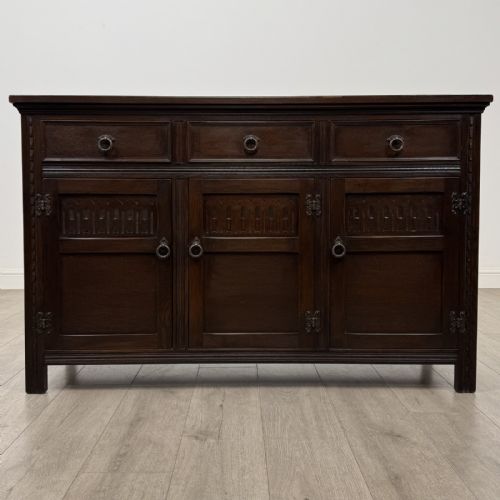
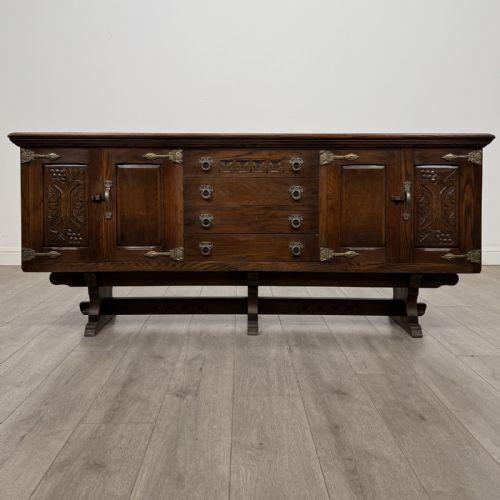
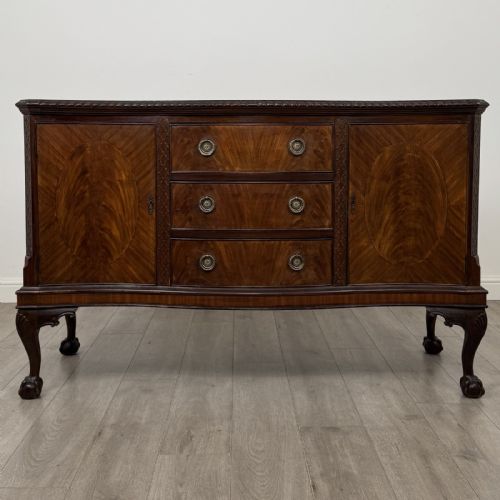
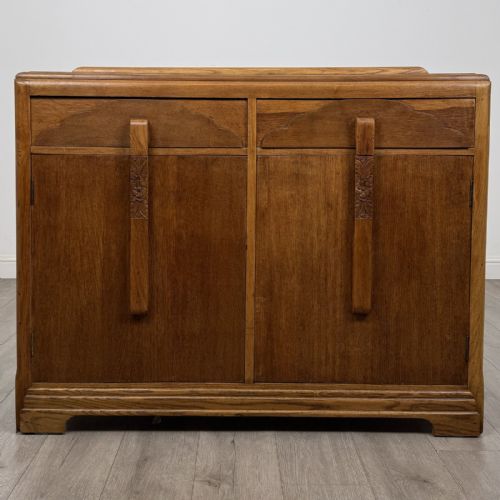
A vintage buffet serves as a substantial storage piece primarily found in dining spaces, often catalogued alongside sideboards, credenzas, and dresser bases. These items provide practical surface space and enclosed compartments for dining utensils and tableware.
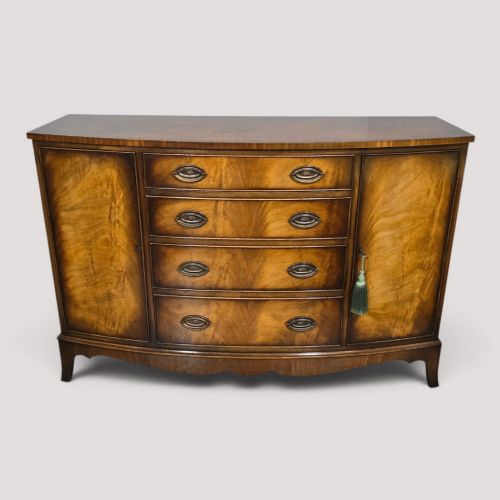
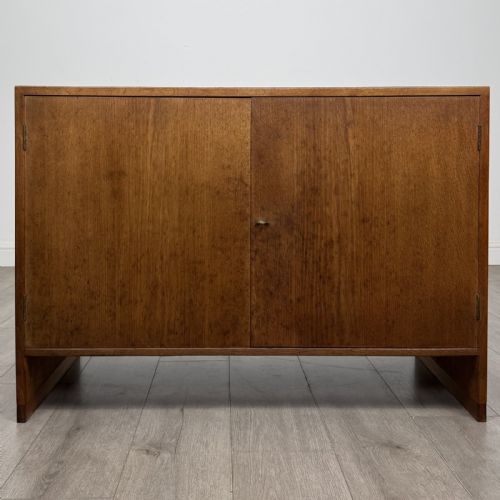
Oak and mahogany versions dominate the available selections, frequently appearing alongside walnut, burr walnut, and pine variants. Buyers encounter styles spanning Edwardian, Victorian, Art Deco, and Georgian periods.
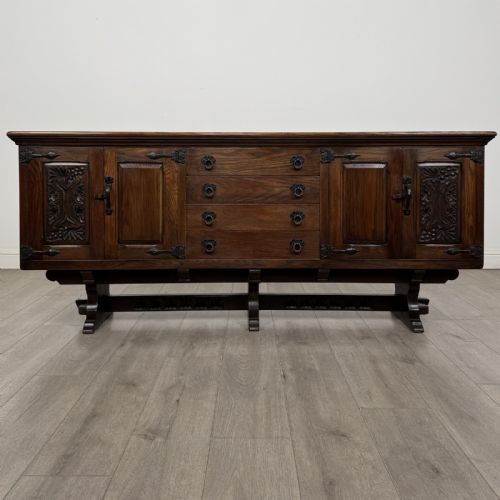
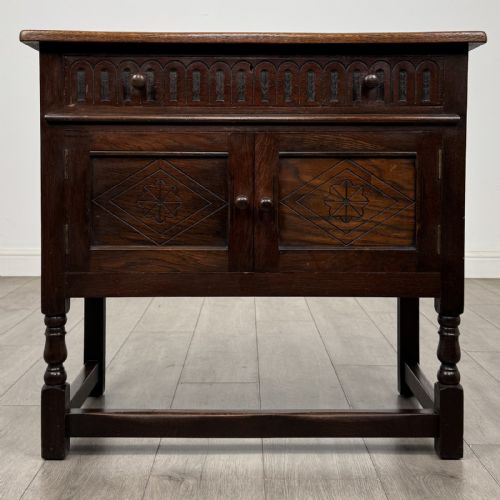
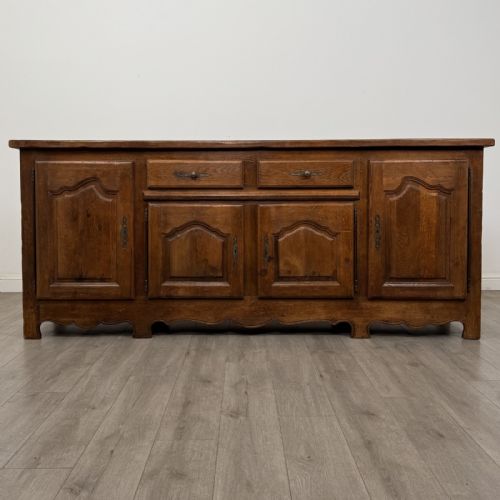
Forms range from large four-door oak cupboards and carved enfilades to compact mirror-back sideboards and dresser bases. The assortment includes regional English pieces alongside French and Scandinavian examples.
Materials and Construction
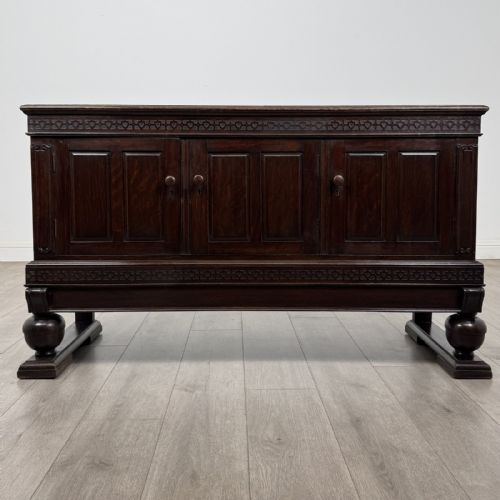
Cabinet makers utilised solid hardwoods such as oak, mahogany, and walnut to build these functional storage pieces. Timber surfaces often display carved detailing, linenfold panels, or figured grains.
Brass handles, iron fittings, and glass elements complement the wooden structures. Marble tops appear on specific continental enfilades, adding durable preparation surfaces to the heavy oak frames.
Listings feature oak, mahogany, burr walnut, and pine items spanning the 18th, 19th, and 20th centuries.
Assessing Quality and Execution
Superior examples demonstrate meticulous hand-carved detailing, balanced proportions, and careful timber selection, such as figured mahogany or burr walnut. Finer pieces incorporate period-correct hardware like brass handles and distinct foot designs including claw and ball or cabriole legs.
Construction methods determine longevity, separating robust dovetailed drawers and solid stretcher bases from simpler assemblies. The clarity of period styling, from Art Deco geometric lines to Jacobean Revival carvings, indicates the original workshop standard.
Charles Dudouyt
The Vintage Buffet Glossary
- Enfilade
- A long sideboard or cabinet with multiple doors, commonly associated with French dining furniture. This form provides extended surface space and deep interior storage.
- Dresser base
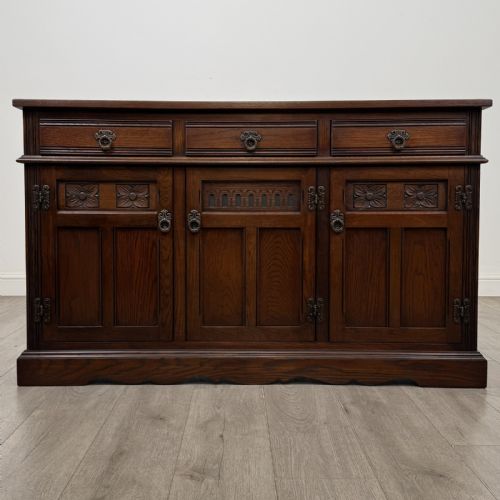
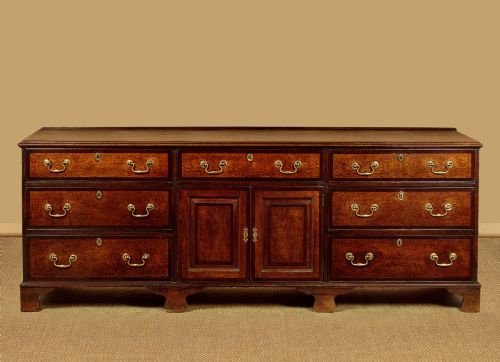
- A lower kitchen or dining cabinet featuring drawers above enclosed cupboards. These items originate from vernacular English and continental traditions.
- Serpentine shaped
- A cabinet front featuring a curved design with a convex centre flanked by concave sides. This technique requires skilled carpentry to shape solid hardwoods.
- Raised gallery
- An elevated decorative backboard attached to the top rear of a sideboard or cabinet. It prevents items from sliding off the surface.
- Linenfold
- A style of wood carving that mimics folded fabric. It frequently decorates the panels of oak cupboards and cabinets from various periods.
Vintage Buffet: Frequently Asked Questions
Where should I place a buffet?
Buffets function best in dining rooms or large kitchens against a primary wall. They offer convenient surface space for serving food and storing tableware close to the dining table.
Ensure adequate clearance around the piece for doors and drawers to open fully. Placing a mirror or artwork above the raised gallery completes the arrangement.
How do I identify Art Deco pieces?
Art Deco buffets feature streamlined geometric forms, symmetrical layouts, and distinctive golden oak or exotic wood veneers. They frequently omit heavy Victorian ornamentation in favour of clean architectural lines.
Details such as stepped galleries or stylised handles help distinguish these items from earlier Edwardian or Georgian designs.
What is a dresser base?
A dresser base is a low wooden cabinet containing multiple drawers and lower cupboards without the upper plate rack. These sturdy items served practical food preparation and storage functions in historic kitchens.
Solid oak and pine versions display regional craftsmanship, ranging from long Cheshire pieces to French provincial enfilades.
How do I care for wooden surfaces?
Maintain timber surfaces by dusting regularly with a soft cloth and applying appropriate beeswax periodically. Avoid placing wooden cabinets in direct sunlight or near heat sources to prevent timber splitting.
Protect marble tops on continental enfilades from acidic liquids by using coasters and mats during daily use.