

Vintage Brown Bedroom Chest
A vintage brown bedroom chest provides essential storage while anchoring a room with rich wood tones and historic character.
Vintage Brown Bedroom Chest
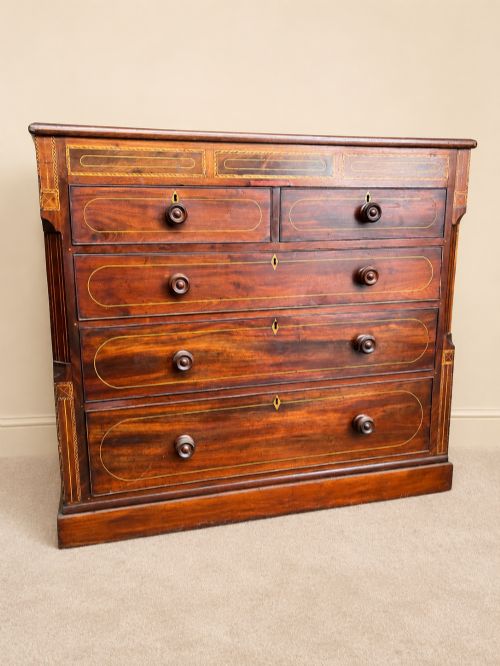
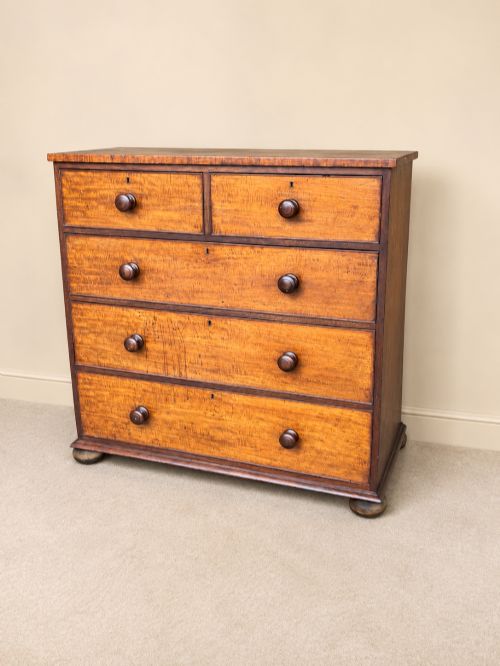
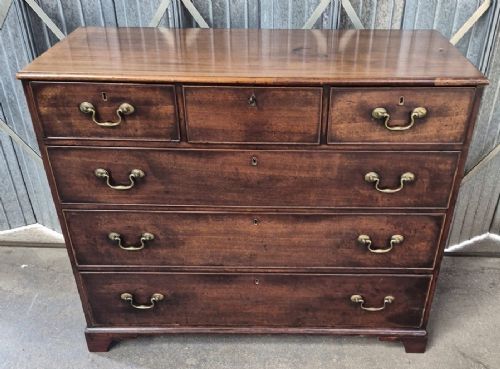
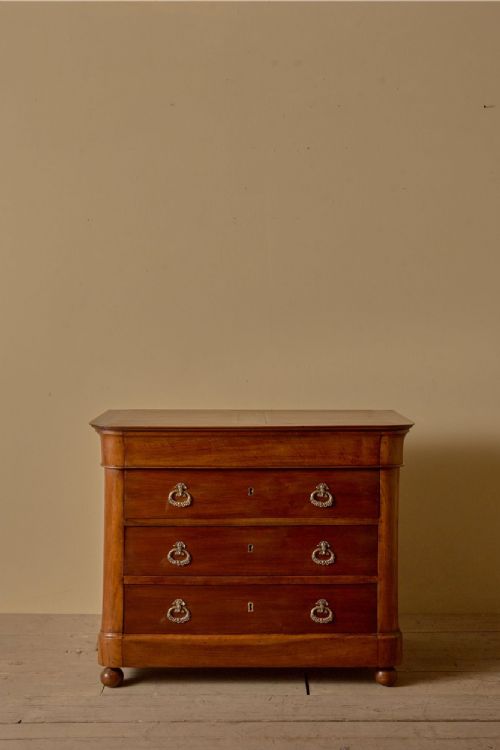
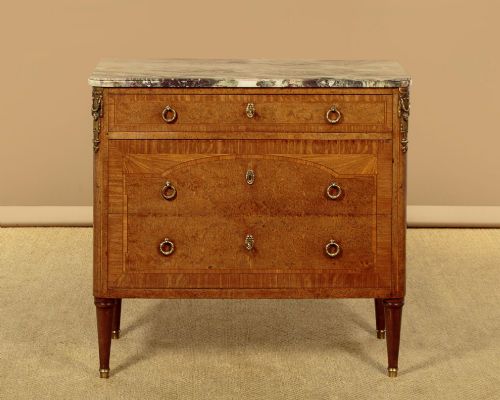
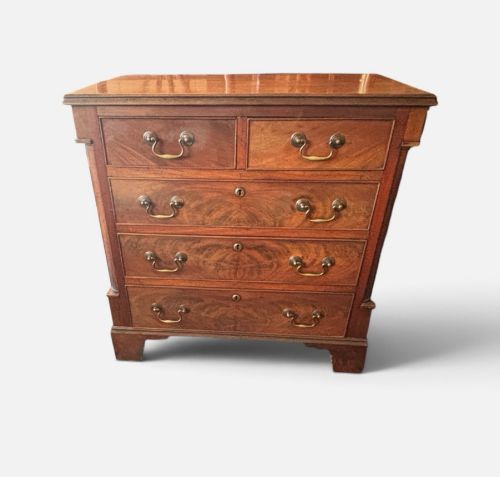
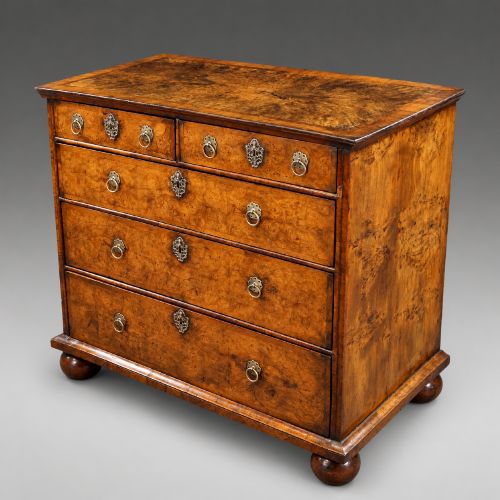
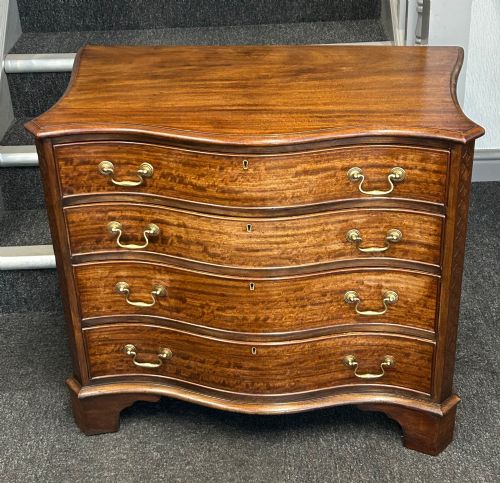
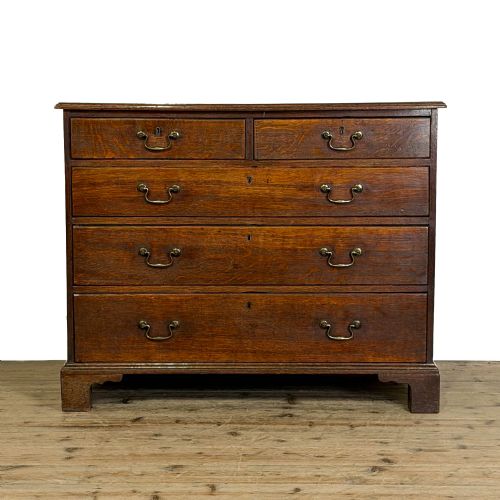
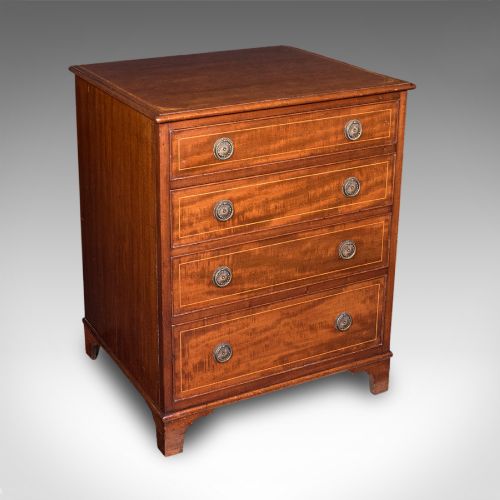
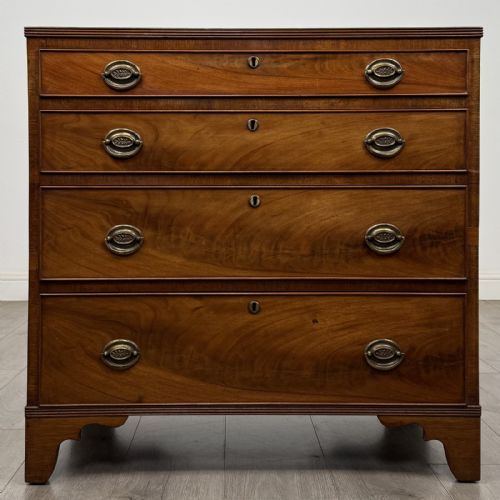
A vintage brown bedroom chest encompasses pieces primarily designed for domestic storage, ranging from compact bedside cabinets to imposing tallboys and spacious chests of drawers. These items emerge from various periods, including the Georgian, Victorian, and Edwardian eras, alongside pieces from the early twentieth century.
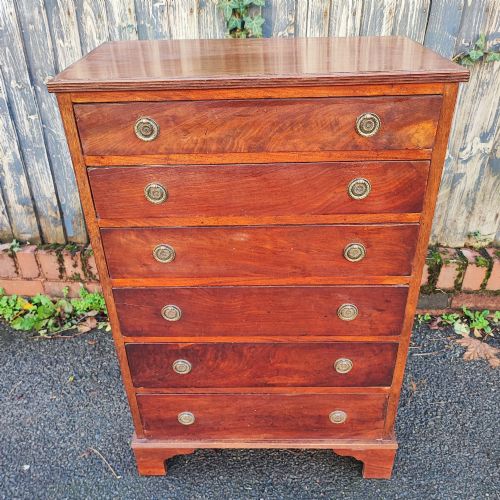
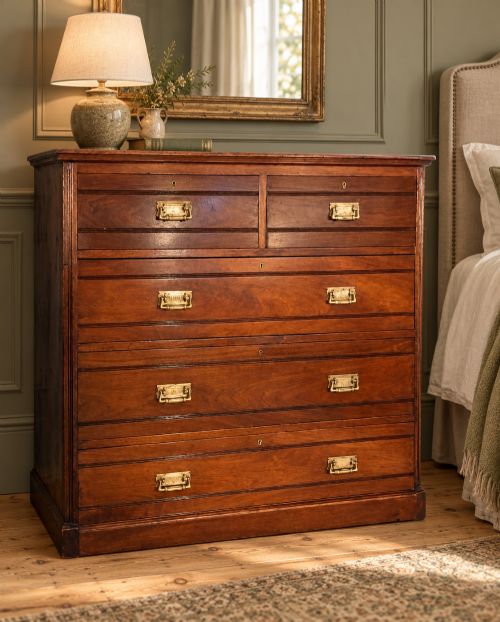
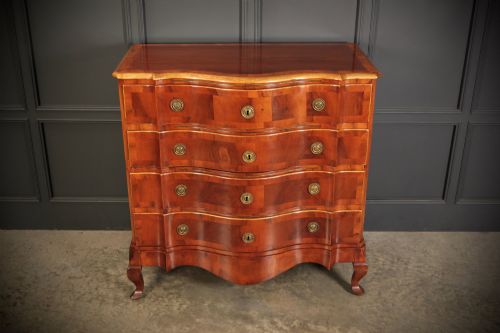
The most common format encountered is the mahogany or walnut chest of drawers, often featuring traditional bracket feet, turned knobs, or brass handles. Variations extend to bow fronts, serpentine shapes, and tallboy configurations with multiple tiers for storage.
Originating from diverse British and continental workshops, these items reflect changing domestic needs over centuries. Buyers select them for genuine period utility and traditional craftsmanship.
Evaluating Standards
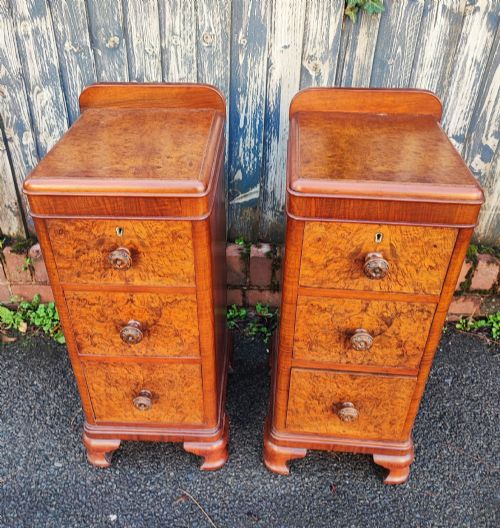
Quality rests upon the selection of timber figures, such as burr walnut or figured mahogany, and the precision of the cross-banding and inlay work. Superior examples display careful timber matching across drawer fronts and crisp execution of carved details like bracket feet or turned legs.
Structural integrity depends on the original integrity of the drawer linings, the retention of period brassware, and the stability of the carcase. Pieces retaining untouched surfaces and balanced proportions demonstrate higher fidelity to their original period standards.
Vintage Brown Bedroom Chest Retail Price Guide 2026
Typical asking prices for vintage brown bedroom chest among the pieces listed under this phrase on Sellingantiques today, from the lower quarter to the upper quarter. They describe what is for sale here now, not the wider market.
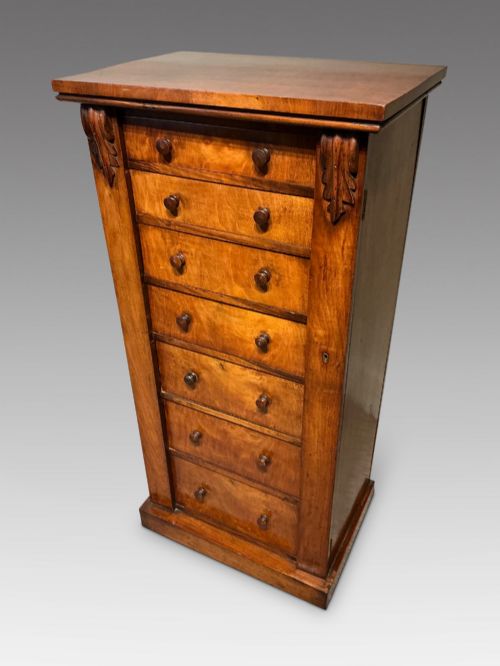
Several tallboys include hidden locking stiles down the side, originally designed to secure precious linens from midnight laundry raids.
Heals·Shapland and Petter
The Vintage Brown Bedroom Chest Glossary
- Bow front
- A convex curved cabinet front that projects outward in the centre. This shape gained popularity during the Georgian and Regency periods.
- Tallboy
- A tall chest of drawers, often built in two sections with a smaller set of drawers stacked atop a larger base. It maximises vertical storage space.
- Bracket foot
- A simple architectural foot supporting a case piece, shaped like a bracket and often mitred at the corner. Styles include splayed and ogee variations.
- Cross-banding
- A decorative border technique where thin strips of veneer are laid so the wood grain runs perpendicularly to the surrounding surface. This adds visual contrast to drawer fronts.
Vintage Brown Bedroom Chest: Frequently Asked Questions
How do I date a brown wooden chest?
Dating relies on examining construction methods, timber choices, and hardware styles. Dovetails cut by hand generally point to earlier periods, whereas machine-cut joints indicate later manufacturing.
Secondary woods inside the drawers, such as oak versus pine, also offer clues to the region of origin and the approximate decade of creation.
What is the difference between a tallboy and a standard chest?
A standard chest of drawers sits at waist height and serves primarily as a bedside or dressing surface companion. A tallboy reaches significantly higher, often stacking more than four or five drawers vertically.
Tallboys were traditionally designed to provide maximum storage capacity within a compact floor footprint.
How do I clean and maintain vintage wood?
Maintenance requires keeping wooden surfaces away from direct sunlight and extreme humidity fluctuations. Regular dusting with a soft, dry cloth prevents particulate build-up.
Periodic application of a quality wax feeds the grain and preserves the finish without sealing the wood permanently.
Where should I place a bow front chest?
A bow front chest functions effectively as a focal point in a bedroom or hallway, where its curved profile can be appreciated without obstruction. Because the front projects outward, adequate clearance is necessary if placed in a narrow corridor.
Pairing the piece with a simple mirror or lamp creates a balanced display surface.