





Vintage Brass Trinket Casket
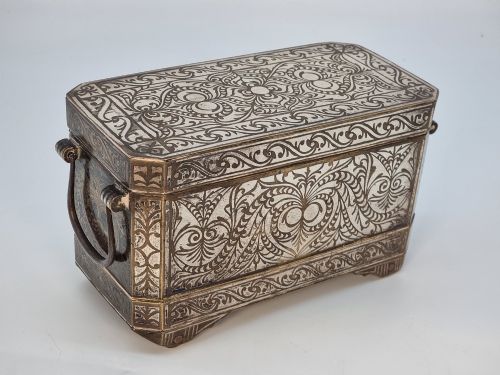
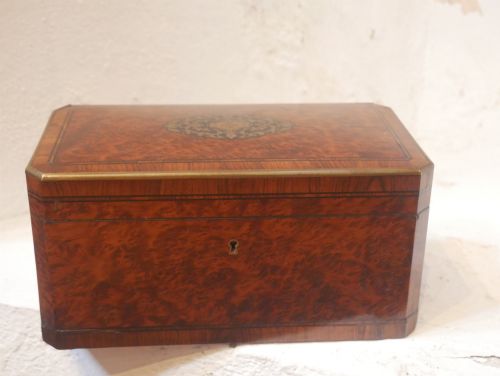
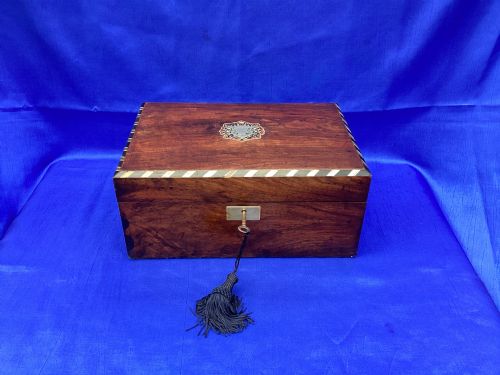
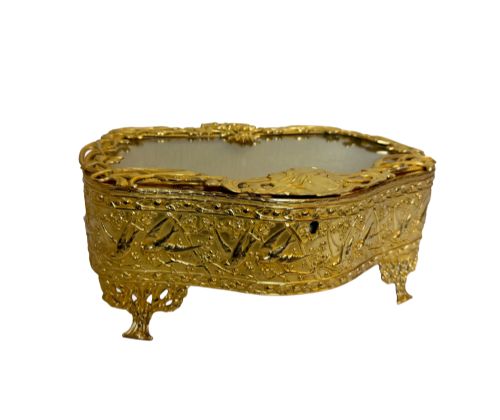
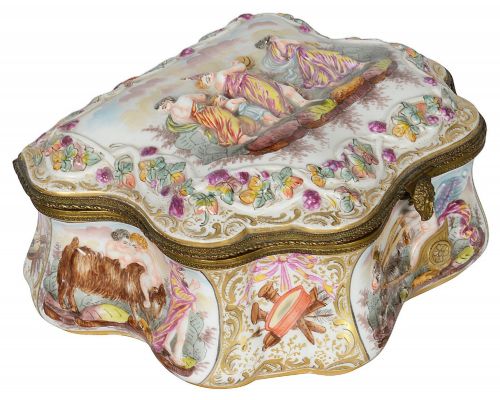
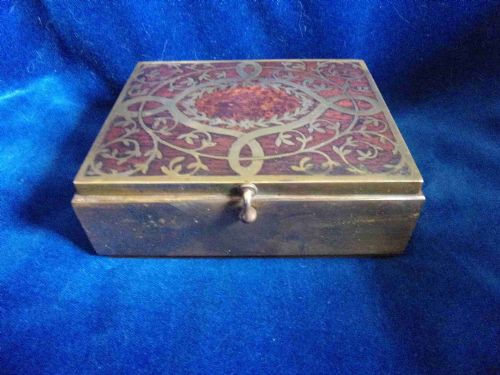
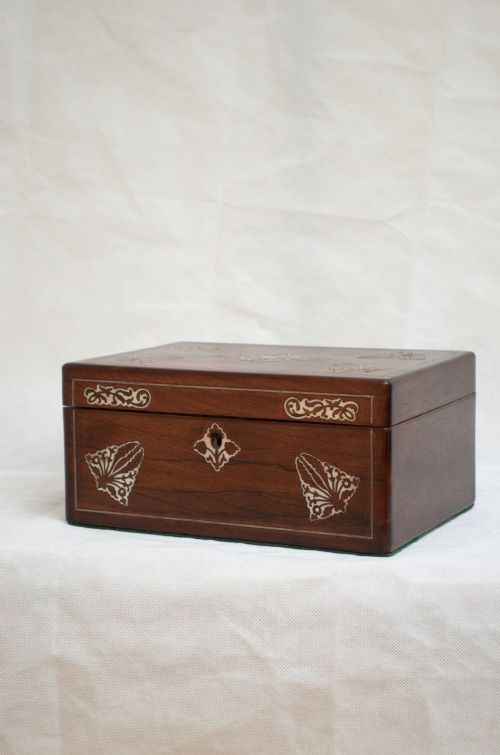
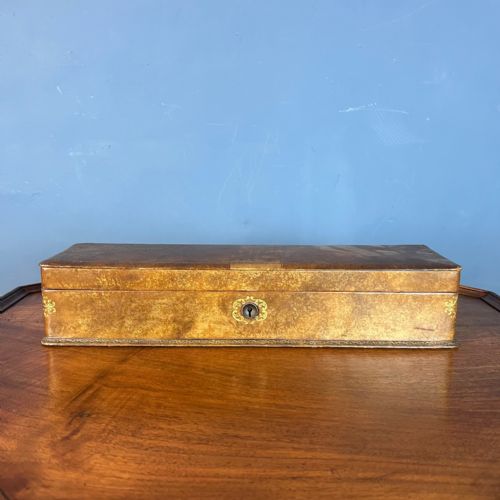
These vintage brass trinket caskets are small containers designed to hold jewellery and small valuables, offering both decorative presence and practical storage.
Vintage Brass Trinket Casket
A vintage brass trinket casket is a small container designed for dressing tables and desks, intended to secure jewellery, pins and personal effects. The selection here spans the Victorian and Edwardian periods, alongside nineteenth-century examples and twentieth-century items.
Most pieces date from the nineteenth century, including Victorian and Edwardian periods, taking forms such as jewellery boxes, trinket boxes and vanity cases. These objects reflect the domestic habits of the period, providing secure compartments for daily accessories.
The styles range from Rococo Revival and Regency to Art Nouveau and Arts and Crafts, showing how makers adapted domestic boxes to changing decorative tastes. Materials extend beyond metal to incorporate rosewood, mahogany, walnut, leather and glass.
How they were made
Makers constructed these caskets using brass, bronze and ormolu frames, frequently combining metal mounts with glass panels, enamel or carved wooden carcases in rosewood, mahogany and walnut. Surface decoration involved techniques such as repousse work, tooling on leather, and inlaid veneers.
Interiors typically received silk, velvet or leather linings, often fitted with removable trays and compartments designed to organise rings, watches and brooches. Hinges, locks and keys required precise metalworking to ensure lids aligned correctly with the box body.
Vintage Brass Trinket Casket Retail Price Guide 2026
Typical asking prices for vintage brass trinket casket among the pieces listed under this phrase on Sellingantiques today, from the lower quarter to the upper quarter. They describe what is for sale here now, not the wider market.
Miniature brass carriages and novelty egg caskets allowed Victorian dressing tables to double as miniature transport networks.
What varies in quality
Quality appears in the precision of the metal casting, the weight of the brass or gilt bronze, and the complexity of surface decoration such as hand-chased repousse work or enamel panels. Superior examples retain original fitted interiors with clean silk or velvet linings and working locks.
The choice of secondary materials also separates standard boxes from finer productions, with exotic timbers like amboyna, coromandel and rosewood indicating higher workshop standards. Better pieces demonstrate careful joinery and well-fitted internal trays that operate smoothly without binding.
Tahan Paris·Erhard and Sohne
The Vintage Brass Trinket Casket Glossary
- Ormolu
- Gilt bronze mounted on decorative objects, popular in nineteenth-century French caskets. This technique involves applying a gold amalgam to bronze.
- Repousse
- Metalworking technique where the metal is hammered from the reverse side to form a raised design. It appears frequently on Arts and Crafts boxes.
- Velvet
- A tufted fabric pile used extensively to line the interior trays of jewellery chests. It protected delicate items from scratches.
- Coromandel
- A dense, dark cabinet wood streaked with black, native to India and Southeast Asia. Nineteenth-century makers utilised it for high-end vanity and jewellery boxes.
Vintage Brass Trinket Casket: Frequently Asked Questions
What were trinket caskets used for?
Trinket caskets served on dressing tables and desks to hold personal items like rings, pins, watches and letters. They kept small valuables organised and protected from dust in domestic interiors.
Many examples included fitted trays and velvet linings specifically designed to separate delicate jewellery pieces and prevent them from scratching against each other.
How do I date a brass casket?
Dating relies on stylistic clues, construction methods, and materials such as the presence of Art Nouveau whiplash lines or Victorian Gothic revival motifs. Maker marks, hinge types, and lock mechanisms also provide specific chronological markers.
Comparing the exterior hardware and wood or metal composition to dated examples helps narrow the decade of manufacture.
Are these boxes secure?
While many caskets feature working brass locks and keys, they were designed for domestic tidiness rather than high-security storage. The small latches and locks deter casual handling rather than determined theft.
Owners typically used them to keep everyday accessories in one place on a dressing table rather than for safeguarding high-value assets.
How should I clean the brass?
Cleaning requires a soft cloth to remove dust, avoiding harsh metal polishes that can strip away original patina or damage surrounding velvet and wood surfaces. Gentle maintenance preserves the historic appearance of the metal.
If the casket includes glass panels, enamel, or leather portions, care must be taken to keep cleaning solutions away from those delicate areas.