


Vintage Brass Task Light
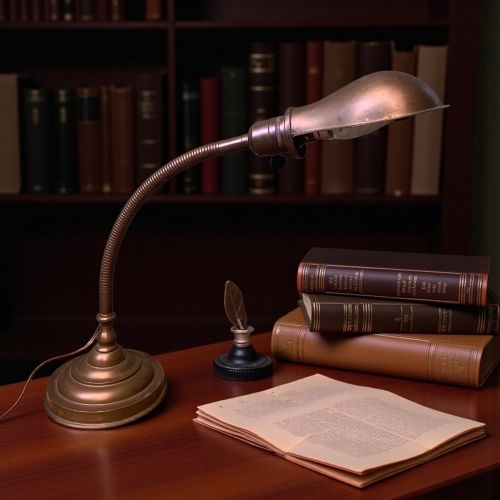
A vintage brass task light brings directional brilliance and enduring metallic warmth to a desk, reading nook or workspace.
Vintage Brass Task Light
A vintage brass task light is a functional desk or table lamp designed to direct illumination precisely where needed. These practical fittings emerged across the nineteenth and twentieth centuries to serve offices, studies and workshops.
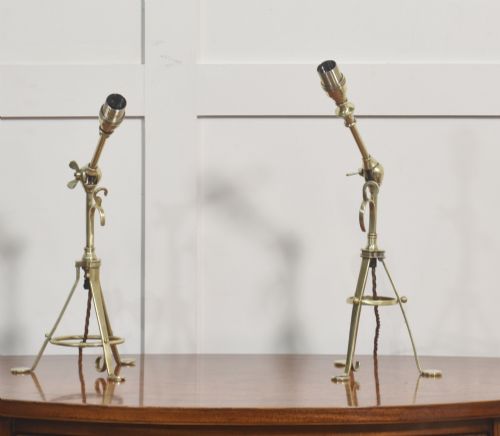
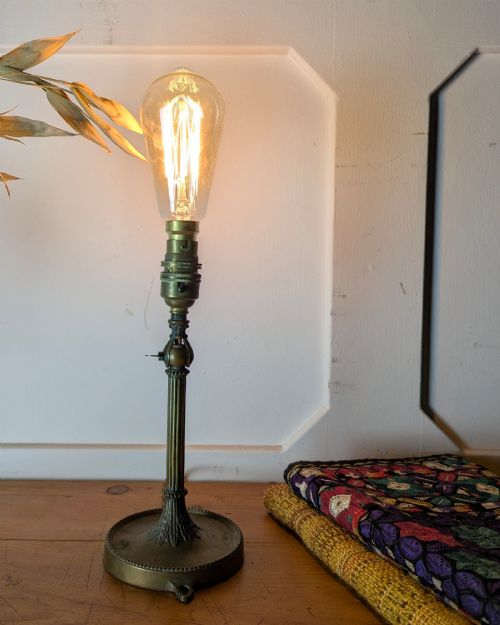
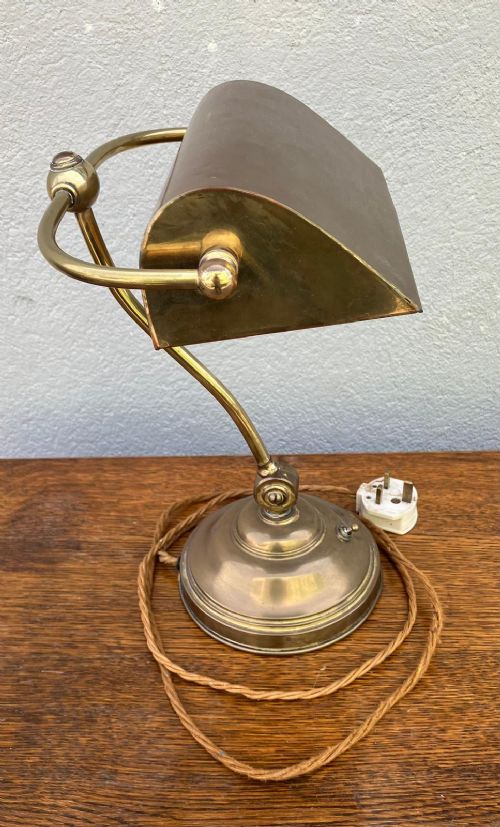
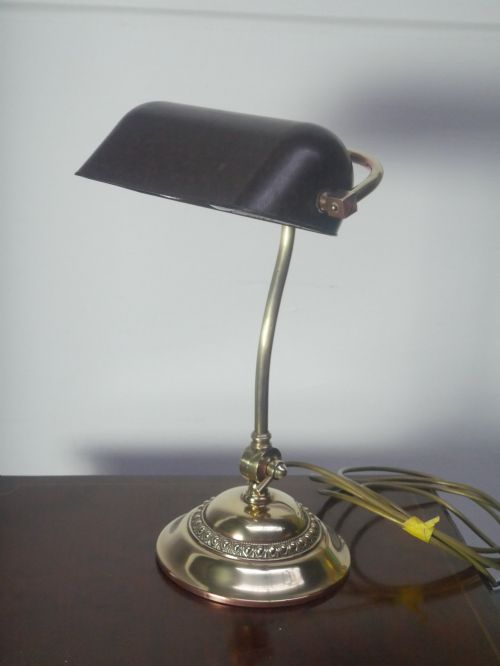
The versions most commonly found here date from the Edwardian era through to the Art Deco and Art Nouveau periods. They take the form of adjustable reading lamps, bankers lamps, swan neck lights and flexible desk fixtures.
Makers utilised durable metals and adjustable joints to create sturdy apparatus for focused work. Many examples incorporate swivel mechanisms, weighted bases and pivoting shades to alter the beam of light.
How they were made
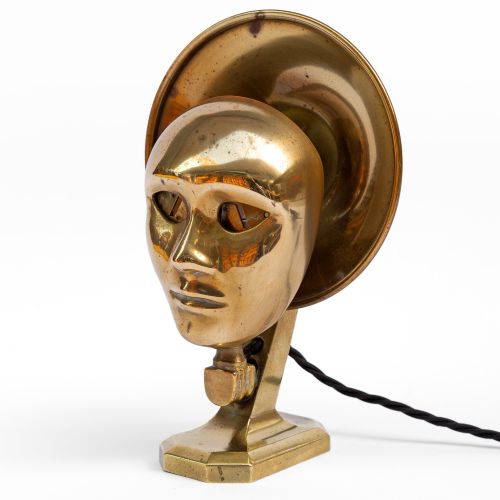
Makers constructed these task lights primarily from brass, bronze and patinated copper, sometimes combining them with fabric flex or metal frames. The primary structures rely on cast, spun or sheet brass shaped into articulated arms and heavy bases.
Shades were formed from glass, frosted glass, opaline glass, cranberry glass, porcelain or toleware to diffuse or direct the output. Joints were engineered using threaded collars, counterweights and knuckles to permit smooth adjustment without slipping.
Listings feature brass alongside frosted glass, fabric flex, patinated copper and cranberry glass across the Edwardian and Art Deco eras.
What varies in quality
Quality in a vintage task light rests upon the mechanical precision of its joints and the substantial weight of its base. Superior examples exhibit fluid articulation, robust fixings and thick-gauge metal that maintains stability during daily adjustment.
The distinction between standard commercial output and finer workshops lies in the finishing details and originality of components. Well-made pieces retain harmonious proportions, crisp casting lines and undamaged glass or porcelain shades that suit the period.
W.A.S. Benson·Wilhelm Wagenfeld
The Vintage Brass Task Light Glossary
- Swan neck
- A curved upper arm resembling the neck of a swan, allowing the light source to project outward over a workspace.
- Bankers lamp
- A desk lamp featuring a cylindrical green or opal glass shade and a heavy brass base, designed for office use.
- Bouillotte lamp
- A traditional candle-style table lamp adapted for electricity, typically featuring a central stem and an adjustable shade.
- Opaline glass
- A milky, translucent white glass used for lamp shades to soften glare and diffuse illumination evenly.
- Articulated
- Fitted with joints or hinges that allow the arm or shade to move and hold different angles.
Vintage Brass Task Light: Frequently Asked Questions
How do I adjust the arm on a vintage task light?
Most adjustable designs rely on pivot joints, knuckle screws or balanced swan neck curves to reposition the shade. Take care to loosen any tightening screws before moving the metal arm to prevent strain on the historical joints.
Allow the mechanism to guide the movement naturally rather than forcing rigid angles. Many period designs use internal springs or external counterweights to maintain the desired position once set.
What type of bulb should I use in these lamps?
Select a bulb that matches the appropriate wattage and physical dimensions for the specific shade, especially when housing delicate glass or porcelain fittings. Modern LED equivalents generate less heat, protecting vintage wiring and internal components.
Ensure the bulb shape does not project beyond the edge of the shade where it might cause glare. Warm white colour temperatures complement the golden tones of polished and patinated brass.
How do I clean vintage brass safely?
Dust the metal surfaces regularly with a soft, dry cloth to prevent the buildup of grime. Avoid harsh chemical polishes that can strip away the aged patina built up over decades of use.
If cleaning is necessary, use a mild soapy solution on a damp cloth and dry thoroughly immediately afterward. Glass shades can often be removed and washed separately in warm water.
Were these lamps originally wired for electricity?
Many Edwardian and later twentieth-century desk lamps were manufactured specifically for electrical use, occasionally utilising fabric flex. Earlier nineteenth-century examples or chamber sticks were sometimes converted from oil or gas to electricity during their working lives.
Because electrical standards have evolved, older fixtures are frequently rewired to meet modern safety requirements. Check the flex and plug condition before connecting the lamp to a power supply.