







Vintage Brass Maritime Decor
These vintage brass maritime decor items bring the heavy engineering and practical hardware of historical vessels straight into domestic rooms.
Vintage Brass Maritime Decor
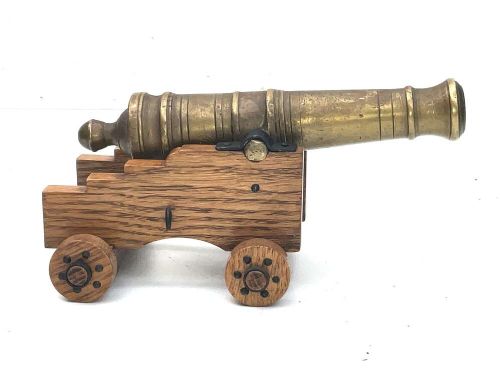
Vintage brass maritime decor encompasses functional shipboard instruments, hardware, and models originating from naval and commercial vessels across the nineteenth and twentieth centuries. These survivors range from heavy steering wheels and engine room telegraphs to pressure gauges, lanterns, and brass-barrelled cannons.
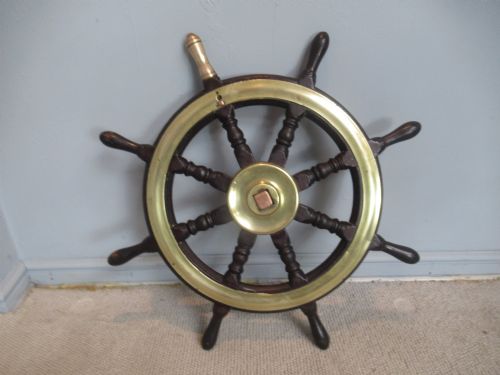
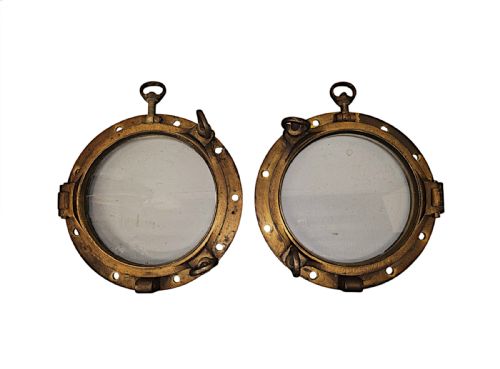
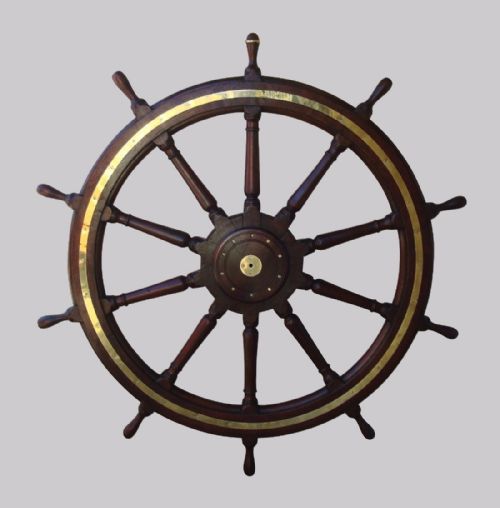
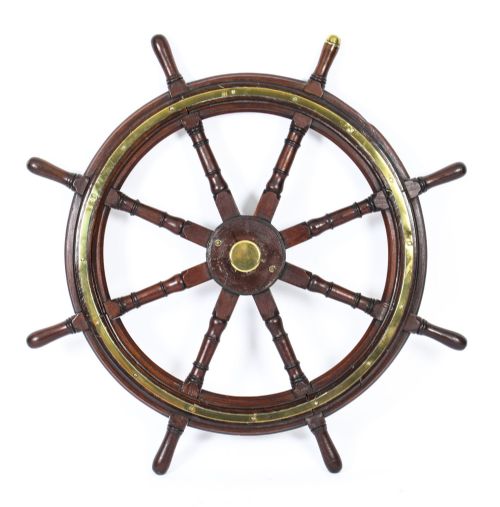
The version most frequently encountered on this page is the ships wheel, appearing in woods like teak and oak with substantial brass hubs and fittings. Alongside these wheels, buyers regularly find navigational instruments and brass-framed port holes retrieved from period vessels.
How they were made
Makers utilised heavy casting and turning techniques to produce thick brass components designed to withstand harsh marine environments. Metals such as brass and copper were cast, hammered, and polished for fittings, dials, and lanterns.
Wooden elements like steering wheels and mountings combined dense hardwoods such as teak, oak, and general hardwood with brass strapping and central bosses. These materials ensured structural integrity under heavy physical strain at sea.
Vintage Brass Maritime Decor Retail Price Guide 2026
Typical asking prices for vintage brass maritime decor among the pieces listed under this phrase on Sellingantiques today, from the lower quarter to the upper quarter. They describe what is for sale here now, not the wider market.
Listings span from the nineteenth century through to the mid-twentieth century, dominated by brass, teak, oak, and copper.
What varies in quality
Quality rests upon the original purpose and commercial standing of the maker, distinguishing standard utility hardware from bespoke navigational instruments. Pieces produced by known engineering firms display superior casting definition and heavier metal gauges.
The degree of original surface preservation and untouched patination dictates the standing of each piece. Items retaining their authentic mechanical components and operational integrity hold greater significance than heavily modernised examples.
Ulugary And Sons·Dewrance Of London·Benson Electric Co USA
The Vintage Brass Maritime Decor Glossary
- Port hole
- A heavy brass circular window frame designed to be bolted into a ship's hull for light and ventilation. These robust rings frequently house thick glass plates.
- Engine room telegraph
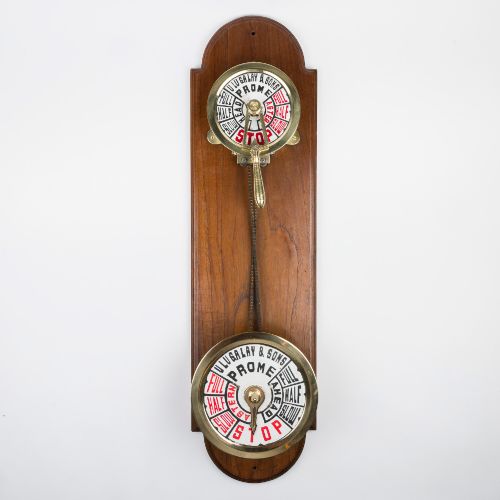
- A mechanical communication device used by the bridge to transmit operational orders to the engine room. These brass instruments feature dual dials and operating levers.
- Ships wheel
- A large timber wheel mounted on a central brass hub used to turn the rudder via cables or chains. The spokes often feature protective brass caps or banding.
- Pressure gauge
- A heavy metal dial instrument utilised to monitor steam or water pressure within shipboard systems. These circular brass housings contain internal brass spring mechanisms.
Vintage Brass Maritime Decor: Frequently Asked Questions
How were ships wheels used?
Ships wheels were mounted on the deck or in the wheelhouse to control the rudder and steer the vessel through the water.
Crew members would turn the wooden spokes to adjust the ship's heading according to navigational orders.
What is an engine room telegraph?
An engine room telegraph provided direct communication between the bridge and the engineers operating the ship's engines.
Moving the handle on the dial rang a bell and pointed to specific speed or direction commands.
How do I date a brass maritime instrument?
Dating relies on maker signatures, patent dates stamped into the brass, and the evolution of dial typography and casing styles.
Nineteenth-century pieces typically show heavier sand-cast components while later twentieth-century items incorporate refined industrial engineering.
Can these pieces be mounted on interior walls?
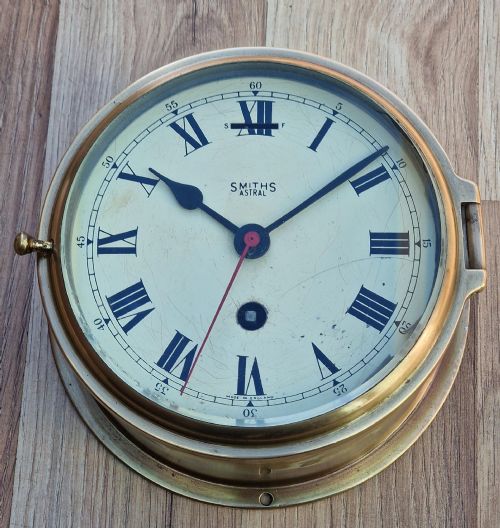
Many items such as port holes, clocks, and barometers are well suited for direct wall mounting in domestic settings.
Heavier objects like large wooden steering wheels require secure structural fixings to support their substantial weight.