



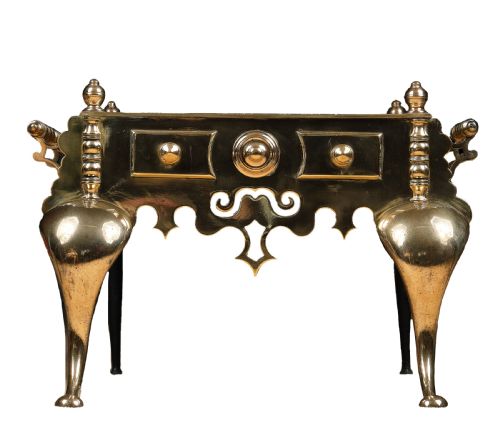
Vintage Brass Hearth Warmer
These vintage brass hearth warmers are the metal footmen, pans and buckets that kept coal, food and beds hot by the fire.
Vintage Brass Hearth Warmer
A vintage brass hearth warmer brings brass fire furniture, chestnut roasters, bed warming pans and footmen into the room. These pieces form the practical hearth equipment of earlier centuries, built to sit near the grate and manage heat.
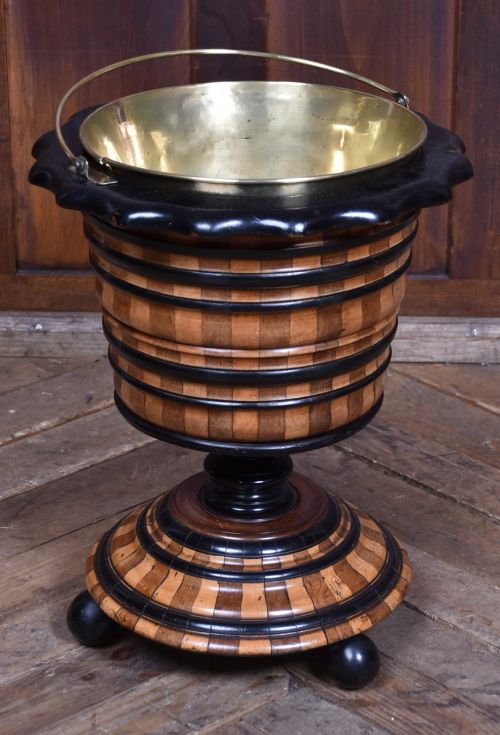
The objects here span periods from the middle of the eighteenth century through the Georgian, Regency, Victorian and Edwardian eras. Footmen and warming pans dominate the selection, alongside Dutch teestoofs and chestnut roasters.
English country workshops and Dutch makers supplied these domestic items in brass, iron, steel and copper. A buyer meets everything from sturdy kitchen warmers to refined footmen meant for the main fireplace.
How they were made
Makers shaped sheet brass and hammered copper for pans and buckets, joining parts with iron and steel handles or supports. Wood and ebonised wood often formed the grips on warming pans and roasters to protect the hands from heat.
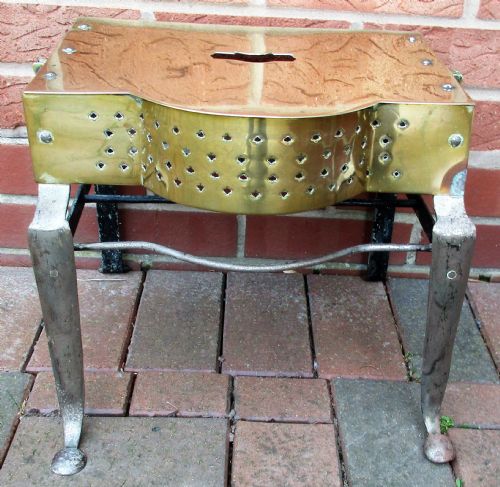
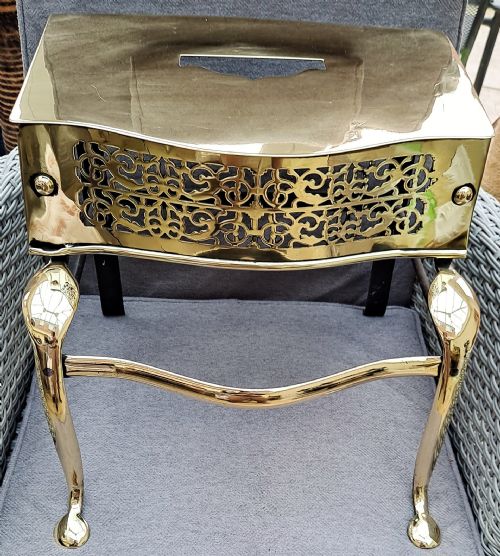
Footmen combined cast or sheet brass tops with heavy wrought iron frames to bear the weight of kettles and plates before the fire. Simple riveting and hand-beating marked the construction of these utilitarian household objects.
Vintage Brass Hearth Warmer Retail Price Guide 2026
Typical asking prices for vintage brass hearth warmer among the pieces listed under this phrase on Sellingantiques today, from the lower quarter to the upper quarter. They describe what is for sale here now, not the wider market.
Chestnut roasters brought warm snacks directly from the hearth embers on winter evenings.
What varies in quality
Quality rests on the weight of the metal and the integrity of the joints between brass plates and iron legs. Thicker brass sheet and heavier iron frames survive centuries of daily hearth use without buckling under weight.
The refinement of the handle turnings and the crispness of pierced designs on footman tops separate standard utility items from finer domestic pieces. Original wooden handles and untouched metal surfaces elevate an individual piece.
The Vintage Brass Hearth Warmer Glossary
- Footman
- A metal stand placed before a fireplace to keep food warm or heat water in a kettle. These typically feature a brass top supported by iron legs.
- Warming pan
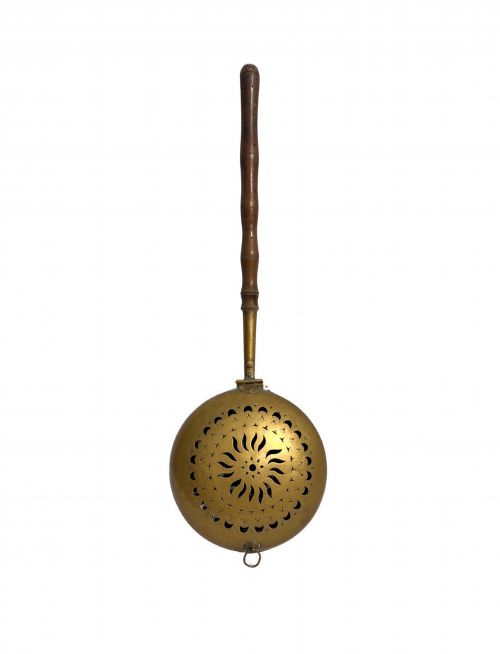
- A long-handled metal pan filled with hot embers and passed between bedsheets to warm the mattress. They pair a brass or copper lid with iron shafts and wooden grips.
- Teestoof
- A Dutch foot warmer or small stove utilising a container for hot coals inside a wooden or metal frame. These warm the feet rather than the room.
Vintage Brass Hearth Warmer: Frequently Asked Questions
What is a brass footman?
A brass footman is an accessory designed to stand directly in front of an open fire. It served as a shelf for warming plates, keeping kettles hot or drying damp items.
These stands combine brass tops with sturdy iron frames to withstand intense heat from the hearth.
How did a warming pan work?
A warming pan operated by filling the metal container with hot coals or ashes taken from the fireplace. The user closed the lid and moved the pan back and forth between cold bedsheets.
The long wooden handle kept the operator safely away from the heat while distributing warmth across the mattress.
Where were these pieces made?
These items originated across English country workshops, Dutch domestic centres and Welsh hearths. Makers utilised local metals and regional designs suited to domestic heating needs.
Footmen and warming pans reflect the distinct utility styles of the eighteenth and nineteenth centuries.
Can I use them by a fire?
Most pieces function well as decorative fireside accessories or plant stands near a hearth. Original metal handles and aged joints require gentle handling rather than active daily service.
Placing items near a working fire adds historical character to a modern fireplace setting.