





Vintage Brass Gallery Sideboard
A vintage brass gallery sideboard brings structural elegance and gleaming metalwork to a room, offering both practical surface space and period character.
Vintage Brass Gallery Sideboard
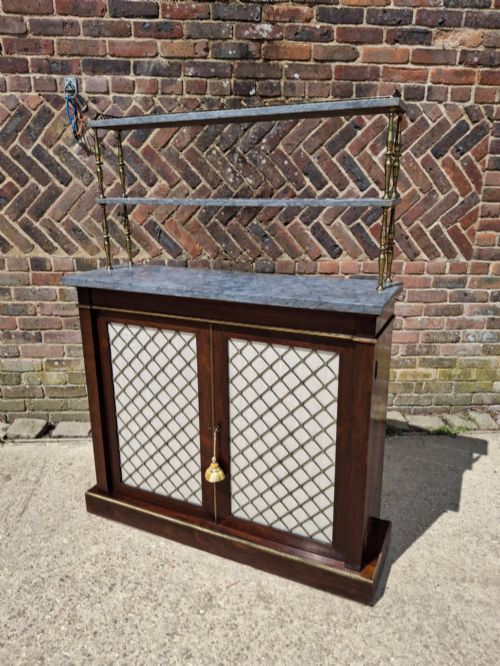
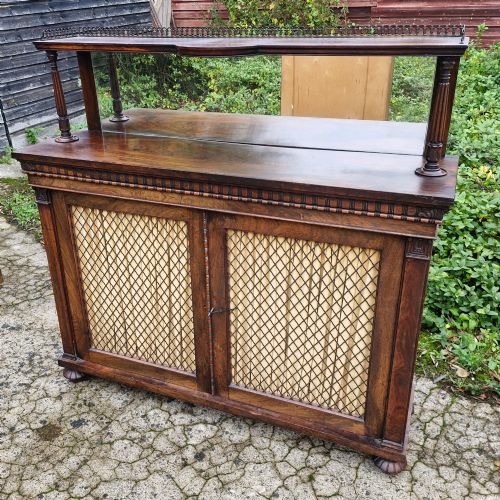
When you search for a vintage brass gallery sideboard, you encounter case furniture designed for serving and storage, often enhanced with a raised metal rail along the top edge.
The pieces listed on this page span several eras including the eighteenth century, the Regency period, the Victorian era, and Edwardian revivals.
Makers and craftsmen of these periods utilised timbers such as mahogany, satinwood, and flame mahogany veneer, sometimes complemented by boxwood inlay and fabric details.
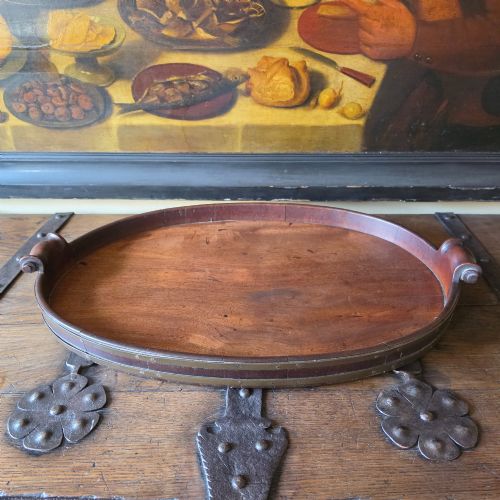
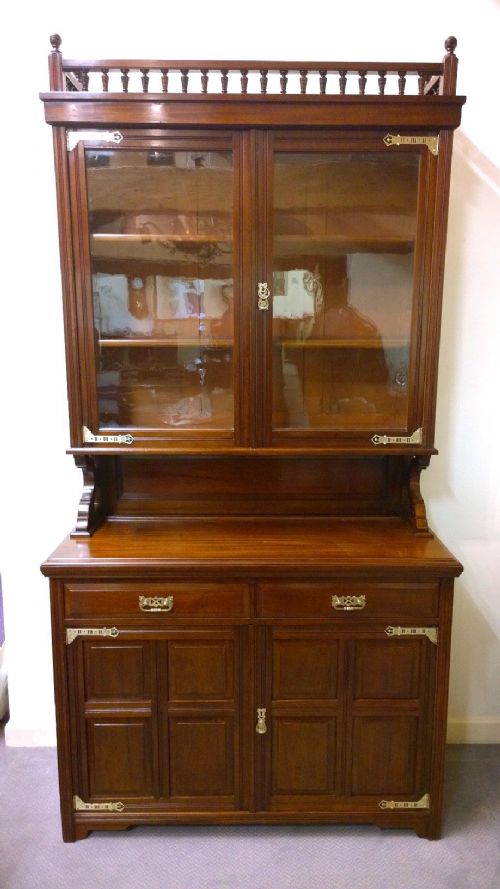
The forms vary from traditional sideboards and chiffoniers to serving trays, display cabinets, and credenzas, reflecting diverse uses across the Georgian, Regency, Sheraton Revival, and William IV styles.
Materials and construction
Cabinet makers constructed these pieces primarily from solid mahogany and flame mahogany veneers, applying cabinet-making techniques that showcased the natural grain and figure of the timber.
Decorative embellishments include boxwood stringing, marquetry inlay, and satinwood contrasts, alongside applied brass galleries that required precise metal-working skills to secure along the top edges.
Vintage Brass Gallery Sideboard Retail Price Guide 2026
Typical asking prices for vintage brass gallery sideboard among the pieces listed under this phrase on Sellingantiques today, from the lower quarter to the upper quarter. They describe what is for sale here now, not the wider market.
Serving trays with brass galleries double as portable retainer walls for clumsy teacups.
Assessing quality and craftsmanship
Quality in these items is determined by the selection of timber veneers, the crispness of any inlaid marquetry, and the structural integrity of the brass gallery rail itself.
Pieces from revival periods like the Sheraton Revival show meticulous attention to historical detail, whereas older examples rely on the proportion, patina, and depth of the aged mahogany surface.
Edwards and Roberts·Howard And Sons
The Vintage Brass Gallery Sideboard Glossary
- Brass gallery
- A low raised metal rail fitted to the top surface of a sideboard or serving piece, originally designed to keep plates and glassware from sliding off.
- Chiffonier
- A compact cabinet or sideboard developed in the nineteenth century, typically featuring shelves or cupboards enclosed by doors.
- Marquetry
- Decorative patterns formed by the insertion of pieces of wood, shell, or ivory into a veneered surface, popular in Sheraton Revival pieces.
- Flame mahogany veneer
- A figured wood veneer cut from the fork of a mahogany tree to create a distinctive flickering flame pattern across the drawer fronts and doors.
Vintage Brass Gallery Sideboard: Frequently Asked Questions
What is a brass gallery?
A brass gallery is a decorative and functional metal rail fitted to the rear or sides of a sideboard top. It prevented serving items from slipping off during meals.
Over time, these galleries became a defining stylistic feature of fine sideboards and serving tables.
How do I date a sideboard?
Dating relies on examining the primary timbers, construction methods, and stylistic cues such as Regency curves or Sheraton Revival inlay. Hardware and secondary woods also offer clues to the period.
Comparing the overall form to documented examples helps narrow down the decade of manufacture.
Were these pieces used for dining?
Sideboards and servers were essential dining room furniture pieces used to hold dishes, cutlery, and serving trays before and after meals. Their surfaces provided space for food presentation.
Today, they adapt easily to living rooms and hallways as display and storage units.
How do I care for mahogany?
Mahogany furniture requires regular dusting with a soft, dry cloth and protection from direct sunlight to preserve the rich colour of the wood. Avoiding excessive moisture prevents damage to the polish and veneer.
Applying a traditional beeswax polish occasionally maintains the natural lustre of the antique surface.