




Vintage Brass Fuel Bucket
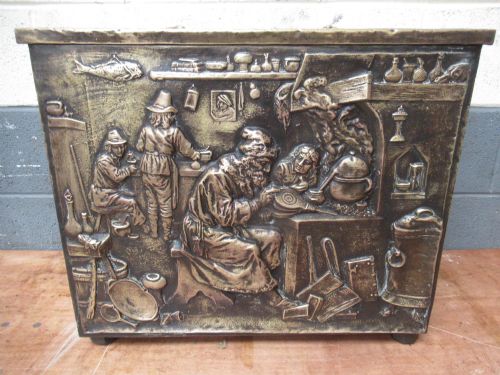
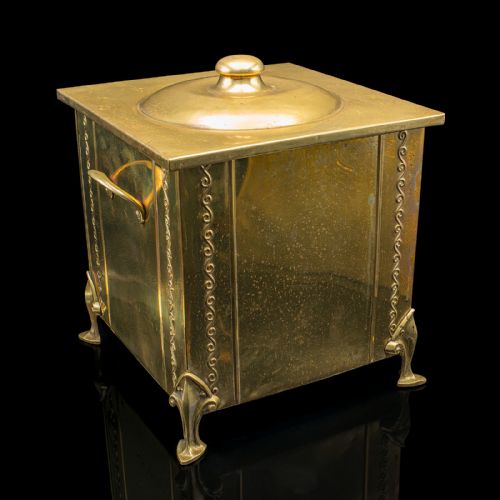
A vintage brass fuel bucket brings heavy metal warmth and a utilitarian history straight to the hearth.
Vintage Brass Fuel Bucket
When you search for a vintage brass fuel bucket, you are looking at robust fireside containers designed to hold coal, logs, or peat. The pieces listed on this page span the Victorian and Edwardian periods, stretching from the late nineteenth century to around nineteen hundred.
You are most likely to meet circular brass coal buckets and lidded log bins fashioned in England or Scotland. These utilitarian vessels combined sheet metal and sturdy handles to transport solid fuel to the fireplace with minimal fuss.
Makers utilised contrasting materials such as oak, mahogany, ebonised wood, and copper alongside the principal brass body. Such hearth accessories served a purely domestic function before evolving into decorative room storage.
How they were made
The construction of these pieces relies heavily on sheet brass and copper joined with visible rivets or smooth seams. Smithing techniques involved hammering, embossing, and occasionally cooperating wooden staves with metal bands.
Makers incorporated wooden elements, fitting walnut, oak, or mahogany for lids, handles, and trim. Internal liners of iron or other metals sometimes reinforced the wooden and brass bodies against damp fuel.
Current listings feature pieces spanning the Victorian and Edwardian eras, incorporating brass, copper, oak, walnut, and ebonised wood.
What varies in quality
Quality in a vintage brass fuel bucket rests on the weight of the metal and the integrity of the construction. Thicker brass panels and hand-hammered or deeply embossed decoration indicate superior craftsmanship.
The refinement of details such as riveted joints, turned wooden handles, and named maker marks elevates an ordinary coal bin into a notable fireside object. Simpler unadorned buckets sit at the utilitarian end of the scale.
Benham And Froud
The Vintage Brass Fuel Bucket Glossary
- Purdonium
- A specialised coal box or cabinet, often featuring a sloping front and an internal metal liner. These Victorian inventions kept domestic fuel neatly concealed beside the fireplace.
- Coopered
- A method of construction where tapered wooden staves are bound together with metal hoops, much like a traditional cask. Scottish peat buckets frequently employ this technique.
- Embossed
- Metalwork decorated by hammering or pressing a design from the reverse side to raise relief patterns on the surface. Victorian examples often display floral or geometric motifs.
- Riveted
- Fastened with metal pins hammered flat at the ends to secure overlapping sheets of brass or copper. This industrial method ensured durability during daily fireside hauling.
Vintage Brass Fuel Bucket: Frequently Asked Questions
What is a coal purdonium?
A coal purdonium is a specialised fireside cabinet designed to store solid fuel indoors. These Victorian pieces typically feature a hinged or sloping front lid to allow easy access for a coal scoop.
Inside, they often retain a removable metal liner to catch coal dust and prevent moisture from damaging the wooden or brass exterior.
How do I clean a brass fuel bucket?
Cleaning requires a soft cloth and a proprietary metal polish suitable for unlacquered brass. Avoid harsh abrasives that can wear away historic surface patination.
Many collectors prefer to leave a certain amount of aged darkness in the recesses to highlight the age and character of the metal.
Can I still use these for logs?
These vessels remain entirely practical for holding firewood or kindling beside a modern hearth. Their original metal and wood construction is robust enough for daily domestic use.
Check for any internal liner damage if storing damp logs to protect the surrounding floor from moisture.
How do I date a brass bucket?
Dating relies on observing manufacturing techniques, material combinations, and stylistic clues. Riveted copper and heavy embossed brass ornamentation are typical of nineteenth-century production.
Turned wooden elements and specific maker stamps help narrow the timeline between the Victorian era and the Edwardian period.