

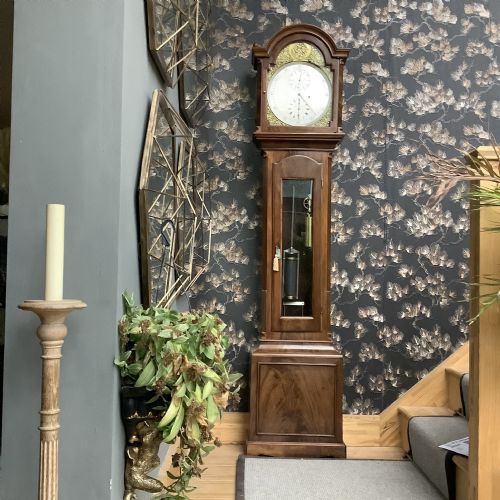
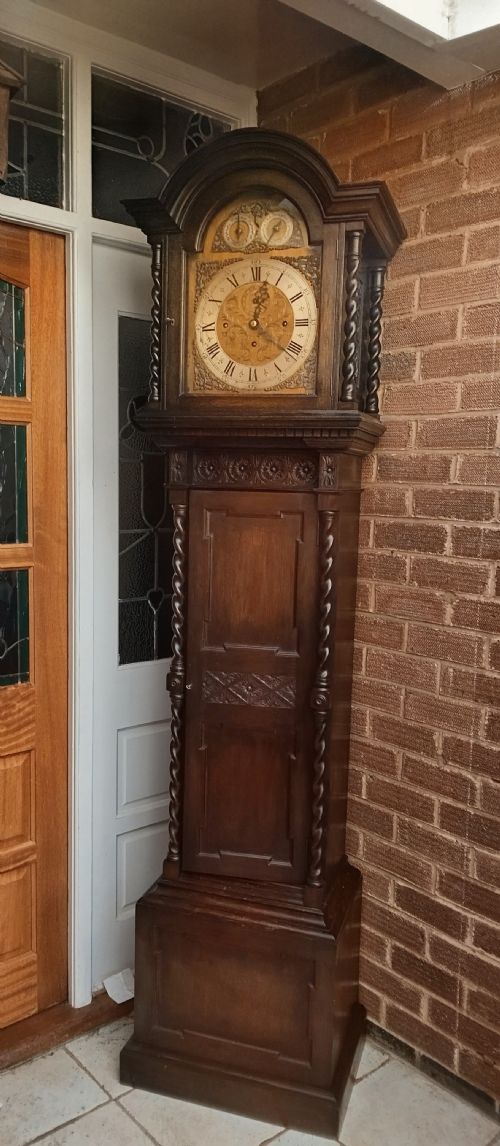
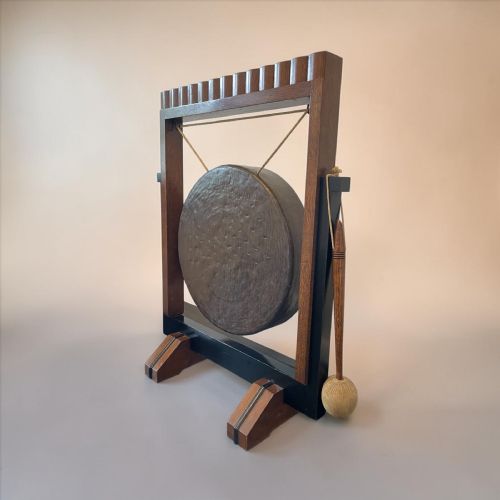
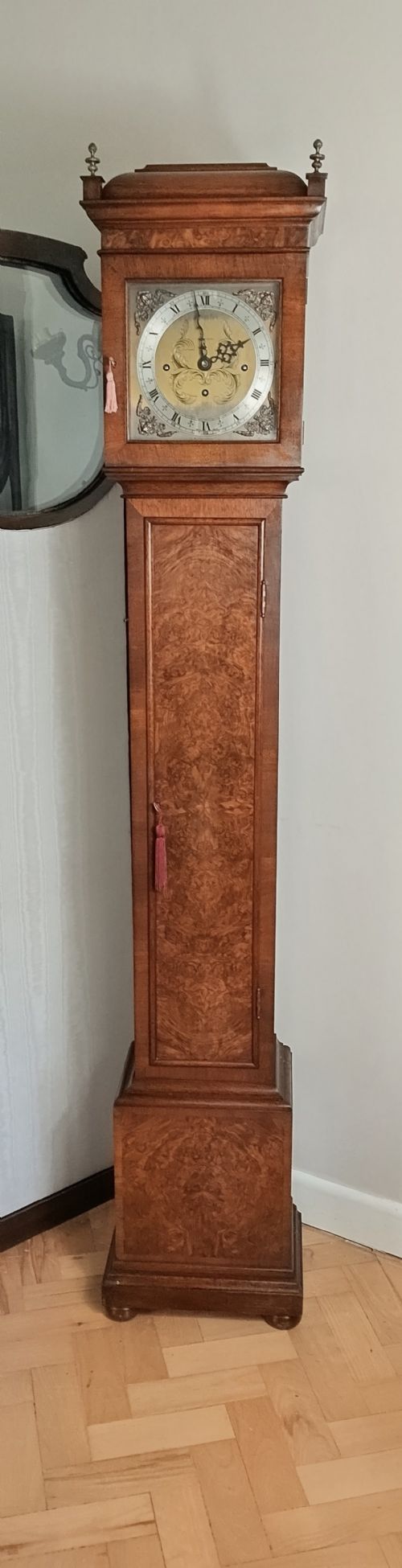
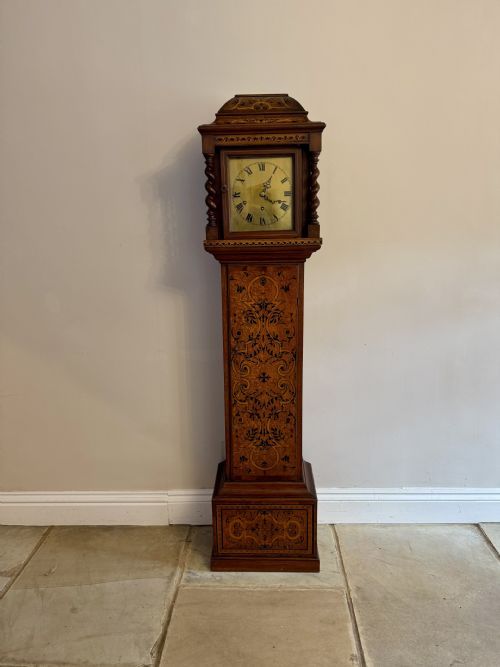


Vintage Brass Chime Stand
A vintage brass chime stand holds resonant metal for striking or chiming, bringing acoustic depth and decorative structure into a room.
Vintage Brass Chime Stand
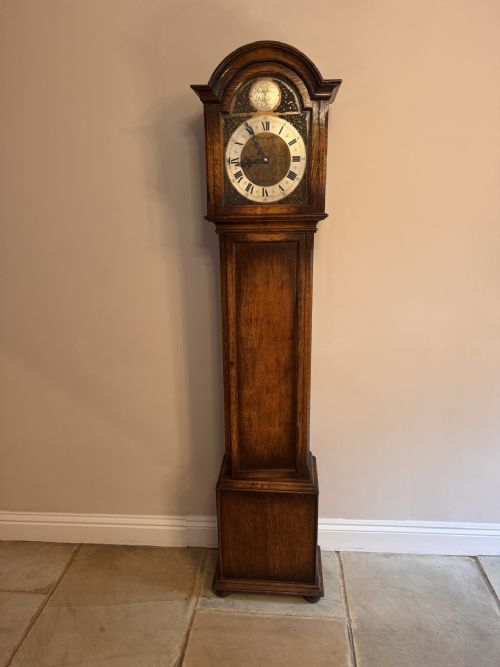
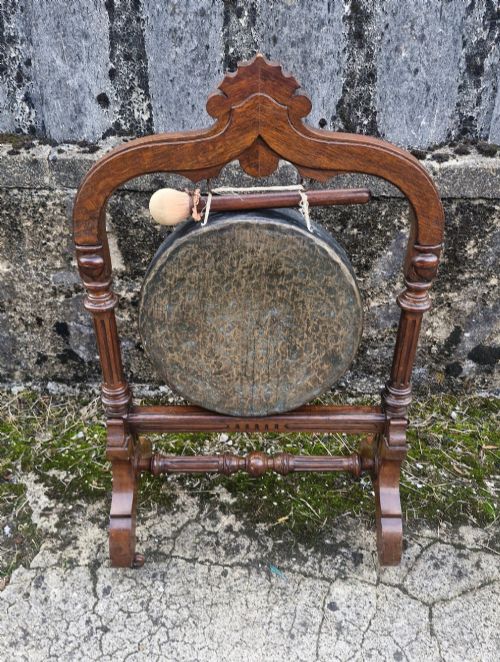
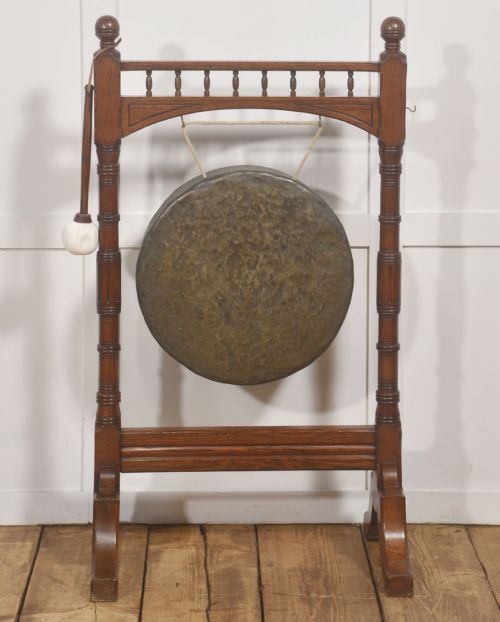
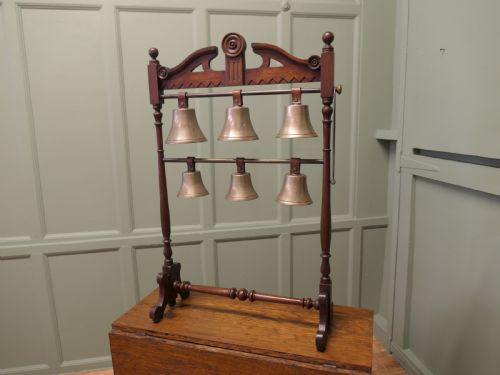
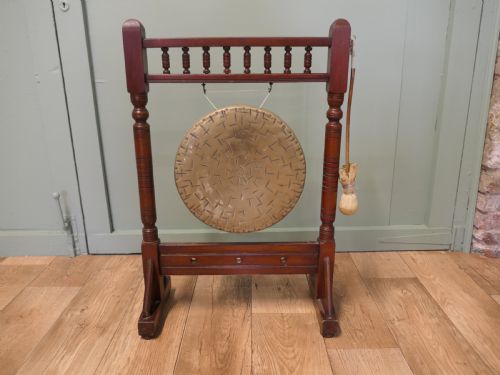
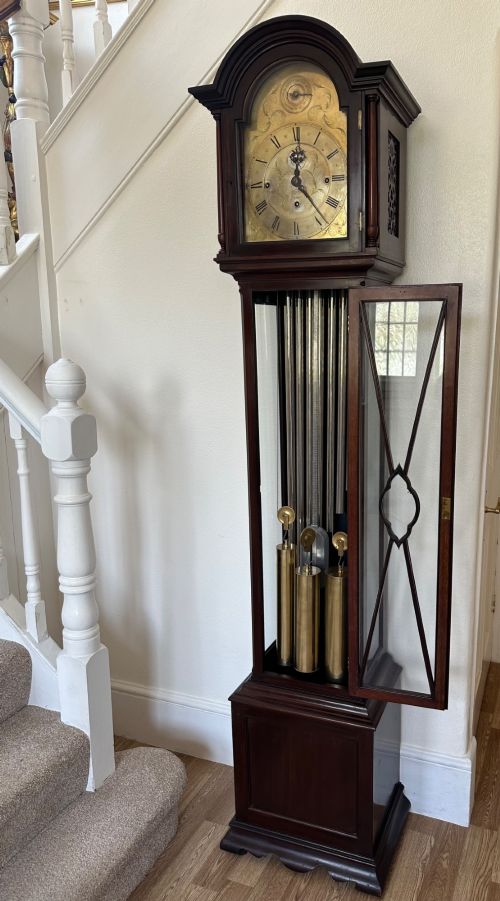
A vintage brass chime stand encompasses floor-standing longcase clocks, table gongs, and dinner gongs that utilise suspended metal tubes, bells, or gongs. These items originate from periods spanning the Victorian era through the mid-twentieth century.
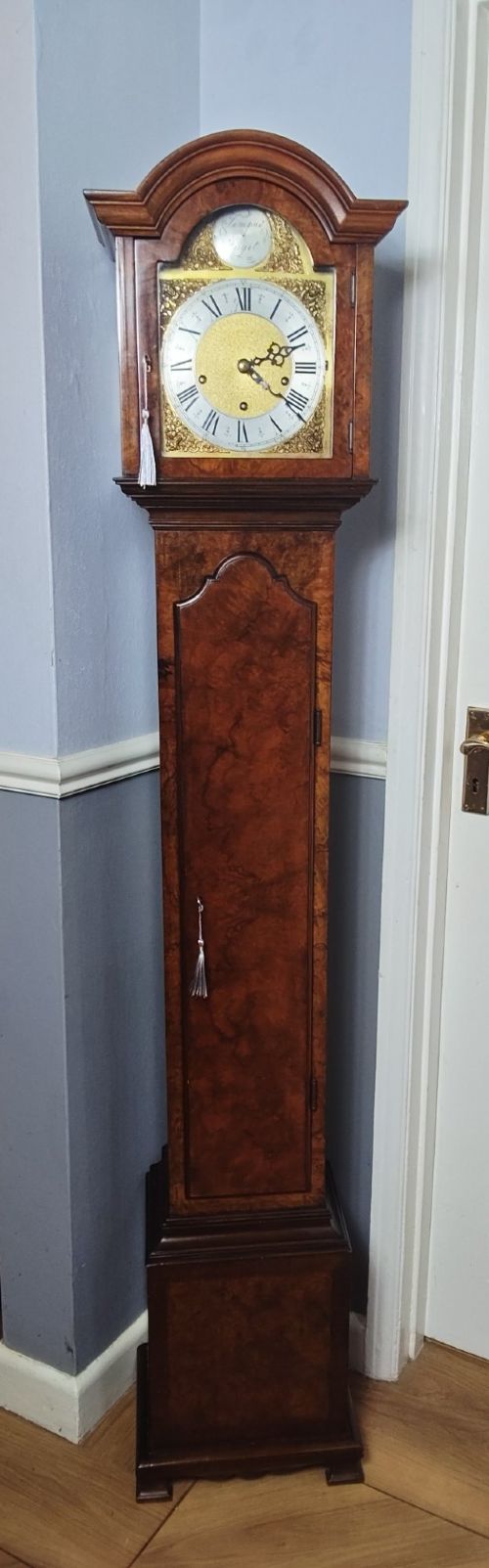
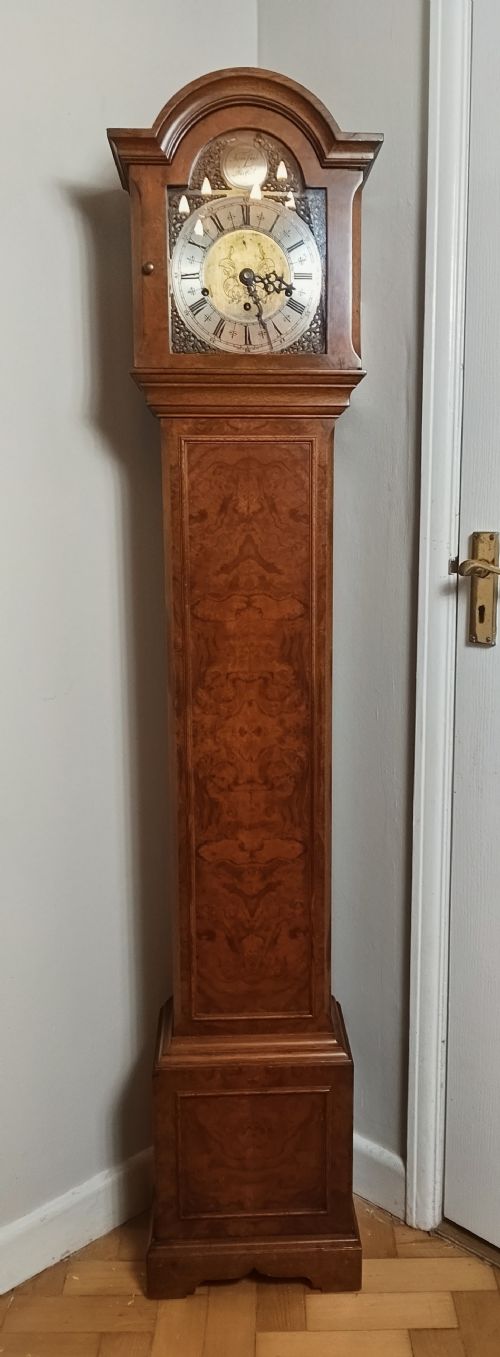
The selections on this page pair brass acoustic elements with cabinetry in mahogany, oak, and walnut. Table top gongs sit alongside grander floor-standing longcase clocks with musical movements.
Makers housed these brass bells and gongs within diverse architectural styles, including Edwardian inlay, Gothic Revival framing, and flowing Art Nouveau lines.
Materials and Construction
Makers cast the brass bells, gongs, and tubular chimes to produce specific tonal resonance when struck by a mallet or triggered by a clock movement. These brass components require secure cord, iron, or wooden suspension frames to vibrate freely.
Cabinet makers constructed the housing cases from dense hardwoods like mahogany, oak, and walnut, often applying burr walnut veneers or marquetry inlay to the exterior surfaces.
Clockmakers integrated intricate quarter-chiming and tubular bell movements into tall wooden cases, while simpler table stands utilised carved wood and wrought iron supports.
Vintage Brass Chime Stand Retail Price Guide 2026
Typical asking prices for vintage brass chime stand among the pieces listed under this phrase on Sellingantiques today, from the lower quarter to the upper quarter. They describe what is for sale here now, not the wider market.
Listings feature brass chimes and gongs paired with oak, mahogany, and walnut cabinetry from the Victorian era to the mid-twentieth century.
Distinctions in Standard
The clarity and sustain of the brass chime or bell separate standard examples from superior pieces, reflecting the metallurgical mix and wall thickness of the metal. Heavier cast brass components yield a purer, longer-lasting tone.
Cabinetry execution dictates overall merit, distinguishing tightly fitted marquetry, figured walnut veneers, and solid mahogany framing from simpler, utilitarian housings.
Complex mechanical movements involving multiple tuned musical tubes or bells demand greater precision from the horologist, elevating the sophistication of the piece.
Elliott·Gillett and Johnston·Bravingtons·Enfield·Lister and Sons·Harrods
The Vintage Brass Chime Stand Glossary
- Dinner Gong
- A suspended brass or bronze disc struck with a mallet to summon people to a meal. These pieces frequently feature carved wooden or wrought iron stands.
- Grandmother Clock
- A smaller version of the traditional longcase clock, standing shorter in height. They frequently house quarter-chiming movements and musical brass tubes.
- Tubular Bell
- A hollow metal cylinder hung vertically within a clock case to produce a deep chime when struck by an internal hammer. They replaced heavy cast bells in many twentieth-century longcase clocks.
- Marquetry
- Decorative woodwork where small pieces of veneer are fitted together to form geometric or floral patterns on clock cases. This technique highlights skilled cabinet making.
- Gothic Revival
- An architectural and decorative style drawing inspiration from medieval forms, often seen in pointed arches and heavy carved oak frames supporting gongs.
Vintage Brass Chime Stand: Frequently Asked Questions
What is a chime stand?
A chime stand is a structural frame designed to suspend brass bells, gongs, or tuned metal tubes in an upright position.
These pieces function either as standalone musical instruments for signalling or as internal mechanisms housed within tall clock cases.
How do I care for the brass?
Keep the brass components free from dust using a dry, soft cloth to preserve the natural metallic sheen.
Avoid abrasive metal polishes that can strip patination or damage delicate surrounding wood surfaces and cords.
Where were these placed?
Dinner gongs typically stood in hallways or dining rooms to announce meals, while tall chiming clocks resided in main living spaces.
Table top versions sat upon sideboards or desks within domestic interiors.
How do I identify the period?
Examine the timber species, case proportions, and decorative motifs such as Edwardian inlay or Gothic Revival carving.
Mechanical movements and maker signatures on the dial or backplate also provide clear dating evidence.