


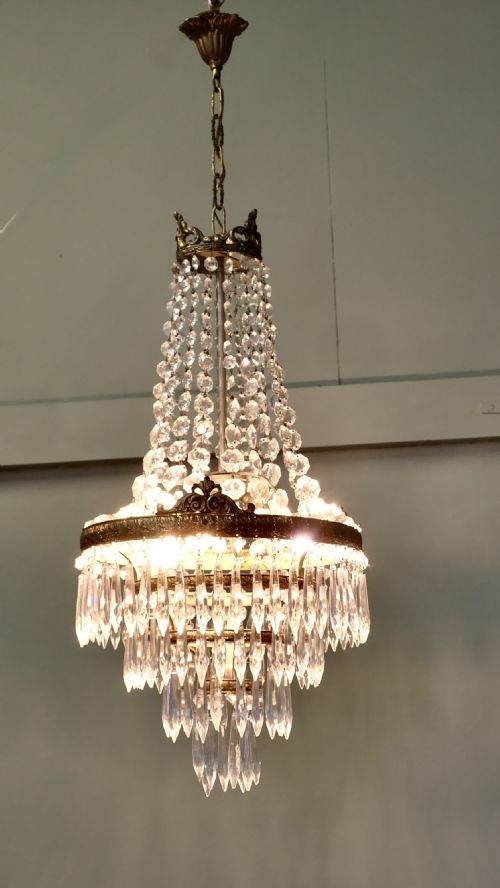
Vintage Brass Ceiling Lamp
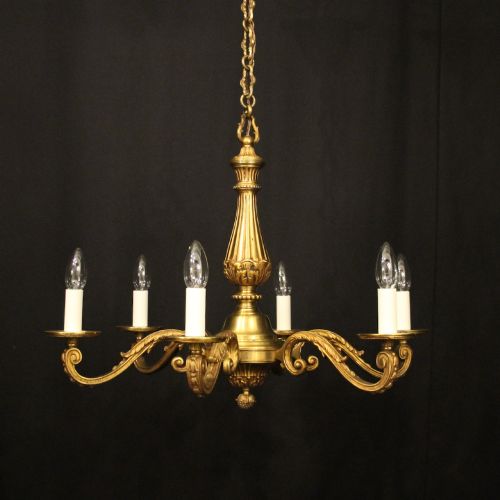
A vintage brass ceiling lamp brings substantial weight and warm metal tones to a room, offering historic character through period chandeliers, pendants, and lanterns.
Vintage Brass Ceiling Lamp
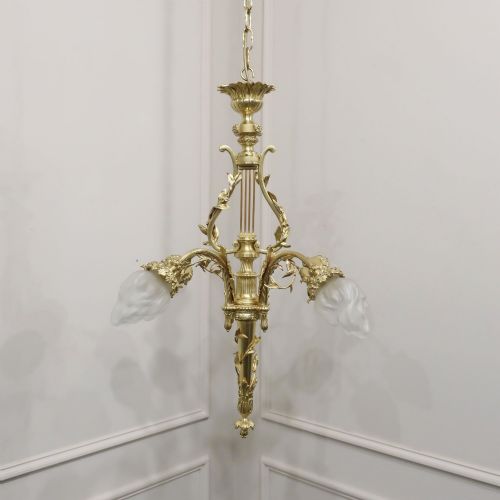
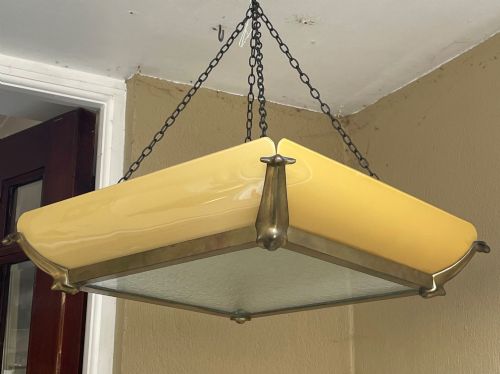
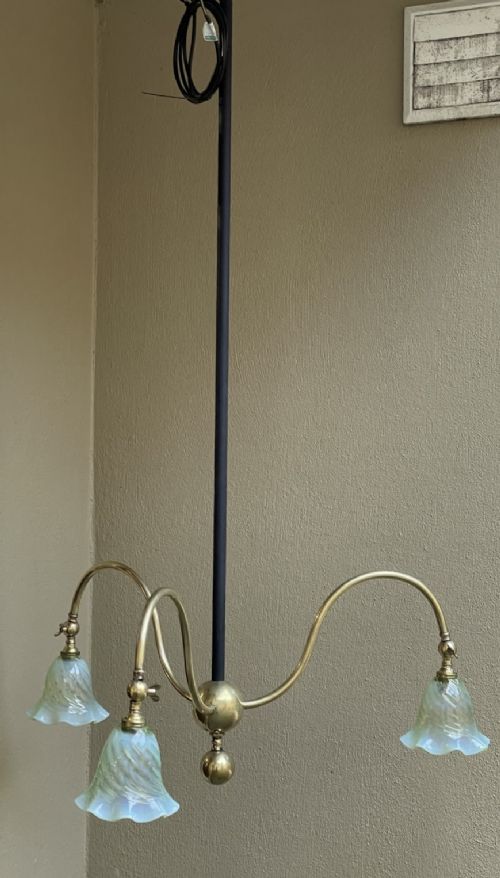
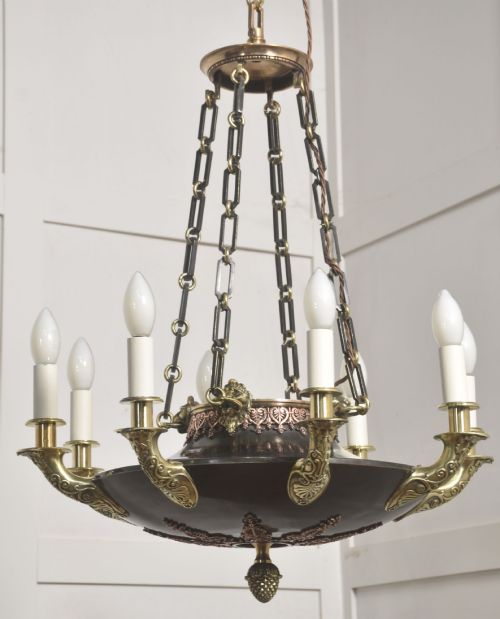
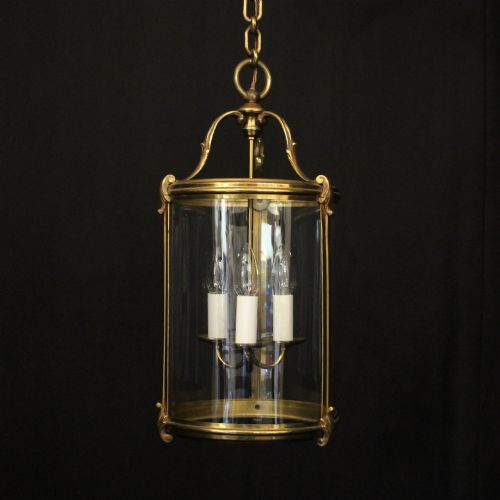
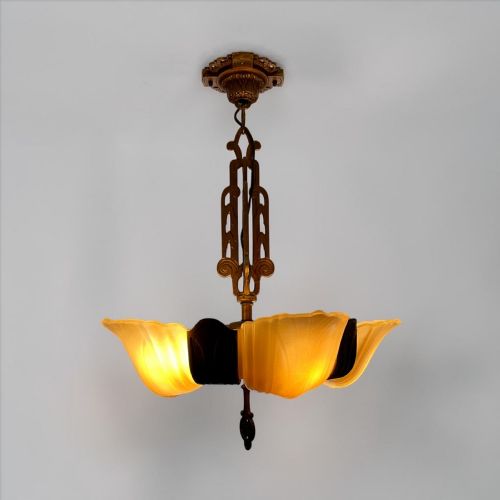
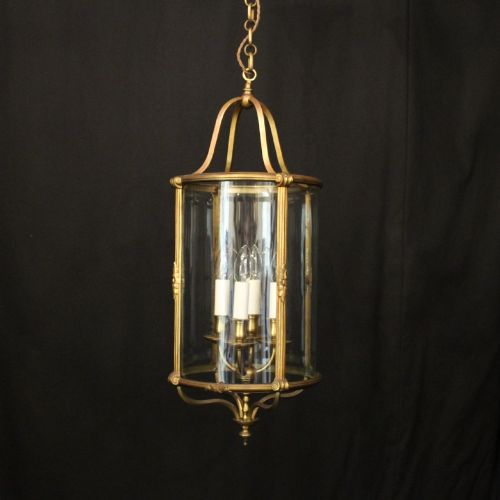
A vintage brass ceiling lamp encompasses a wide variety of overhead lighting fixtures, ranging from multi-branch chandeliers to single pendant lights and hall lanterns. When exploring this selection, buyers encounter distinct forms influenced by design movements such as Art Deco, Edwardian, Victorian, and French Empire styles.
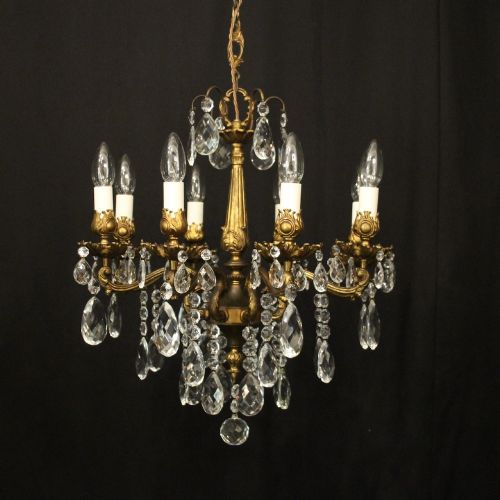
The objects span multiple decades and centuries, incorporating periods from the nineteenth century through the 1930s and 1940s. Formats frequently seen include multi-light chandeliers with crystal drops, cast brass branch fittings, copper railway lanterns, and industrial ceiling lights designed for utilitarian spaces.
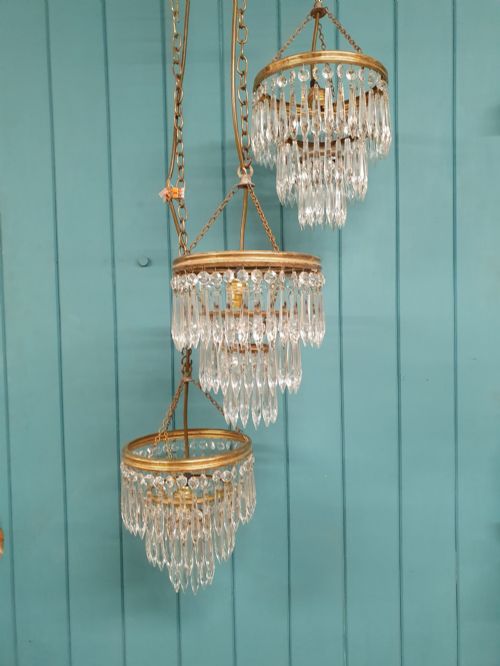
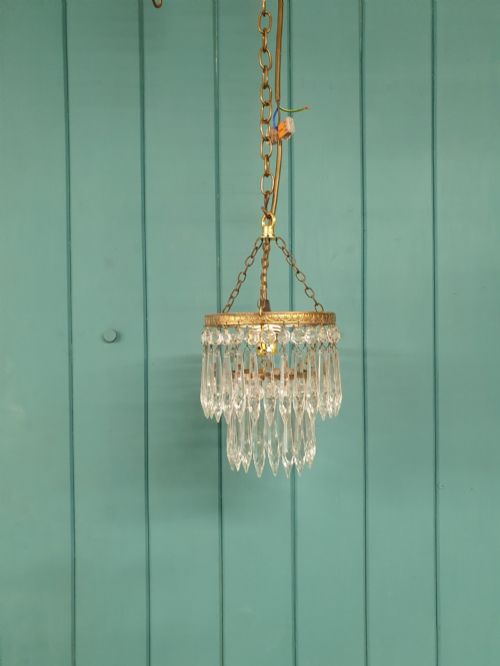
Origins vary across British, French, Dutch, and Italian workshops, displaying regional preferences in metalwork and glass combination. French examples often lean toward gilded bronze and elaborate tent-and-waterfall crystal arrangements, whereas English and industrial pieces prioritise simpler brass framing and functional glass shades.
Materials and construction methods
Construction relies heavily on cast and sheet brass, frequently accompanied by copper, gilt bronze, and silver-gilded metal frameworks. Metals are shaped, cast, or spun to form the structural bodies of chandeliers and the protective surrounds of hanging lanterns.
Glass elements form a vital counterpart to the metalwork, utilising cut glass, crystal drops, opaline glass, leaded glass, and hand-painted or slip-moulded shades. These translucent components distribute light and add textural contrast to the heavy metal mounts.
Manchester City Town Hall once contributed to the supply of sturdy Arts & Crafts multi-light fixtures.
Distinctions in standard and execution
Quality separates fixtures by the crispness of metal casting and the depth of surface gilding or patination. Finer examples display intricately worked brass or bronze foliage, secure structural joints, and substantial weight in their primary frames.
The integration of glass components further distinguishes standard, with hand-cut crystals, heavy moulded shades, and leaded construction representing superior craftsmanship compared to simpler pressed glass alternatives.
The Vintage Brass Ceiling Lamp Glossary
- Plafonnier
- A shallow ceiling light fixed closely to the ceiling surface, often featuring decorative cut glass or moulded bowls.
- Chandelier
- A branched ornamental light fixture suspended from the ceiling designed to hold multiple bulbs or candles.
- Opaline glass
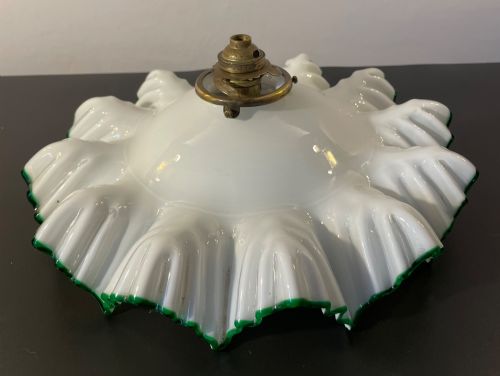
- A milky, semi-translucent glass developed in the nineteenth century, frequently utilised for soft-diffusing lamp shades.
- Gilt bronze
- Bronze metal treated with a thin layer of gold or gold-coloured alloy, commonly associated with French decorative lighting.
- Slip shade
- A type of glass shade that slips directly into a metal frame or basket, popular during the Art Deco period.
Vintage Brass Ceiling Lamp: Frequently Asked Questions
What periods do these ceiling lamps date from?
The selections span from the Victorian and Edwardian eras through the Art Deco period of the 1930s and 1940s. Pieces also stretch back into nineteenth-century designs and revival styles.
Each period brings distinct stylistic markers, from ornate French gilt bronze to robust industrial metalwork and Edwardian cut glass.
How do I choose between a chandelier and a pendant light?
Chandeliers provide multi-branch illumination suited to central living spaces and dining rooms where wider light distribution is required. Pendant lights and single-bulb lanterns offer focused downward lighting ideal for smaller rooms, hallways, or specific functional zones.
Selecting the right form depends on ceiling height and the scale of the room it occupies.
Where were these brass ceiling lights originally used?
Many fixtures were created for grand domestic interiors, public buildings, and civic spaces such as town halls. Others originated from utilitarian settings, including industrial workshops and railway infrastructure.
This diverse background means surviving pieces carry varying levels of decorative embellishment or robust functional design.
How do I identify French Empire style lighting?
French Empire style lighting is characterised by formal symmetry, classical architectural motifs, and elaborate crystal arrangements. Pieces often incorporate tent-and-waterfall crystal drops suspended from gilded bronze or brass frames.
Such designs reflect neoclassical influences popular across European drawing rooms during the nineteenth and early twentieth centuries.