

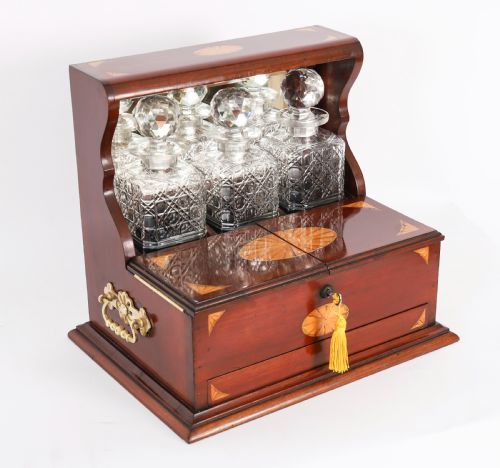


Vintage Boxed Barware Set
A vintage boxed barware set provides an elegant home for spirits and drinking accessories, combining secure fitted storage with fine craftsmanship.
Vintage Boxed Barware Set
When searching for a vintage boxed barware set, buyers encounter specialised containers designed to hold decanters, glasses, or cocktail accessories securely in place. These pieces range from tantalus sets and liqueur caves to fitted boxes for cocktail sticks and shot glasses.
The versions most commonly met on this page include oak and mahogany tantalus decanter stands alongside boxed sets featuring cut glass and silver plate. Origins span from the eighteenth century through the Victorian and Edwardian eras to nineteen thirty Art Deco pieces.
Makers and craftsmen from periods such as the nineteenth century utilised timber cases to house intricate glass bottles and metalware. Each configuration reflects the entertaining habits of its specific decade, from grand three bottle tantalus designs to compact liqueur cellars.
How they were made
These sets were constructed using robust timbers such as oak, mahogany, and satinwood, often enhanced with marquetry inlay or brass mountings. Woodworkers built sturdy boxes designed to withstand frequent use while protecting fragile glass contents.
Interiors frequently incorporate velvet linings or fitted wooden divisions to hold decanters, Baccarat crystal bottles, and silver plated accessories securely. Metal locking mechanisms and silver mounts required precision engineering to secure the bottles within their wooden housings.
Vintage Boxed Barware Set Retail Price Guide 2026
Typical asking prices for vintage boxed barware set among the pieces listed under this phrase on Sellingantiques today, from the lower quarter to the upper quarter. They describe what is for sale here now, not the wider market.
Black Forest tantalus boxes bring woodland charm to your spirits, hiding your favourite tipple behind intricately carved leaves and forest animals.
What varies in quality
Quality in these pieces depends upon the choice of timber and the sophistication of the case construction. Superior examples feature dense hardwoods, intricate satinwood inlay, and high grade marquetry rather than simpler box builds.
The refinement of the internal hardware and the inclusion of cut crystal decanters or Baccarat glass elevate certain items above standard production. Complete sets retain their original locking mechanisms, fitted velvet bases, and matching glassware without replacement components.
The Vintage Boxed Barware Set Glossary
- Tantalus
- A locking drink cabinet that displays decanters while preventing unauthorised access to the contents. The wooden or metal bar secures the stoppers in place until a key is turned.
- Cave a liqueur
- A French fitted liqueur box containing decanters and small glasses, often finished in exotic woods or elaborate decorative styles. These portable cellars were popular for after dinner entertaining.
- Marquetry
- The art of applying decorative pieces of veneer to a structural structure to form geometric or pictorial designs. Craftsmen utilised contrasting timbers to create detailed patterns on the exterior of boxes.
- Cut crystal
- Glassware shaped with faceted geometric patterns that reflect light across the surface. High quality pieces exhibit sharp, clean cutting and substantial weight.
Vintage Boxed Barware Set: Frequently Asked Questions
What is a tantalus set?
A tantalus set is a locking decanter stand designed to hold spirits securely within a wooden frame. The locking mechanism prevents guests or servants from accessing the contents without the key.
These pieces typically house two or three glass decanters and sit on sideboards or in drawing rooms. They combine security with decorative display during the Victorian and Edwardian periods.
How do I date a barware box?
Dating relies upon observing the timber, the style of the box, and the manufacturing methods used in the mountings. Pieces from the eighteenth century display different cabinetmaking techniques compared to Edwardian or nineteen thirty Art Deco examples.
Examining the locks, hinges, and the cut of the crystal glassware provides further clues to the period of origin. Surviving documentation or hallmarks on silver components can also confirm the date.
How should I care for antique barware?
Care involves maintaining the humidity around wooden cases to prevent timber splitting and keeping brass mounts polished with appropriate products. Glass components should be washed by hand with lukewarm water rather than placed in modern dishwashers.
Leather or velvet interior linings require gentle dusting to preserve the fabric. Maintaining stable indoor temperatures protects both the exterior wood and the delicate internal fittings.