
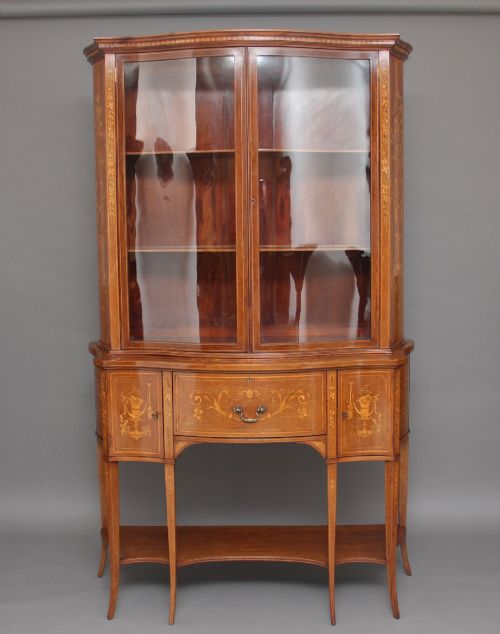
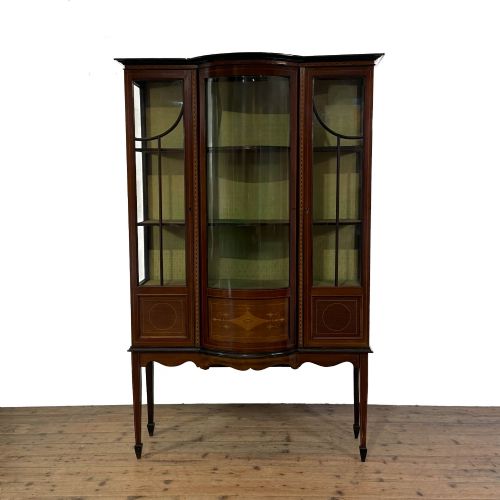

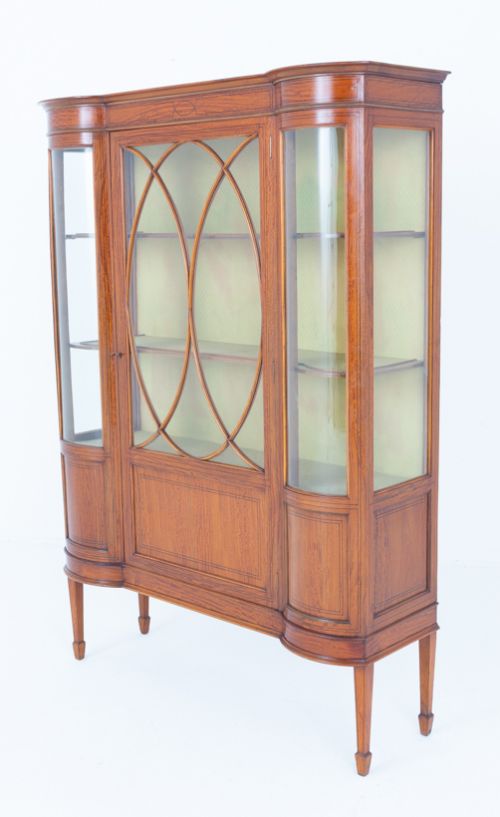


Vintage Bow Fronted Vitrine
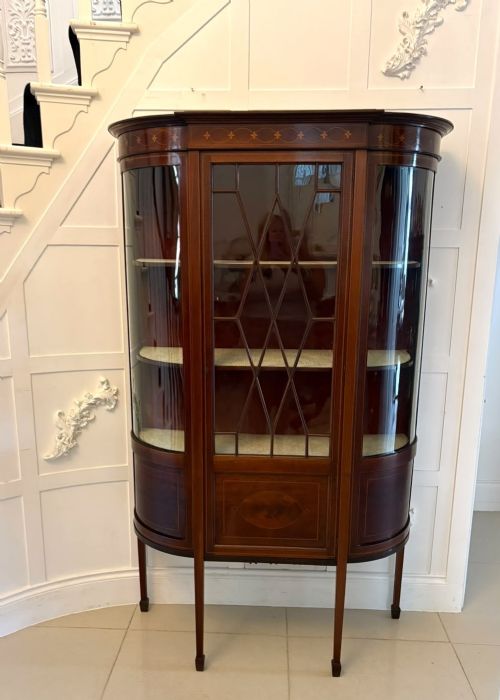
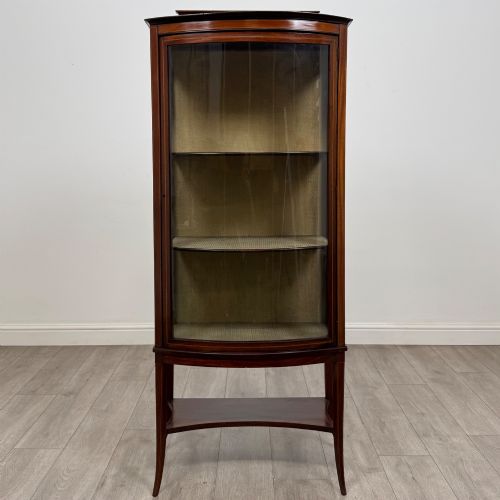
A vintage bow fronted vitrine brings curved glass and polished timber together to display treasured china and curios.
Vintage Bow Fronted Vitrine
When you search for a vintage bow fronted vitrine, you encounter refined display cabinets and bookcases originating from the Victorian, Edwardian, and early twentieth-century periods. These freestanding timber pieces combine curved glass doors with interior shelving designed to showcase decorative objects and china.
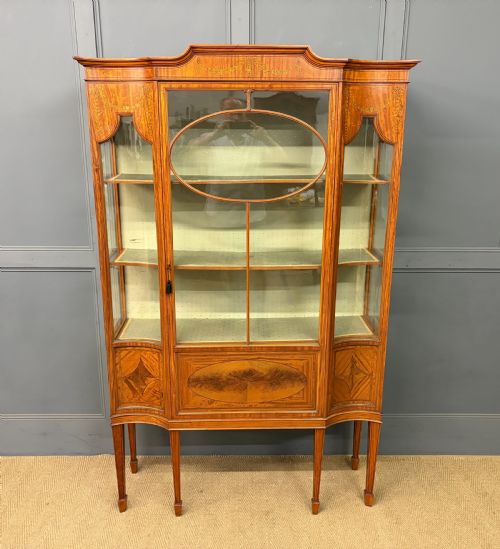
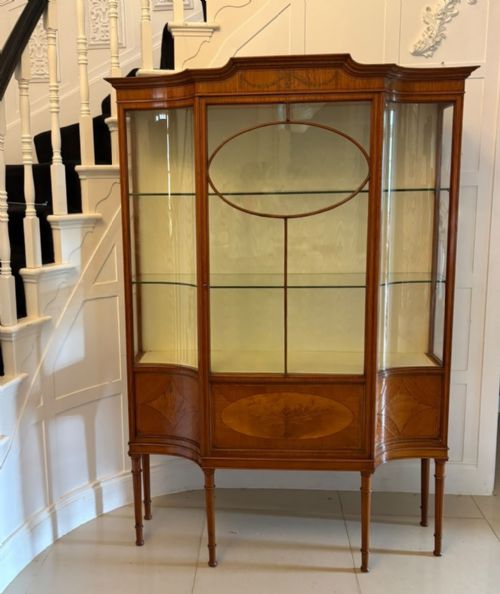
The Edwardian and Victorian examples on this page frequently display Sheraton Revival influences, alongside variations in satinwood, burr walnut, and solid mahogany. Makers such as Maple & Co. produced notable pieces during this era, often incorporating delicate fruitwood inlay.
Forms range from intimate side cabinets to larger display cases, occasionally featuring painted finishes or concave glass doors. Each cabinet reflects the domestic aspirations of its period through careful joinery and curved glazing.
Markers of distinction
Quality rests in the precision of the curved glazing bars and the intricacy of the satinwood or fruitwood inlay. Superior examples feature well-figured mahogany or burr walnut veneers that demonstrate careful selection by the cabinetmaker.
The refinement of the internal shelving supports, the execution of the brass hardware, and the stability of the bowed door hinges separate standard production pieces from finer workshop commissions.
Cabinet styles span Sheraton Revival, Art Nouveau, and French Provincial design traditions.
Maple & Co.
The Vintage Bow Fronted Vitrine Glossary
- Vitrine
- A glass-fronted cabinet designed specifically for displaying fine porcelain and curiosities. These pieces rely on extensive glazing to maximise visibility from multiple angles.
- Bow front
- A convex curved cabinet facade that projects outward from the centre. This shape softens rectilinear room layouts and requires skilled timber bending.
- Sheraton Revival
- A late nineteenth and early twentieth-century design movement inspired by eighteenth-century neoclassical furniture. It relies on light timbers, satinwood inlay, and balanced proportions.
- Marquetry
- Decorative patterns formed by fitting together small pieces of contrasting veneer. Artisans use this technique to create floral or geometric motifs on cabinet doors.
Vintage Bow Fronted Vitrine: Frequently Asked Questions
What is a vitrine?
A vitrine is a glazed display cabinet built to showcase porcelain, silver, and decorative objects. The glass panels on the front and sides allow light to enter and illuminate the interior.
Historically placed in formal reception rooms, these cabinets protect delicate items from dust while keeping them visible to guests.
How do I style a vitrine?
Styling a display cabinet involves balancing the scale and colour of your collection across the interior shelves. Grouping items by material or period creates a cohesive visual arrangement.
Allowing generous negative space around each piece prevents the shelves from appearing crowded and highlights individual objects.
Are the glass doors original?
Many Edwardian and Victorian cabinets retain their original bent glass panes, which often display slight surface ripples or minor bubbles. These subtle imperfections confirm the traditional manufacturing methods of the period.
Replacement glass on older cabinets tends to appear perfectly flat and lacks the historical character of original curved panes.
How do I date these cabinets?
Dating relies on stylistic clues, timber choices, and construction methods characteristic of Victorian, Edwardian, or later twentieth-century workshops. Sheraton Revival influences and satinwood inlay strongly suggest late nineteenth or early twentieth-century production.
Examining the interior linings, backboards, and hardware provides further evidence of the exact era in which the cabinet was built.