







Vintage Bottle Carrier
These vintage bottle carriers are practical drinking vessels and cases designed to hold multiple bottles securely for transport or display.
Vintage Bottle Carrier
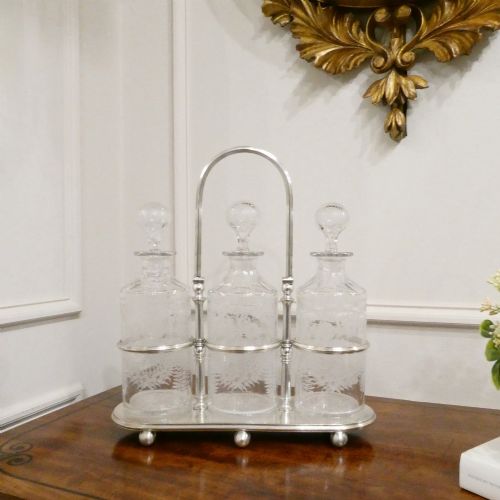
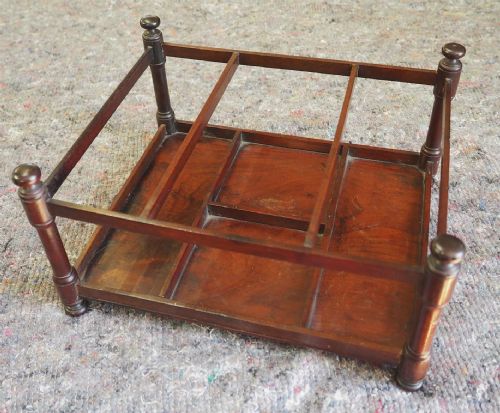
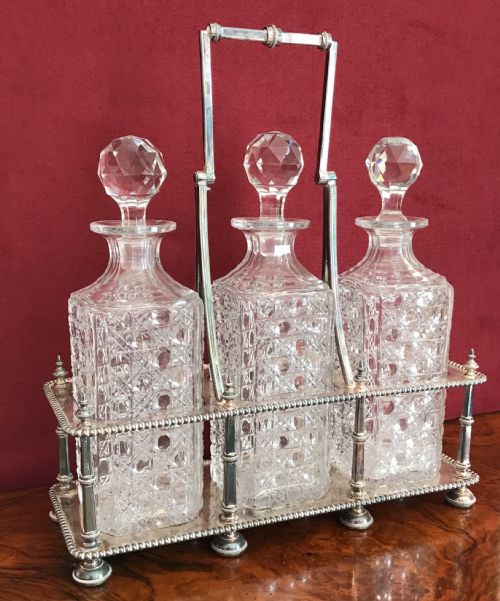
A vintage bottle carrier encompasses various forms such as wine holders, decanter stands, spirit cases, and tantalus sets designed to hold beverage bottles securely. When searching for a vintage bottle carrier, buyers encounter items ranging from Georgian mahogany and treen holders to silver plated Victorian frames and Edwardian campaign decanter cases.
The materials and construction vary widely across the inventory, reflecting different domestic and travel needs from the eighteenth century through to the early twentieth century. Examples span from leather mountaineering whisky cases and champagne magnum presentation boxes to elaborate silver plate twin wine holders.
Buyers are most likely to meet silver plated frames and mahogany holders dating from the Victorian and Edwardian periods on this page. These pieces showcase functional craftsmanship intended for dining rooms, campaign travel, or formal presentation.
How they were made
Makers constructed these carriers using robust hardwoods like mahogany, often paired with brass fittings, leather linings, or treen elements to secure the glass vessels firmly in place. Woodwork involved traditional joinery to build sturdy boxes, presentations cases, and bottle holders capable of withstanding regular movement.
Metalwork played a central role, utilising silver plate over base metals and cast brass for frames, handles, and locking mechanisms on tantalus sets and stands. Cut glass and standard glass decanters were specifically fitted into these wooden or plated metal frames to complete the barware sets.
Vintage Bottle Carrier Retail Price Guide 2026
Typical asking prices for vintage bottle carrier among the pieces listed under this phrase on Sellingantiques today, from the lower quarter to the upper quarter. They describe what is for sale here now, not the wider market.
Materials in these listings include silver plate, mahogany, brass, cut glass, leather, and fabric across several centuries.
What varies in quality
Quality in these carriers rests on the precision of the joinery, the durability of the materials, and the sophistication of the metal plating or hardware. Superior examples display substantial mahogany framing, robust silver plating, and integrated locking mechanisms that operate smoothly.
Finer pieces often feature specialised provisions such as fitted leather cases, cut glass bottles, or maker marks that indicate skilled workshop production rather than standard commercial output.
Lee And Wigfull
The Vintage Bottle Carrier Glossary
- Tantalus
- A locking drink cabinet or frame that secures decanters by their necks to prevent unauthorized access while still displaying the contents.
- Treen
- Small handmade wooden household objects turned on a lathe or carved from timber.
- Decanter stand
- A stationary or portable frame designed to hold one or more decanters and serving bottles safely on a table or sideboard.
- Campaign case
- A portable box or container designed for travel, typically featuring robust construction and fitted interior compartments.
Vintage Bottle Carrier: Frequently Asked Questions
What is a tantalus?
A tantalus is a locking beverage frame that holds decanters by the stopper and neck. This design displays the liquor while keeping the bottles secure.
Such devices typically feature a hinged metal bar across the stoppers connected to a locking mechanism at the side or base.
How were bottle carriers used?
These items served to transport, present, or store multiple wine and spirit bottles safely in homes or during travel. Campaign versions were built for mobility on journeys.
Stationary stands and holders remained in dining rooms and on sideboards for everyday service and entertaining.
What woods were used?
Makers predominantly utilised mahogany for eighteenth and nineteenth century wooden carriers and presentation boxes. This hardwood provided the necessary strength and appearance.
Other materials like brass and leather were incorporated to reinforce the structure and protect the bottles during handling.
How do silver plate and brass differ?
Silver plate involves applying a thin layer of silver over a base metal frame to give a bright, polished finish. Brass is a solid alloy of copper and zinc used for structural fittings.
Both metals were chosen for durability and decorative appeal on handles, shields, and frames.