

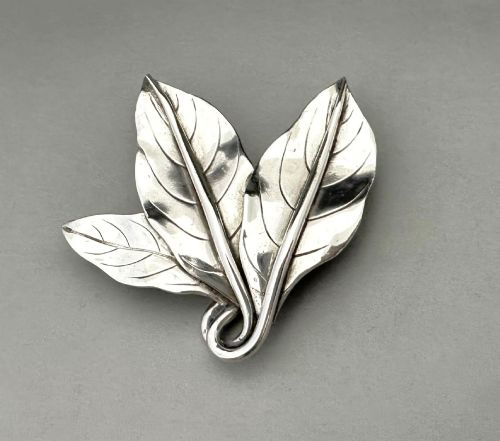
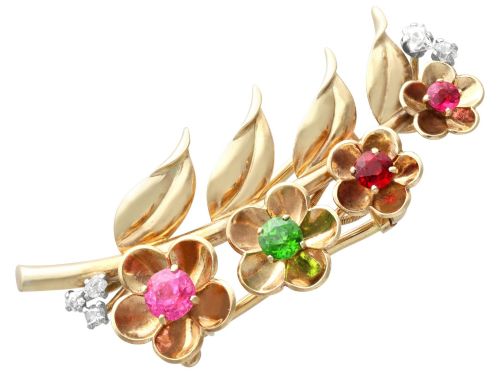
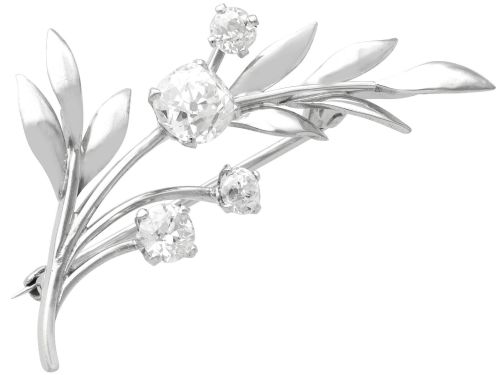
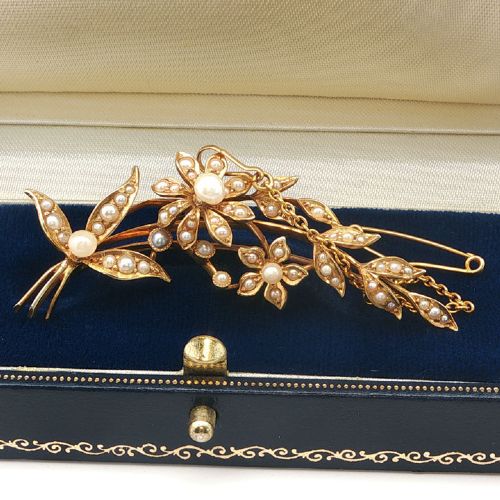


Vintage Botanical Brooch
A vintage botanical brooch brings leaf, flower and insect forms to your lapel in enamel, gold and silver.
Vintage Botanical Brooch
A vintage botanical brooch takes natural forms such as leaves, flowers and sprays, capturing plant life in precious metals and gemstones. When you search for a vintage botanical brooch, you encounter pieces that span the Victorian, Edwardian and mid-century periods, alongside Art Nouveau interpretations.
Origin and period dictate the character of each piece, ranging from British Victorian gold work to mid-century Scandinavian silver and enamel designs. These jewels serve as wearable representations of flora, pinned securely to garments as decorative accents.
Materials and construction
Goldsmiths and silversmiths utilised 15ct gold, 18ct gold, silver and silver gilt to form the structure of each brooch, soldering stems and bezels by hand. Precious stones including diamonds and pearls were set into the metal to highlight floral centres and leaf veins.
Enamelling techniques such as plique-à-jour were employed to create translucent coloured petals that catch the light without a solid metal backing. This demanding craft requires fusing powdered glass to metal wire frames, resulting in delicate wings and leaves.
Vintage Botanical Brooch Retail Price Guide 2026
Typical asking prices for vintage botanical brooch among the pieces listed under this phrase on Sellingantiques today, from the lower quarter to the upper quarter. They describe what is for sale here now, not the wider market.
Flower fairy brooches allow you to carry a tiny mythical woodland creature on your lapel wherever you go.
Judging quality and craftsmanship
The standard of a botanical brooch rests upon the precision of the metalwork and the preservation of the enamel. Finer pieces display intricate hand-chasing on gold leaves and secure claw or flush settings for pearls and diamonds.
Enamel condition significantly separates examples, as flawless translucent colour indicates superior firing and handling. Robust pin mechanisms and clear maker attribution or gold hallmarks further elevate a piece within its period.
Aksel Holmsen·Meyle & Mayer
The Vintage Botanical Brooch Glossary
- Plique-A-Jour
- An enamelling technique where enamel is applied in cells without a backing, creating a stained-glass effect that lets light pass through. This method is frequently seen in Art Nouveau jewellery.
- Silver Gilt
- Silver that has been coated with a thin layer of gold through fire gilding or electroplating. It offers the warm tone of gold combined with a silver base.
- Essex Crystal
- A convex rock crystal carved and painted on the flat reverse side to create a three-dimensional miniature image. The technique produces a lifelike representation beneath the crystal dome.
- Flower Spray
- A jewellery motif depicting a gathered bunch of stems and blossoms arranged together. This design was particularly popular during the Edwardian and mid-century eras.
Vintage Botanical Brooch: Frequently Asked Questions
What periods do these brooches come from?
The listings encompass items from the Victorian, Edwardian and mid-century eras, dating from the early twentieth century through to the nineteen-fifties. Styles shift from naturalistic floral sprays to stylised Scandinavian enamel work.
Each period brings distinct manufacturing techniques and aesthetic priorities, helping collectors attribute pieces to specific decades.
How do I wear a botanical brooch?
These brooches pin securely to lapels, collars, heavy knitwear and scarves using traditional pin and safety catch mechanisms. They add a focal point to tailored jackets and winter coats.
Heavier gold and diamond pieces require sturdy fabrics to support their weight without pulling the cloth.
What materials are typically used?
Common materials include yellow gold in various carats, sterling silver, silver gilt and vitreous enamel. Pearls and diamonds are frequently integrated to accent petals and flower centres.
Translucent enamel is often combined with precious metals to mimic the natural colours of leaves and blossoms.
How do I identify Art Nouveau pieces?
Art Nouveau examples feature fluid, asymmetrical lines inspired by natural plant growth and organic forms. They often incorporate plique-à-jour enamel and depict flower fairies, leaf motifs or curling stems.
These designs date predominantly from the turn of the twentieth century and emphasise artistic craft over strict symmetry.