



Vintage Bombe Commode
A vintage bombe commode brings sweeping serpentine curves and substantial storage to a room through distinctive bulging drawer fronts.
Vintage Bombe Commode
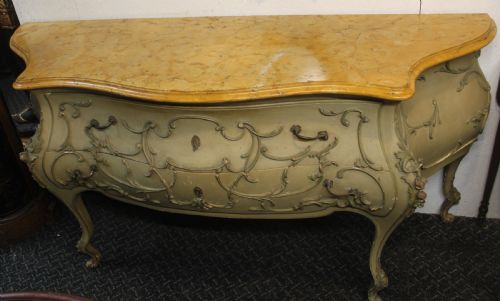
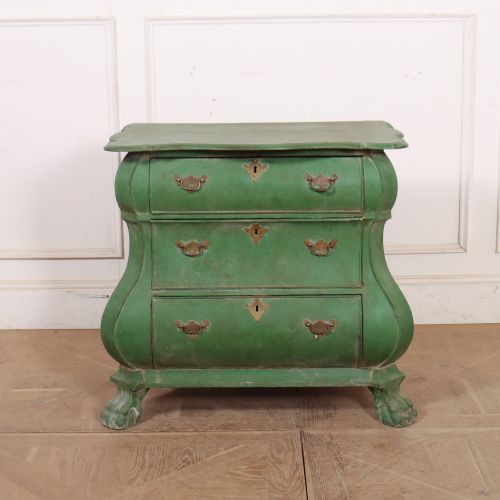
A vintage bombe commode is a chest of drawers defined by its swelling, outward-curving sides and fronts that demand space in a hallway or bedroom. Pieces matching this phrase appear across the eighteenth, nineteenth and early twentieth centuries, drawing heavily on French Rococo, Louis XV and Dutch Baroque idioms.
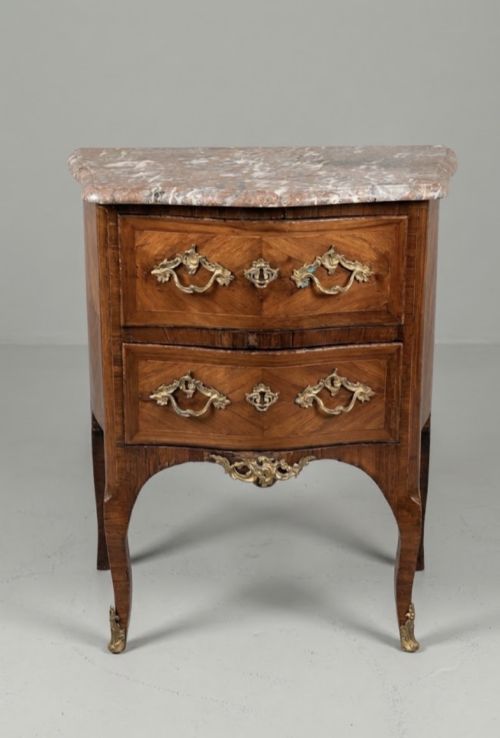
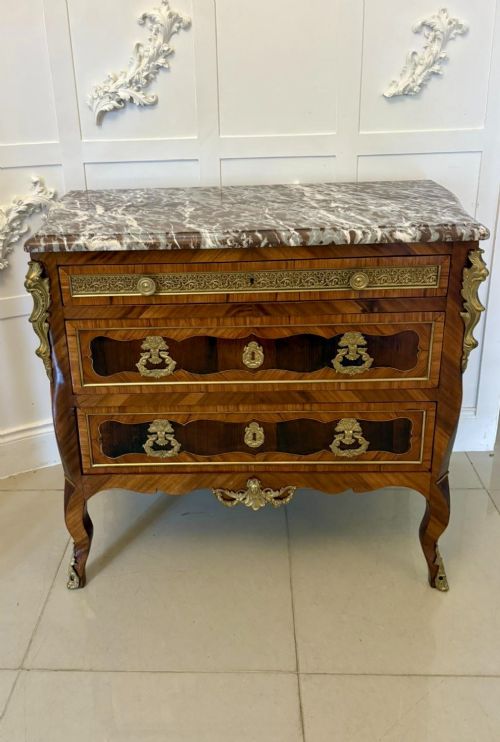
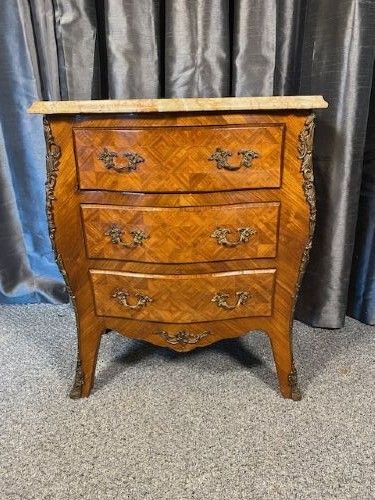
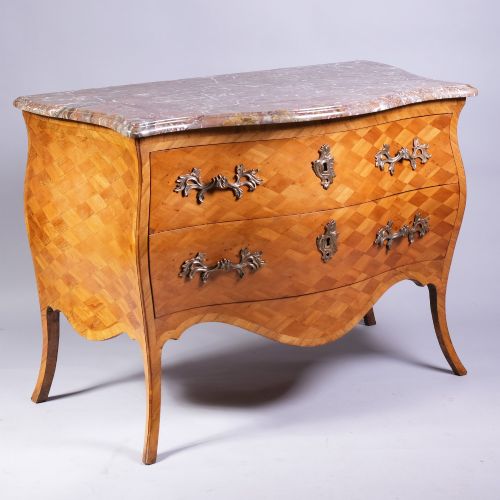
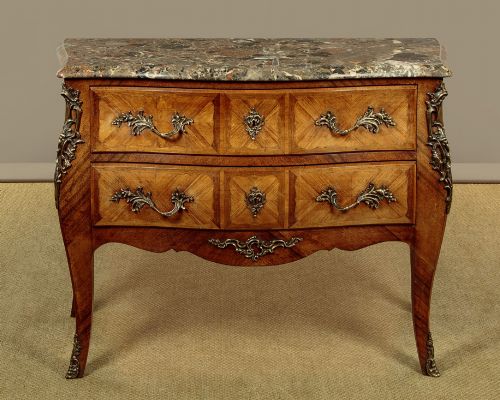
The form frequently meets the eye in walnut, kingwood and burr walnut, alongside painted finishes and intricate marquetry. Many examples feature shaped marble tops and gilt ormolu mounts, shifting between grand French styling and robust Dutch or Italian interpretations.
Buyers encounter various scales, from small bedside cabinets to large sideboards and chests with serpentine or bombe fronts. These items function primarily as statement storage pieces, combining decorative presence with deep, curving drawers.
Materials and construction methods
Cabinetmakers shaped these pieces using solid timbers such as oak and walnut as a carcase, overlaid with decorative veneers like kingwood and burr walnut. Complex curving fronts required careful timber selection and joinery to achieve the characteristic swollen profile.
Surfaces were frequently embellished with marquetry inlay, painted decoration, or gilded ormolu mounts that accent the corners and handles. Heavy marble slabs, shaped to follow the serpentine contours of the top, were fitted to complete the construction.
Vintage Bombe Commode Retail Price Guide 2026
Typical asking prices for vintage bombe commode among the pieces listed under this phrase on Sellingantiques today, from the lower quarter to the upper quarter. They describe what is for sale here now, not the wider market.
Listings span several distinct eras, featuring nineteenth-century interpretations alongside pieces dated to nineteen-hundred and nineteen-thirty.
Distinctions in craftsmanship
The finesse of the timber matching and the complexity of the marquetry patterns set finer examples apart from simpler production. Burr walnut and kingwood veneers show deliberate grain placement that follows the difficult contours of a swelling drawer front.
The weight and chasing of the ormolu mounts, together with the quality of the marble top's edge profiling, indicate the original workshop's investment in the piece. Robust internal drawer construction and smooth operation of the serpentine drawers reflect higher standards of period cabinetmaking.
The Vintage Bombe Commode Glossary
- Bombe
- A descriptive term for furniture with an outward-swelling or bulging front and sides. This silhouette requires specialised curved joinery.
- Ormolu
- Gilded bronze mounts applied to furniture for decoration and edge protection. These metallic elements highlight the corners and handles of Rococo pieces.
- Marquetry
- Decorative patterns formed by fitting contrasting veneers into a wooden surface. Craftsmen use this technique to create floral or geometric motifs.
- Serpentine
- A furniture front or top shaped with a curving line, convex at the centre and concave at the sides. It softens the boxy geometry of traditional chests.
- Kingwood
- A dense, richly figured exotic timber used extensively for cabinet veneers. Its dark grain patterns add visual depth to revival pieces.
Vintage Bombe Commode: Frequently Asked Questions
Where should I place a bombe commode?
These pieces require generous floor space to allow their curving fronts and protruding corners to be seen properly. They suit large hallways, living rooms, or spacious bedrooms as focal storage points.
Because of their depth, ensure walkways remain clear around the piece so the drawers can open fully without obstruction.
How do I care for marble top commodes?
The marble top requires gentle cleaning with a damp cloth and mild, non-acidic soap to preserve the polish. Avoid placing acidic liquids directly on the stone.
Treat the wood body with appropriate furniture wax, keeping moisture away from the veneer edges and ormolu mounts.
Are these commodes practical for daily storage?
The swelling shape creates deep drawers that offer substantial volume for linens, clothing, or household items. The curved interior matches the exterior profile.
Drawers can be heavy when filled, so pull them evenly using both handles to prevent binding within the curved carcase.
How do I distinguish French from Dutch styles?
French-influenced pieces tend to feature lighter veneers like kingwood, elaborate ormolu mounts, and refined Rococo curves. They often include marble tops and marquetry.
Dutch examples frequently display heavier oak or walnut construction, painted finishes, and a more robust, swelling profile rooted in Baroque traditions.