






Vintage Bobbin Leg Table
These vintage bobbin leg table pieces bring distinctive turned woodwork into a room, offering both practical surfaces and genuine character.
Vintage Bobbin Leg Table
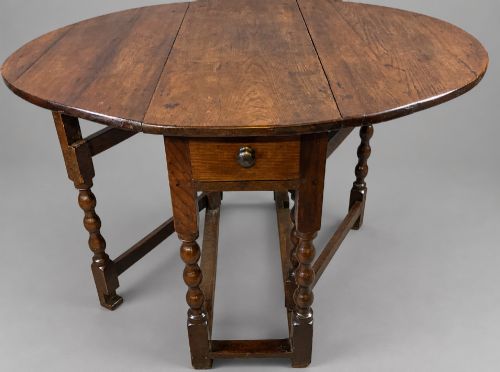
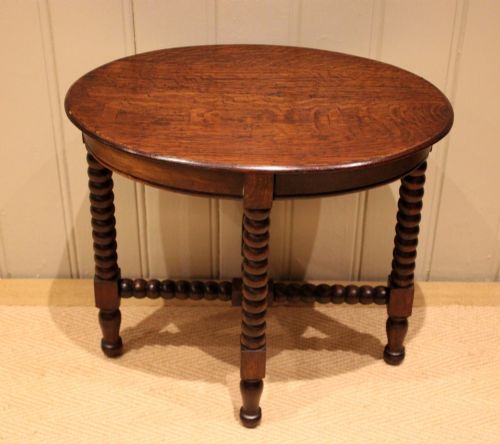
A vintage bobbin leg table relies upon distinctive spool-turned supports, creating a rhythmic silhouette that spans multiple centuries of furniture making. Buyers searching for a vintage bobbin leg table encounter forms ranging from sturdy oak gateleg dining pieces to small occasional and side tables.
The materials used across these tables lean heavily toward traditional timbers such as oak, beech, walnut, and mahogany, sometimes paired with brass or velvet accents. Origins stretch from the seventeenth century through the Victorian era and into the early twentieth century, incorporating revived Jacobean aesthetics and rustic farmhouse styles.
How they were made
Makers shaped the characteristic bobbin legs using a lathe to turn solid timbers like oak, beech, and walnut into repeating spherical and cylindrical shapes. These turned supports were then joined to tabletops using traditional mortise and tenon joinery or hinged drop-leaf mechanisms.
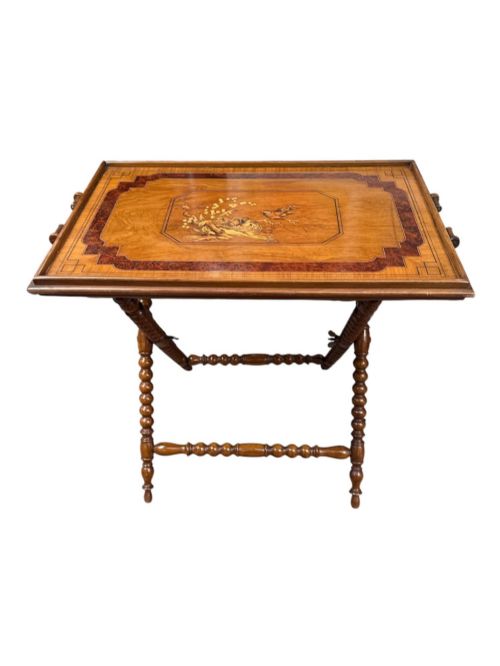
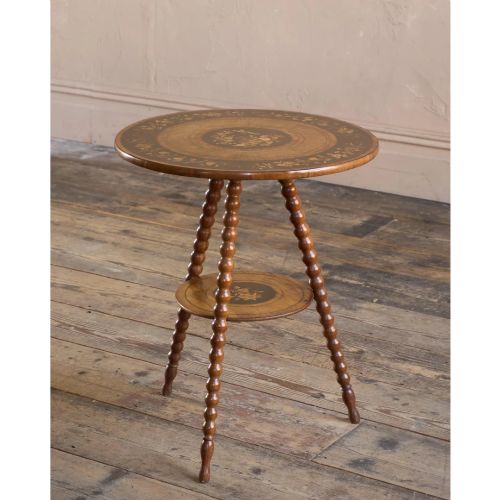
Surface decoration on certain pieces involves intricate marquetry work, as seen in Sorrento Ware examples, while others rely on the natural grain of yew wood, mahogany, or elm. Finishes were kept relatively simple to highlight the turned woodwork and the underlying timber.
Vintage Bobbin Leg Table Retail Price Guide 2026
Typical asking prices for vintage bobbin leg table among the pieces listed under this phrase on Sellingantiques today, from the lower quarter to the upper quarter. They describe what is for sale here now, not the wider market.
The listings span from seventeenth-century oak gateleg designs to early twentieth-century coffee tables and Arts and Crafts pieces.
What varies in quality
The grade of timber dictates much of the quality, with dense quarter-sawn oak, rich mahogany, and burr walnut commanding greater presence than simpler utility woods. The crispness and symmetry of the lathe-turned bobbin legs also reveal the skill of the original maker.
Structural integrity separates everyday examples from finer pieces, particularly in the tightness of joints on gateleg and drop-leaf mechanisms. Subtle details such as inlaid marquetry or the inclusion of a fitted drawer elevate a piece beyond standard utilitarian tables.
The Vintage Bobbin Leg Table Glossary
- Bobbin leg
- A furniture leg turned on a lathe to resemble a string of bobbins or spools, popular in the seventeenth century and revived in later periods.
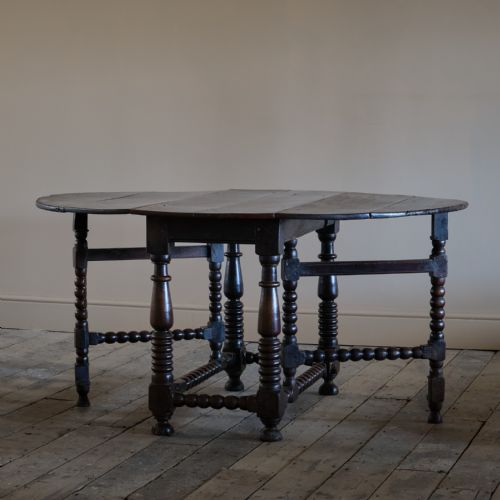
- Gateleg table
- A table with hinged leaves supported by legs that swing out like a gate, allowing the surface area to expand or contract.
- Marquetry
- The art of applying decorative pieces of veneer to a structure to form intricate patterns and pictures, often using contrasting woods.
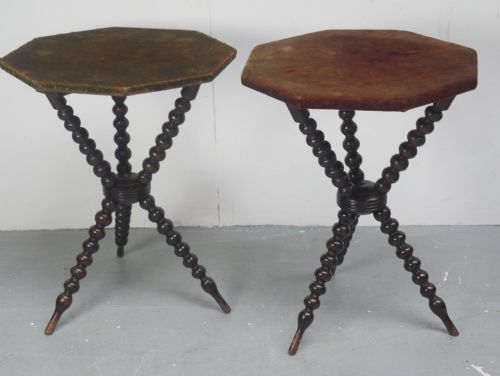
- Gypsy table
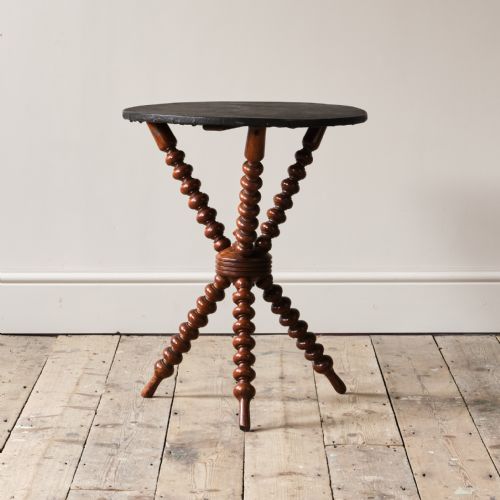
- A lightweight occasional table, frequently featuring bobbin-turned legs and sometimes draped with fabric, popular during the Victorian period.
- Refectory table
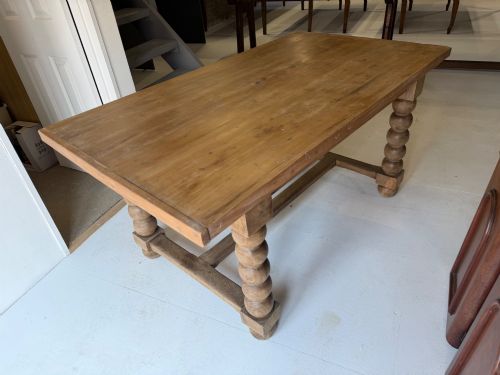
- A long, narrow dining table traditionally used in monasteries and great halls, often constructed from heavy oak with sturdy underframes.
Vintage Bobbin Leg Table: Frequently Asked Questions
How do I date a bobbin leg table?
Dating depends largely on the timber, the construction methods of the tabletop, and the style of the turnings. Seventeenth-century examples typically feature heavy oak and hand-pegged joinery, whereas nineteenth-century revivals often use machine-turned beech or mahogany.
Examining the underside and the wear patterns on the feet helps determine whether a piece belongs to the original seventeenth-century period or a later Victorian revival.
Are these tables sturdy enough for daily use?
Most antique bobbin leg tables are built from solid hardwoods like oak and beech, making them robust enough for everyday living. Gateleg and drop-leaf versions provide flexible surface space for dining or working.
Care should be taken with older hinge mechanisms and delicate marquetry surfaces, using coasters and avoiding excessive moisture to preserve the timber.
What is a gypsy table?
A gypsy table is a small, portable occasional table characterised by slender turned legs, often in a bobbin pattern. They gained popularity in the Victorian era as versatile accent pieces for parlours and drawing rooms.
These tables were frequently paired with draped fabric or used to display small decorative items, lamps, and books.
What is the difference between a side table and an occasional table?
A side table typically stands against a wall or beside furniture, sometimes incorporating a drawer for storage. An occasional table is a smaller, more movable piece brought out as needed for specific tasks.
Both forms appear frequently with bobbin-turned legs across various periods from the seventeenth century through the early twentieth century.