




Vintage Board Game Table
A vintage board game table brings parlour entertainment into the sitting room, combining fitted play surfaces with handsome timber construction.
Vintage Board Game Table
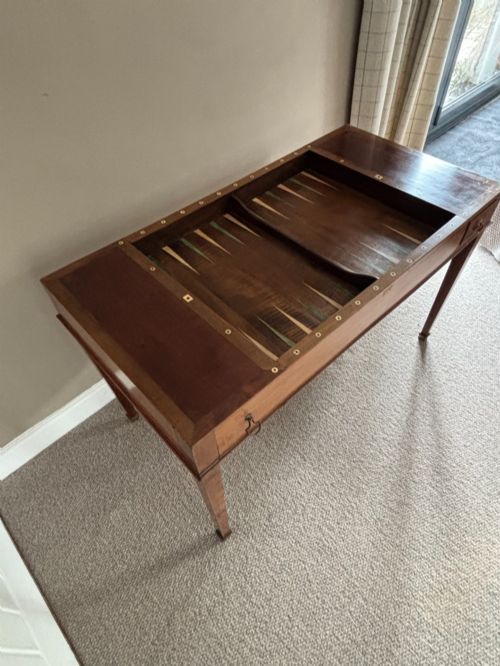
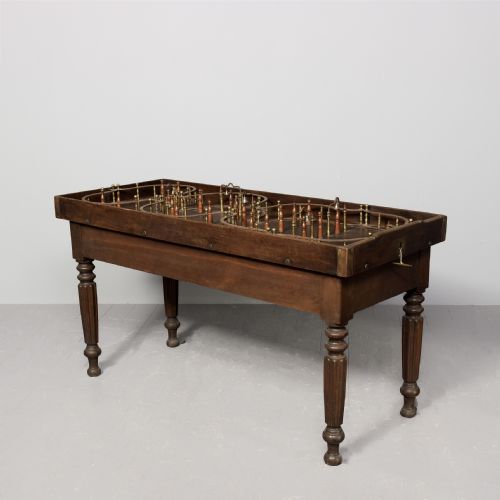
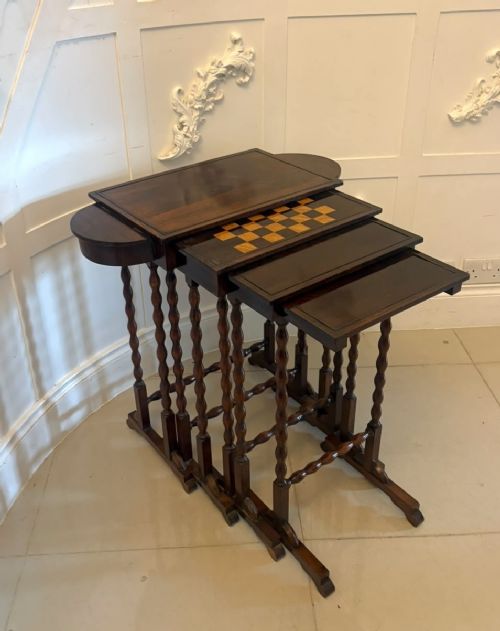
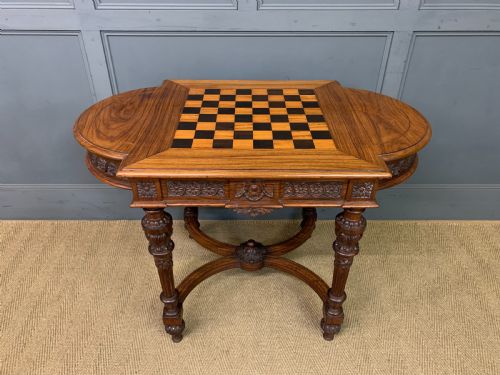
A vintage board game table provides a dedicated surface for pastimes like chess, bagatelle, and skittles, often integrating folding leaves or removable boards. These pieces span the nineteenth century through the Edwardian period, appearing in forms from freestanding tables to nests of tables with integrated chess surfaces.
The materials and styles reflect their era of production, ranging from Regency rosewood and George IV oak to late Victorian walnut score cabinets. Buyers most frequently encounter nineteenth-century pieces alongside Edwardian examples designed for parlour games and compendiums.
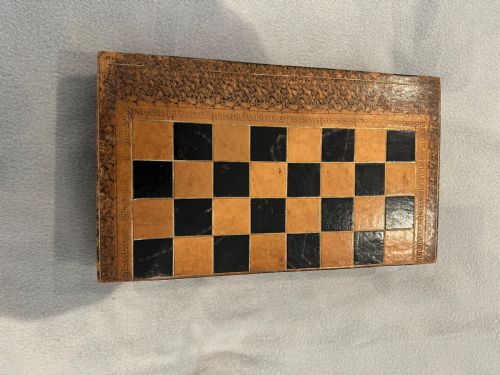
Forms vary from compact boxwood boards and leather-bound faux book games boards to larger billiard and pool score cabinets. Each piece serves a dual purpose as both functional entertainment furniture and decorative room furnishing.
Construction and materials
Cabinet makers utilised dense hardwoods such as rosewood, mahogany, oak, and satinwood to build these tables and associated boxes, often incorporating contrasting inlays like boxwood and ebony for chess and cribbage boards.
Specialised construction techniques accommodated integrated play surfaces, including sliding drawers for pieces, hinged compartments, and removable tabletops that reveal secondary uses beneath.
Vintage Board Game Table Retail Price Guide 2026
Typical asking prices for vintage board game table among the pieces listed under this phrase on Sellingantiques today, from the lower quarter to the upper quarter. They describe what is for sale here now, not the wider market.
The inventory spans the Victorian, Regency, George IV, Anglo-Indian, and Edwardian design periods.
Judging quality in play tables
Quality rests on the selection of timber figures and the precision of the joinery, particularly where folding leaves and sliding mechanisms experience regular movement. Finer examples display meticulous marquetry and harmonious grain matching across the playing surface.
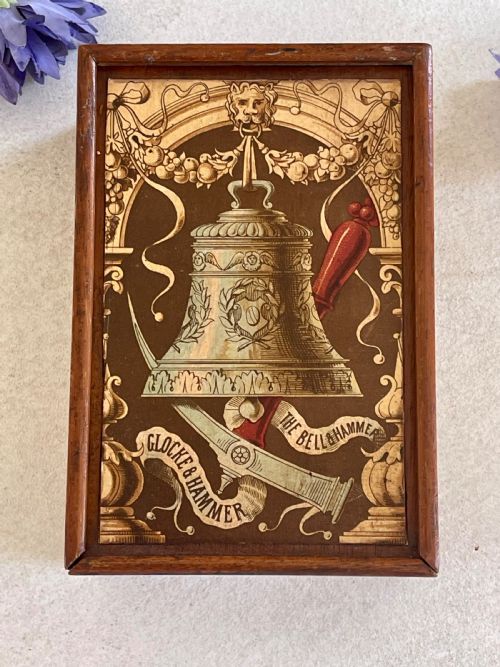
The integrity of integrated accessories, such as original brass fittings, carved bone dominoes, and complete game bells, elevates an example above altered or later-assembled pieces.
Thurston·A British Chess Company
The Vintage Board Game Table Glossary
- Quartetto
- A nest of four tables designed to slide neatly beneath one another when not in use. These often feature an integrated chess table on the top surface.
- Bagatelle
- A nineteenth-century cue sport played on a board with holes and wooden pins. Tables for this game feature specific scoring layouts.
- Compendium
- A multi-game box or cabinet containing equipment for several different pastimes in one container. These sets typically include pieces for chess, checkers, and cribbage.
- Cribbage
- A card game traditionally scored by moving pegs along a tracked board. Cribbage boxes and boards frequently incorporate inlaid wood or silver mounts.
- Score Cabinet
- A wall-hanging or freestanding piece of furniture designed to keep tallies for cue sports like billiards and pool. Edwardian examples often use English walnut.
Vintage Board Game Table: Frequently Asked Questions
What games were played on these tables?
These tables supported a variety of nineteenth-century pastimes, most commonly chess, bagatelle, skittles, and cribbage. Many pieces housed multiple games within a single compendium layout.
Players used integrated boards, sliding compartments, and specialised accessories to transition between different parlour games during evening entertainment.
How do I date a game table?
Dating relies on timber selection, structural style, and manufacturing methods associated with periods like the Regency, George IV, and Edwardian eras. Stylistic markers such as rosewood veneers and brass details provide strong chronological clues.
Maker marks, registration stamps, and accompanying hardware further narrow the specific decade of production.
Can I use these tables daily?
Many vintage tables remain sturdy enough for regular use, provided they receive careful handling and protection from extreme temperatures and moisture. Hinges, folding leaves, and sliding boards should be operated without force.
Maintenance involves gentle cleaning of timber surfaces and preserving the original inlays and hardware.