



Vintage Blue Glass Lamps
These vintage blue glass lamps bring colour and light to a room, spanning periods from the nineteenth century through the art deco era.
Vintage Blue Glass Lamps
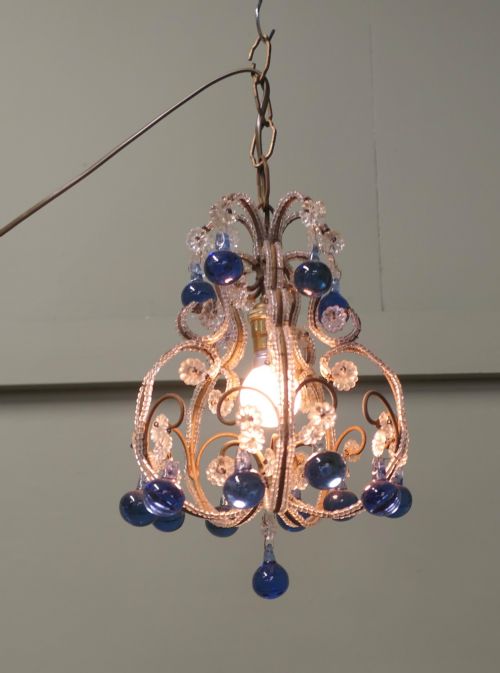
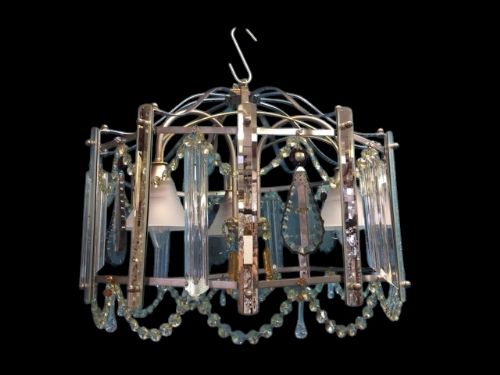
Vintage blue glass lamps encompass a varied selection of lighting forms, from oil lamps and table lamps to chandeliers and wall sconces. Buyers searching for vintage blue glass lamps will encounter pieces originating from Victorian, Edwardian, and Art Deco periods, alongside French neoclassical and art nouveau designs.
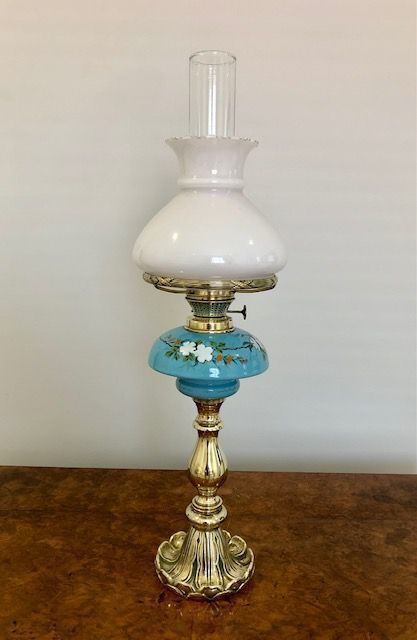
The most common examples on this page are oil lamps featuring blue glass fonts or shades, often paired with brass or ceramic bases. Alongside these, early twentieth-century pendant lights and table lamps demonstrate how glasswork evolved from nineteenth-century apothecary styles into geometric art deco forms.
How they were made
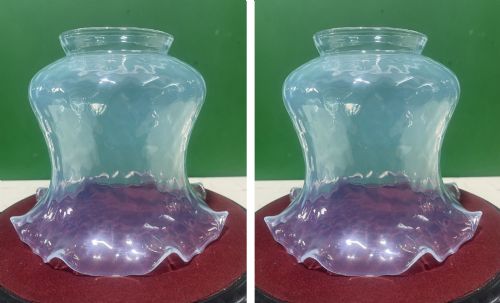
Makers shaped these pieces using blown, frosted, and opalescent glass, combining the material with brass, copper, chrome, and ceramic structures. Coloured glass was worked while molten, shaping fonts, globes, and shades through free-blowing or mould-blowing techniques.
Metal mounts, burners, and brackets were cast and turned in brass or embossed to hold the fragile glass components securely. Structural stability often relied on heavy black glass bases or weighted metal stems to balance the upper weight of the shades and fonts.
Vintage Blue Glass Lamps Retail Price Guide 2026
Typical asking prices for vintage blue glass lamps among the pieces listed under this phrase on Sellingantiques today, from the lower quarter to the upper quarter. They describe what is for sale here now, not the wider market.
Terrestrial globe shades bring miniature maps to your ceiling, letting you illuminate the world from an armchair.
What varies in quality
Quality shows in the depth and consistency of the blue glass, where rich cobalt or tinted hues display even distribution without unintended cloudiness. The crispness of brass embossing and the precision of fitted metal collars separate standard production items from finer workshop pieces.
Finer examples maintain original matching components, such as corresponding burners, brackets, and delicate prisms, which integrate harmoniously with the glass body. The weight and stability of the underlying base, whether cast brass or black glass, indicate the overall structural integrity of the piece.
Baccarat·Hinks
The Vintage Blue Glass Lamps Glossary
- Font
- The oil reservoir of a lamp, frequently fashioned from coloured glass to catch the ambient light. It sits atop a stem or base and connects directly to the burner mechanism.
- Plafonnier
- A ceiling-mounted bowl light that sits close to the surface, popular during the art deco period. These fixtures direct illumination downwards through patterned or frosted glass.
- Globe shade
- A rounded glass cover enclosing the light source, sometimes decorated with terrestrial map designs or uniform tinting. It diffuses light evenly across the room.
- Apothecary jar
- A utilitarian glass container adapted into a lamp base, originating from nineteenth-century chemist shops. These heavy vessels provide a sturdy and distinct silhouette.
Vintage Blue Glass Lamps: Frequently Asked Questions
What periods do these lamps come from?
The pieces span the nineteenth and early twentieth centuries, covering Victorian, Edwardian, and Art Deco eras. You will find items dated from the 1860s through to the 1930s.
Victorian and late nineteenth-century examples often lean towards oil lamps and brass mountings, while 1920s and 1930s pieces showcase art deco styles and chrome work.
How were oil lamps converted for electricity?
Many oil lamps retain their original brass burners and collars while discreetly housing modern internal wiring. This allows them to function safely with contemporary electrical supplies.
Conversion methods vary by piece, but most retain the aesthetic of the original nineteenth-century oil reservoir and glass shade.
Are the glass shades original to the bases?
Most pieces pair glass shades or fonts with matching metal or ceramic bases from the same period. Matching components reflect the typical manufacturing standards of their respective eras.
Examining the fit between the glass collar and the metal mount helps determine how the elements correspond.
How do I care for antique glass lighting?
Clean the glass components gently using a soft, dry cloth or lukewarm water with mild soap. Avoid harsh chemical cleaners that might damage tinted finishes or frosted surfaces.
Brass and metal parts benefit from minimal intervention to preserve their natural age and patina over time.