


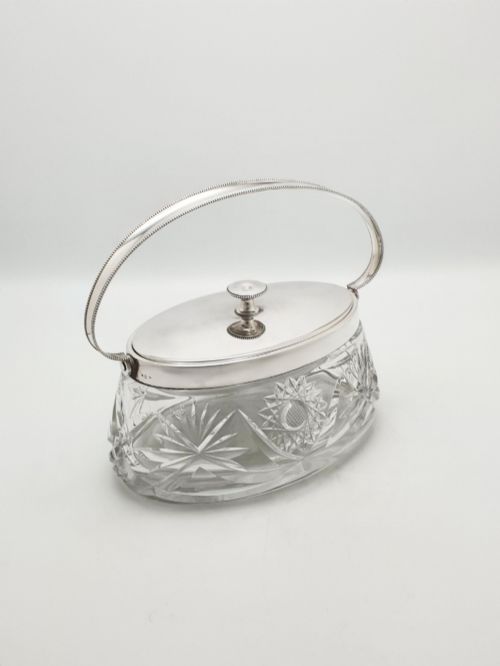


Vintage Biscuit Container
A vintage biscuit container is a charming table vessel designed to keep dry baked goods fresh, offering period craftsmanship for the home.
Vintage Biscuit Container
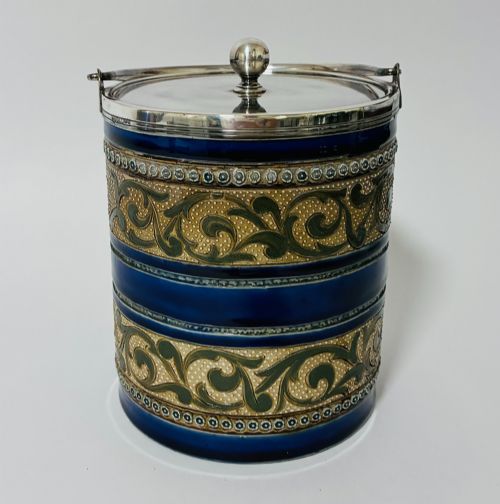
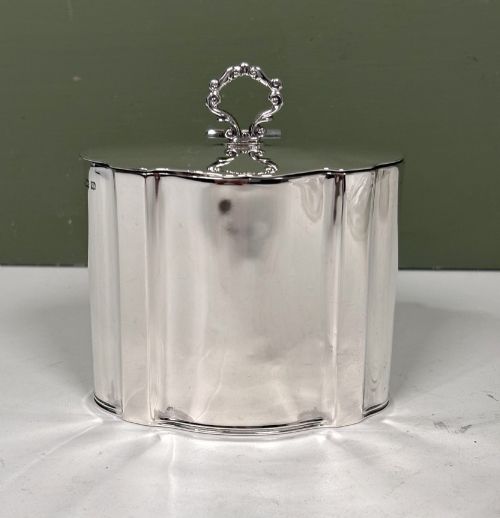
A vintage biscuit container encompasses practical lidded jars, barrels and decorative tins designed for serving and preserving dry baked goods at the table. These vessels emerge primarily from the Victorian and Edwardian eras through to the early twentieth century, spanning utilitarian kitchenware and refined parlour pieces.
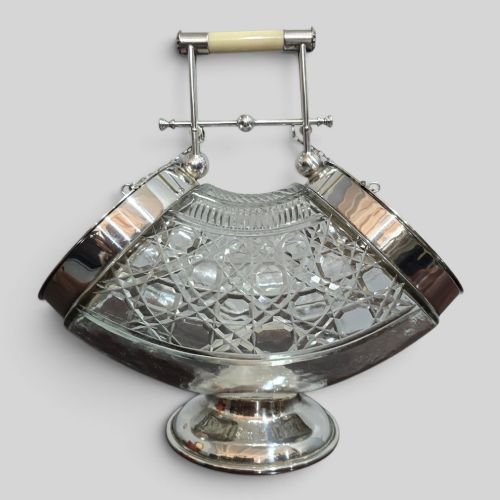
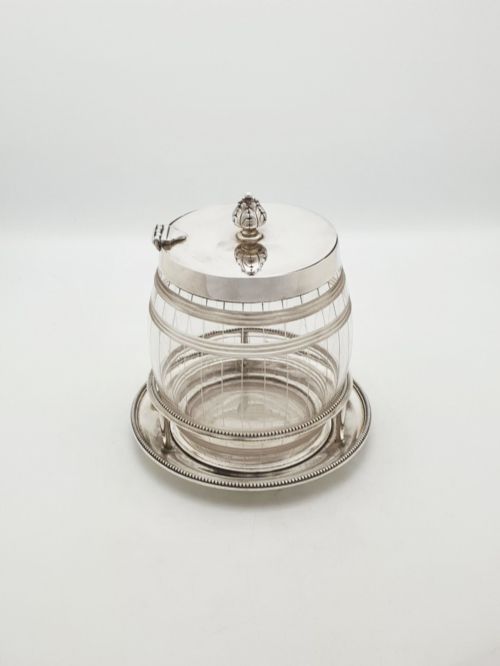
The selections available here showcase significant variety in form and origin, ranging from cut glass barrels with silver plated mounts to ceramic stoneware and lithographed novelty tins. Collectors frequently encounter traditional cylindrical barrel shapes alongside whimsical novelty designs shaped like books, satchels, hats or weights.
Examples stem from various periods including the late nineteenth century and the George V era, demonstrating how domestic dining habits evolved. Buyers searching for a vintage biscuit container will find both ceramic bodies from potteries like Doulton Lambeth and Wedgwood, alongside metalwork from makers such as Elkington and James Dixon and Sons.
Materials and construction methods
Makers utilised a combination of ceramic, glass, and metal to construct these vessels, pairing stoneware or earthenware bodies with hinged metal lids and swing handles. Cut glass components often feature intricate hobnail or faceted surface patterns that catch the light.
Silver plating and solid sterling silver mounts provide structural support and decorative borders around ceramic and glass bodies, frequently secured with swing handles. Tinplate versions employ lithographed enamel decoration to replicate textures like leather or printed book covers.
Specialised decorative techniques include flow blue transfer printing on ceramics, applied gold leaf details, and moulded Jasper Ware reliefs. Metalwork elements often incorporate cast finials, such as heraldic dragons, atop hinged lids.
Vintage Biscuit Container Retail Price Guide 2026
Typical asking prices for vintage biscuit container among the pieces listed under this phrase on Sellingantiques today, from the lower quarter to the upper quarter. They describe what is for sale here now, not the wider market.
Production dates stretch from Victorian stoneware to early twentieth-century novelty tins shaped like satchels.
Distinctions in quality
Quality in these containers rests on the weight and finish of the metal mounts, the clarity and depth of the glass cutting, and the crispness of ceramic moulding. Substantial silver plate over sturdy brass or copper forms indicates superior early manufacturing.
The integrity of the hinged mechanism and the snugness of the lid fit influence daily usability and value. Finer ceramic examples display evenly saturated glazes and sharply detailed applied reliefs without blurring or surface pooling.
Novelty tins and containers depend heavily on the preservation of their original lithographed enamel surfaces and the complexity of their three-dimensional stamped shapes. Intact makers' marks and hallmarks stamped into silver or plate provide secure attribution of quality.
Doulton Lambeth·Elkington·WMF·Huntley And Palmers·Wedgwood·William Crawfords And Son Ltd·Peek Frean And Co·James Dixon And Sons
The Vintage Biscuit Container Glossary
- Biscuit barrel
- A cylindrical lidded container designed specifically for holding biscuits and dry baked goods on the dining table. These pieces usually feature a fixed or swing handle attached to a metal rim.
- Jasper Ware
- A type of fine stoneware developed by Wedgwood, characterised by a matt unglazed surface and contrasting raised white ceramic reliefs, typically in blue or green grounds.
- Silver plate
- A layer of silver fused to a base metal such as copper, brass, or Britannia metal, widely utilised for the rims, covers, and handles of nineteenth-century glassware and ceramics.
- Hobnail cut
- A sharp geometric glass-cutting pattern featuring rows of raised pyramidal facets that create a textured, sparkling surface across the body of a bowl or barrel.
- Flow blue
- A cobalt-blue transfer printing technique used on earthenware where the blue colour bleeds slightly into the surrounding white glaze during kiln firing, producing a soft, hazy effect.
- Novelty tin
- A lithographed metal container manufactured in a playful sculptural form, such as a book, piece of luggage, or toy, often produced by commercial biscuit manufacturers for retail.
Vintage Biscuit Container: Frequently Asked Questions
What is a vintage biscuit container used for?
These vessels were originally manufactured to store and present biscuits, crackers, and dry baked goods on the nineteenth or early twentieth-century dining table. Their fitted lids helped protect the contents from moisture in domestic sitting rooms and parlours.
Today, buyers utilise them for practical storage in kitchens or as decorative display pieces on sideboards and shelves. They remain functional for holding small household items or continuing their original role during gatherings.
How do I tell Victorian pieces from Edwardian ones?
Victorian examples often lean towards heavier ornamentation, incorporating rich ceramic bodies like Wedgwood Jasper Ware or Doulton Lambeth stoneware alongside cast heraldic finials. Silver-plated mounts from this period frequently display robust Neoclassical or ornate Victorian design motifs.
Edwardian pieces tend to introduce lighter aesthetics, including delicate cranberry glass, bright flow blue ceramics, and refined cut glass barrels. The transition into the early twentieth century also brought whimsical novelty forms such as hat boxes and book tins.
Are silver plated mounts marked with hallmarks?
Silver plated containers generally display maker marks, model numbers, or plating symbols rather than official government hallmarks. These stamps often indicate the specific manufacturing firm or the quality of the plate used on the base metal.
Pieces made with solid sterling silver, by contrast, feature official assay office hallmarks indicating the year of manufacture, city, and standard of precious metal. Checking the rim or base usually reveals these stamped manufacturer details.
How do I care for a vintage biscuit container?
Maintenance requires gentle cleaning by hand using mild soap and a soft cloth, avoiding abrasive pads that can scratch glass, ceramic glazes, or delicate silver plate. Keeping metal surfaces dry prevents tarnishing and protects the integrity of vintage hinges and swing handles.
For lithographed tinplate novelty containers, moisture should be kept away from printed surfaces to preserve the original enamel decoration. Storing them in stable humidity conditions safeguards both ceramic bodies and applied metal mounts.