






Vintage Billiard Scoreboard
These vintage billiard scoreboards are functional wall pieces from games rooms and parlours that bring period character to modern interiors.
Vintage Billiard Scoreboard
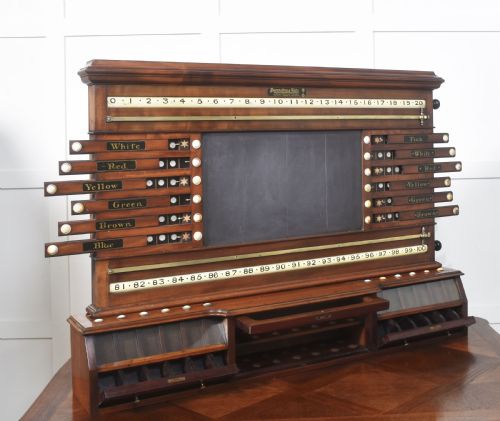
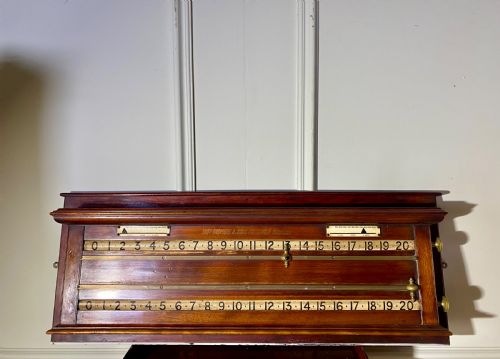
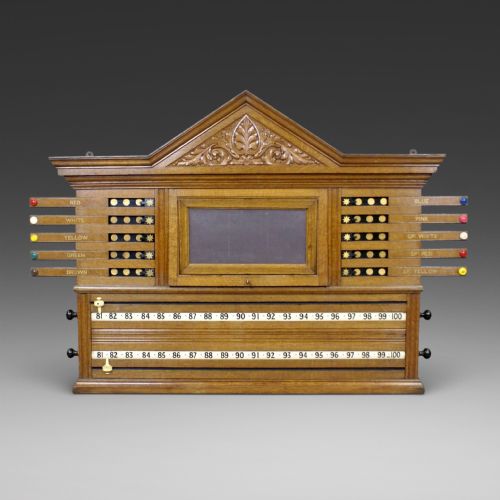
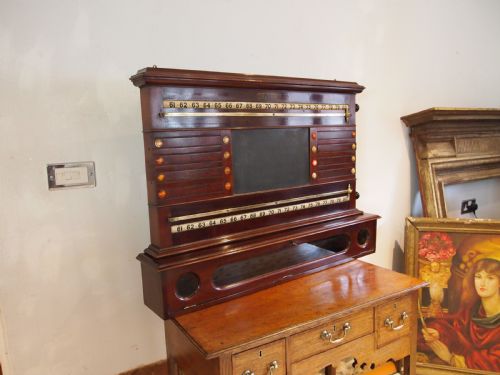
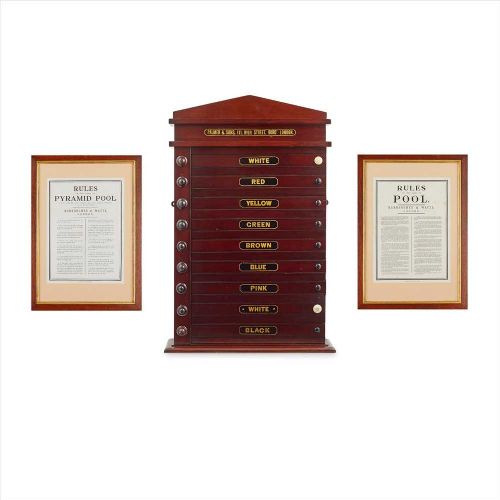
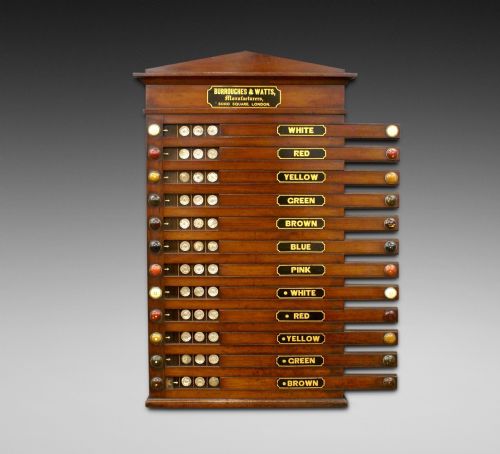
A vintage billiard scoreboard is a wall-mounted or cabinet-style marker used to keep score during games of billiards, snooker, and pool. The examples seen on this page span the nineteenth century into the Edwardian era, encompassing straightforward scoreboards and more elaborate score cabinets.
Most pieces date from the Victorian period through to nineteen hundred, reflecting the heyday of domestic and club cue sports. They serve today both as practical scoring devices and as decorative items for studies and games rooms.
How they were made
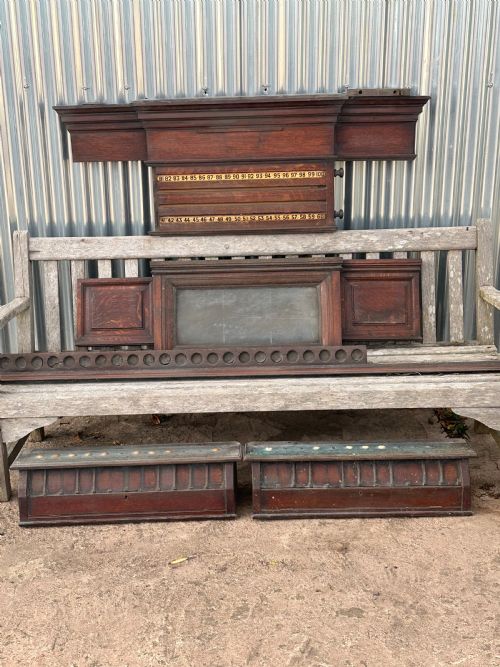
Maker workshops utilised dense hardwoods such as mahogany, oak, and English walnut to build durable mounting boards and housing cabinets. These timbers were selected for their stability and finished with polish to highlight the grain.
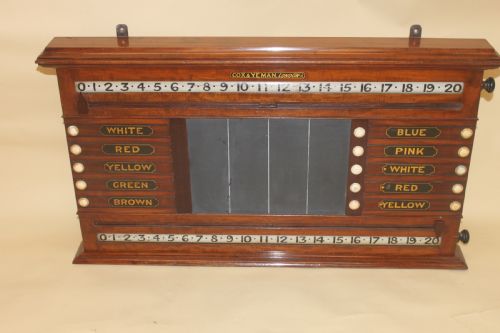
Scoring mechanisms incorporated brass sliding pointers, slate panels for chalk writing, and markers fashioned from bone and celluloid. Cabinets often included glazed doors and internal compartments for billiard accessories.
Listings span the nineteenth century to the Edwardian period, predominantly featuring mahogany and oak alongside brass and slate elements.
What varies in quality
Quality in these scoreboards rests upon the caliber of the timber selection and the complexity of the housing. Pieces featuring substantial walnut or finely figured mahogany cabinetry stand apart from simpler utilitarian boards.
The refinement of the mechanical components, including engraved brass numerals, bone pointers, and integrated slate panels, distinguishes standard workshop production from the work of premier makers.
Orme & Sons Manchester·Thurston & Co of London·Cox & Yeman London·Burroughes and Watts
The Vintage Billiard Scoreboard Glossary
- Scoreboard
- A wall-mounted wooden board fitted with sliding indicators or rollers to track points during a game. These units form the core of the items listed.
- Score cabinet
- A larger housing unit that encloses the scoring markers behind doors, frequently incorporating storage space for related accessories. They are deeper and more architectural than flat boards.
- Slate
- A fine-grained metamorphic rock utilised within the face of the board for chalk-written notations. It provides a dark, durable writing surface.
- Celluloid
- An early thermoplastic material used for numbering discs and marker pointers before the advent of modern plastics. It mimics the appearance of bone or ivory.
Vintage Billiard Scoreboard: Frequently Asked Questions
How do the sliding score markers operate?
The sliding markers move along brass rods or tracks mounted directly onto the wooden face of the board. Each pointer corresponds to a specific numerical range for tracking points.
Users slide the markers manually as the game progresses, keeping a clear tally visible to all players in the room.
Can these scoreboards be mounted on modern walls?
These boards are generally heavy due to the solid hardwoods and slate components used in their construction. Secure wall fixings into masonry or timber studs are essential for safe hanging.
Professional installation is often recommended to support the weight of larger cabinet formats.
What is the difference between a board and a cabinet?
A standard board is a flat, wall-hung panel displaying the scoring tracks openly on the surface. Cabinets feature enclosing doors that protect the scoring mechanism and frequently provide extra depth for storage.
Cabinets often incorporate decorative woodwork and glazed panels suited to formal reception spaces.
How should I care for the wood and brass?
Regular dusting with a dry cloth keeps the polished mahogany, oak, or walnut surfaces in good condition. Avoid using harsh chemical cleaners on the timber or the brass components.
Applying a traditional beeswax occasionally helps nourish the hardwood and preserves the finish over time.