


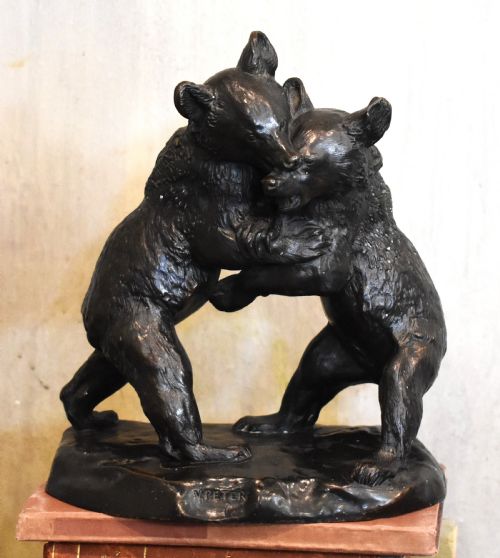


Vintage Bear Figurine
A vintage bear figurine brings character to a room, offering craftsmanship in wood, bronze, brass, and stone across several distinct periods.
Vintage Bear Figurine
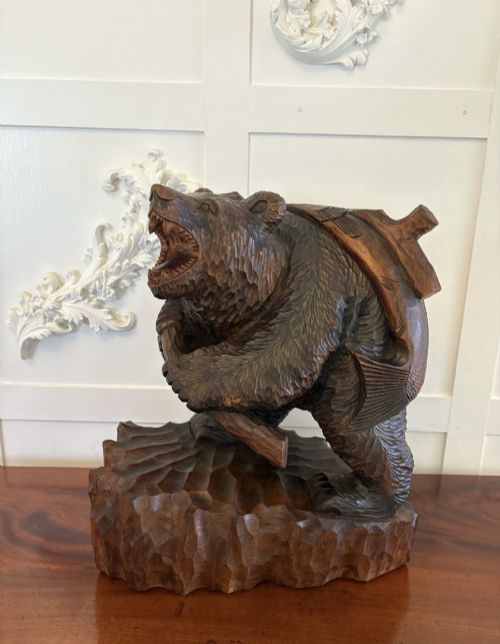
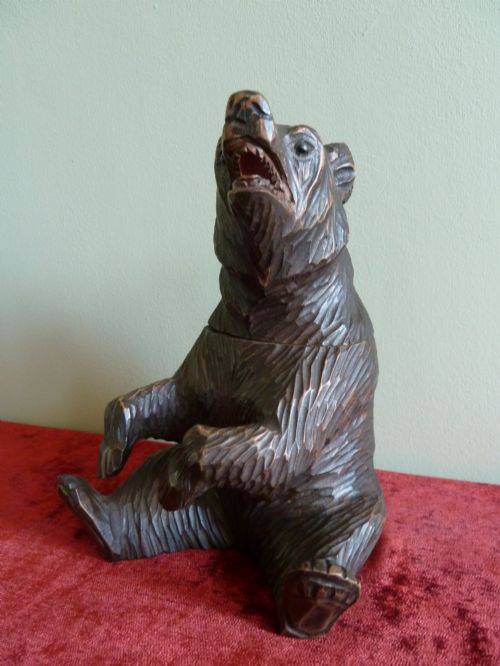
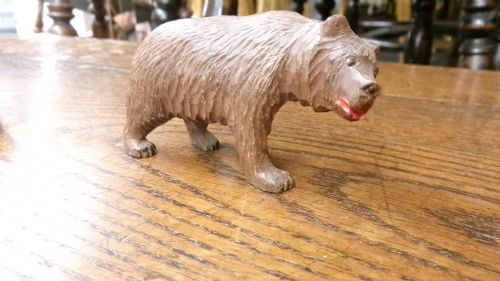
A vintage bear figurine encompasses small sculptures, tobacco jars, trinket boxes, and pin cushions produced across the nineteenth and early twentieth centuries. These pieces capture bears in various poses, from standing figures carrying fish to fighting cubs and sculptural groups.
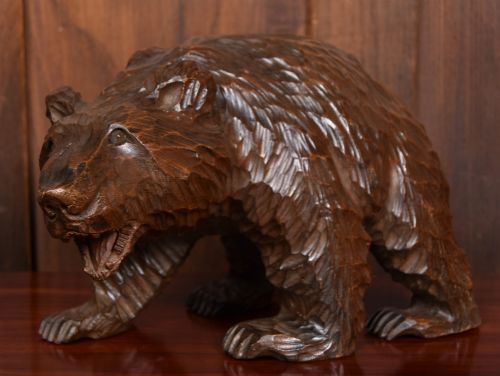
The most common examples on this page are hand-carved wooden sculptures from the Black Forest and Japanese folk art traditions, alongside European bronze castings. Makers utilised materials ranging from linden wood and cedar to gilt bronze and silver, shaping forms that served both decorative and practical domestic roles.
How they were made
Bronze and brass pieces rely on metal casting techniques, seen in French animalier works and novelty brass boxes. These metal sculptures capture dynamic movement and fine surface detail through careful casting and finishing.
Vintage Bear Figurine Retail Price Guide 2026
Typical asking prices for vintage bear figurine among the pieces listed under this phrase on Sellingantiques today, from the lower quarter to the upper quarter. They describe what is for sale here now, not the wider market.
Listings feature works from the nineteenth century up to 1920, spanning Japanese folk art, Black Forest, and French animalier styles.
What varies in quality
Quality rests upon the precision of the carving or casting and the expressiveness of the animal form. Master carvers achieved depth and naturalism in wood grain, whereas lesser pieces display rigid lines and minimal surface texture.
Named makers and documented regional traditions elevate certain bronzes and carved groups above anonymous workshop production. The integration of functional elements, such as pin cushions or lidded boxes, also influences the distinction between standard ornaments and finer sculptural objects.
Victor Peter·Christophe Fratin
The Vintage Bear Figurine Glossary
- Black Forest
- A nineteenth-century carving style originating in Switzerland and Germany, known for detailed wooden animal sculptures and domestic objects.
- Animalier
- A nineteenth-century artistic genre focusing on the realistic depiction of animals, particularly in bronze sculpture.
- Kibori Kuma
- A traditional style of Japanese wood-carving depicting bears, often associated with folk art from Hokkaido.
- Linden Wood
- A pale hardwood favoured by carvers for its fine grain and ease of shaping intricate details.
- Pin Cushion
- A small domestic accessory, occasionally formed as a silver or textile-fitted novelty item shaped like a bear.
Vintage Bear Figurine: Frequently Asked Questions
What materials are used in these bear figures?
The pieces utilise organic materials such as linden wood, cedar, hardwood, wax, and stone alongside metals including bronze, brass, and silver.
Wood examples often showcase natural grain and hand-carved textures, while metal figures rely on casting techniques for weight and fine detail.
How do I identify a Black Forest bear?
Black Forest pieces are characterised by carved wood construction, typically depicting bears with realistic fur and expressive postures. They frequently appear as sculptures, tobacco jars, or small decorative boxes.
Originating in the nineteenth century, these items reflect specific regional European carving traditions.
What is Japanese Kibori Kuma?
Kibori Kuma refers to hand-carved wooden bear figurines originating from Japan as folk art during the late nineteenth and early twentieth centuries. These pieces often feature distinct tool marks and natural wood finishes.
They are frequently depicted carrying fish or in standing poses.
Were these figures used for storage?
Certain examples served practical domestic functions beyond pure decoration. Items include lidded tobacco jars, trinket boxes, and novelty pin cushions.
These functional objects combine sculpture with everyday utility from the Victorian and Edwardian eras.