


Vintage Basket Chandelier
A vintage basket chandelier brings cascading crystal prisms and formal French Empire grandeur straight into a modern ceiling space.
Vintage Basket Chandelier
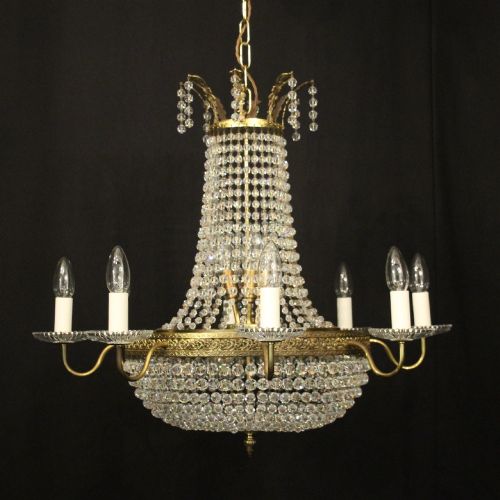
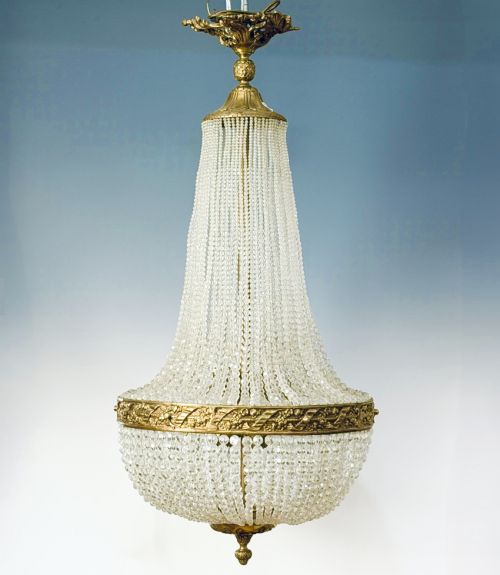
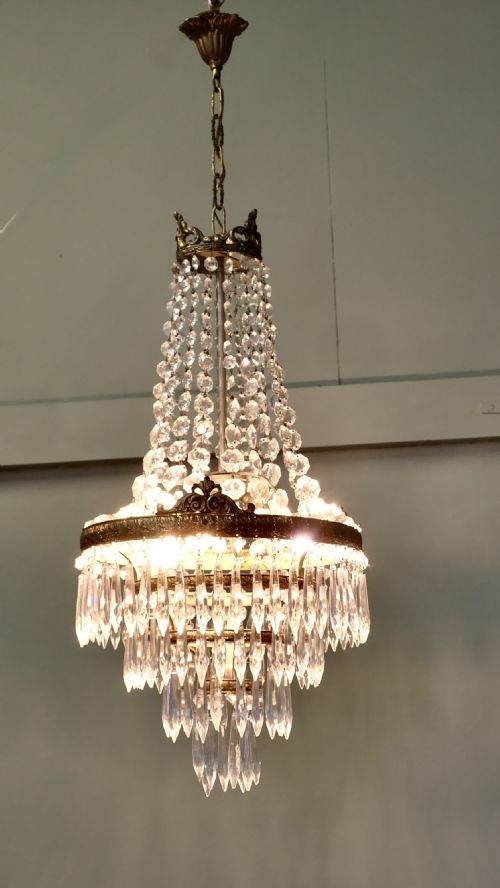
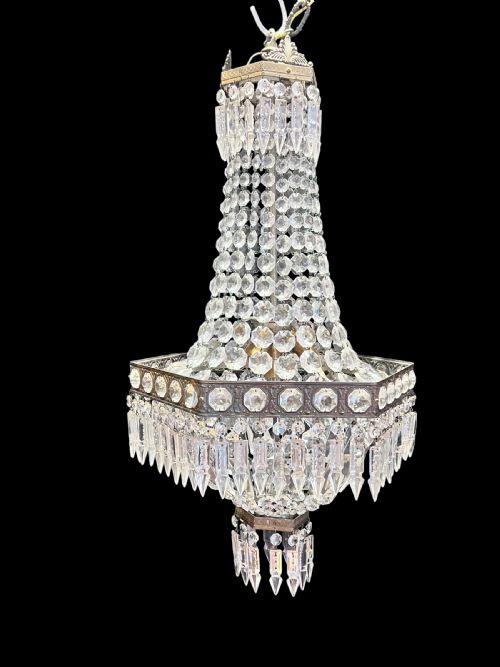
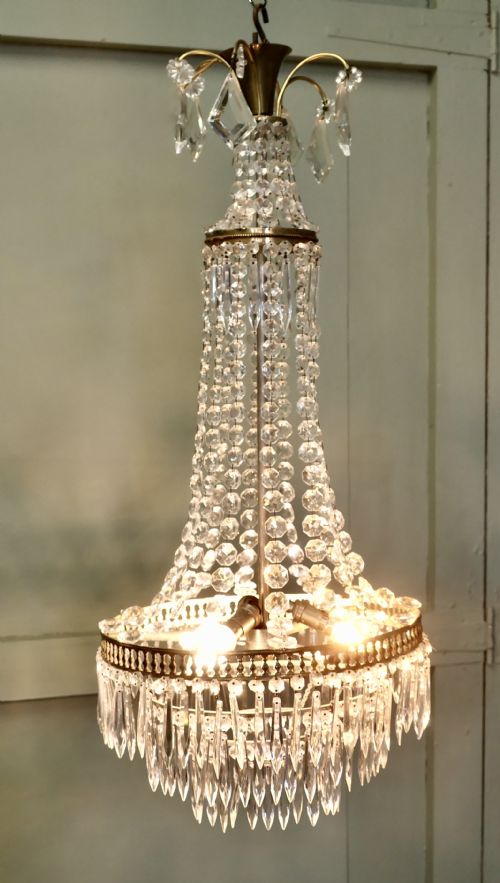
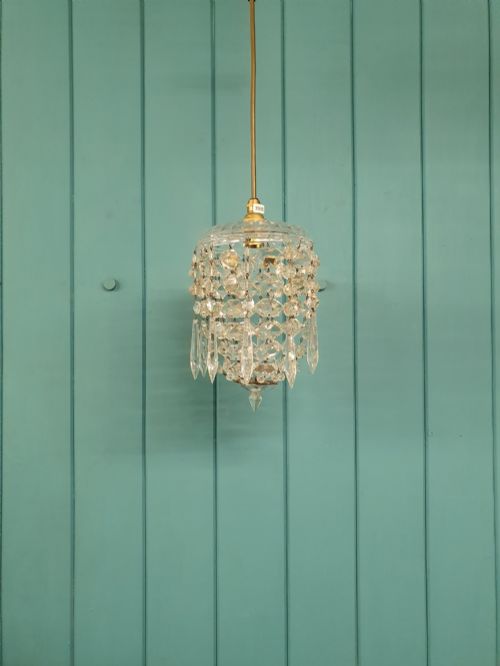
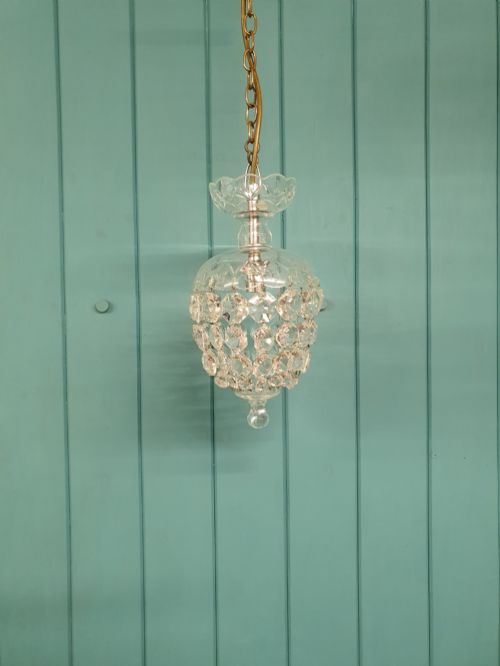
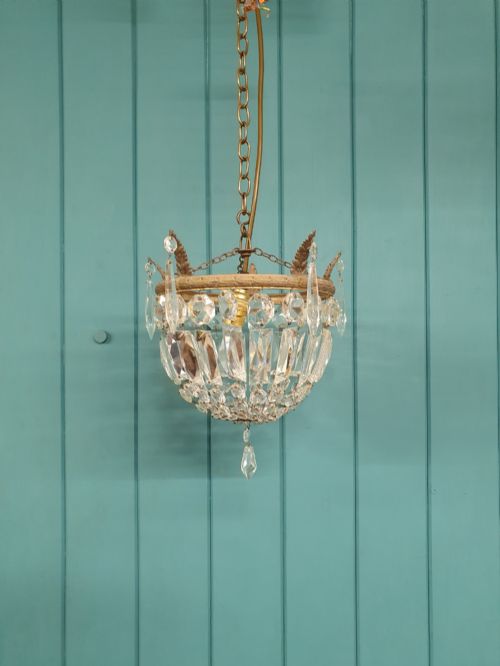
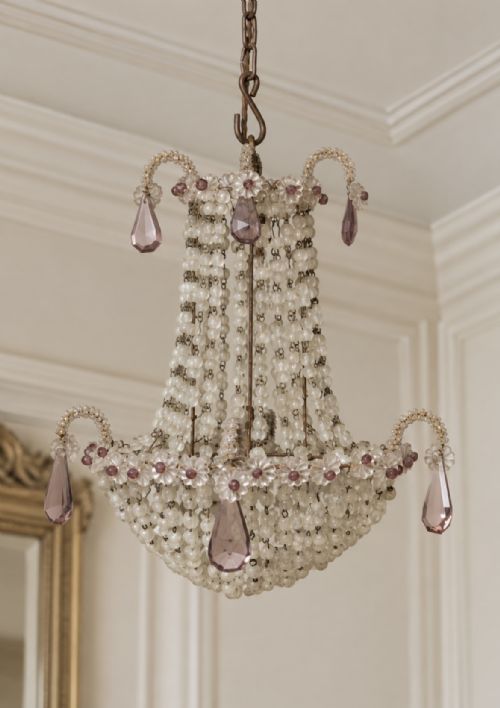
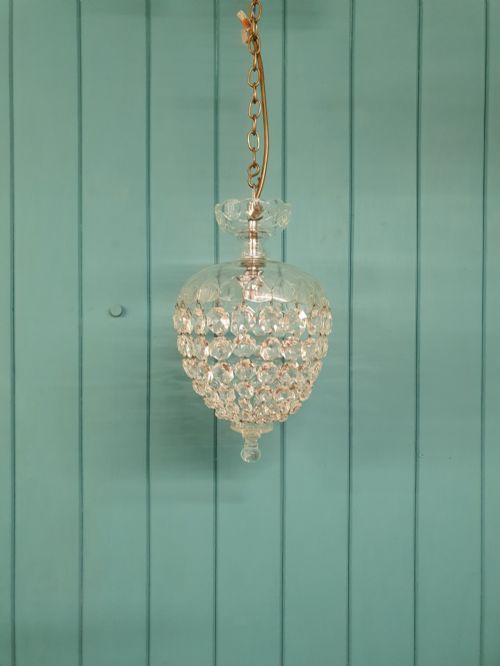
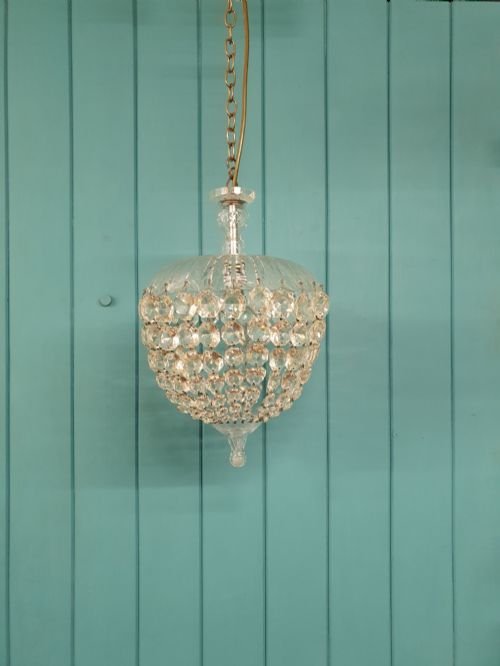
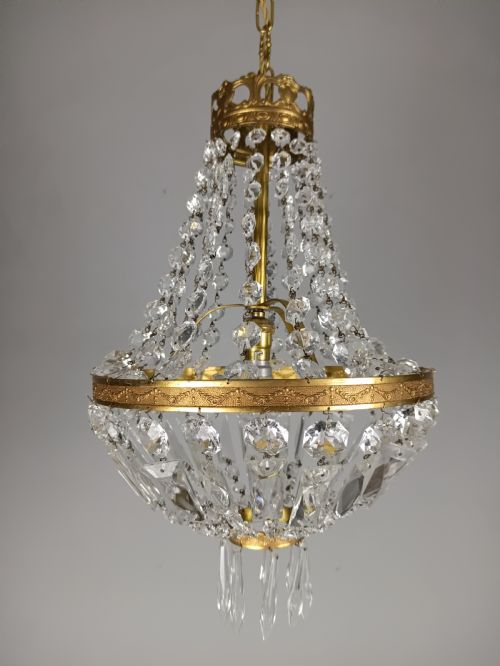
A vintage basket chandelier is a ceiling light defined by its gathered arrangement of glass beads, crystal drops and metal framework. These fittings appear frequently in Edwardian formats and 1920s French Empire styles, taking the form of bag chandeliers, dome tops and tent shapes.
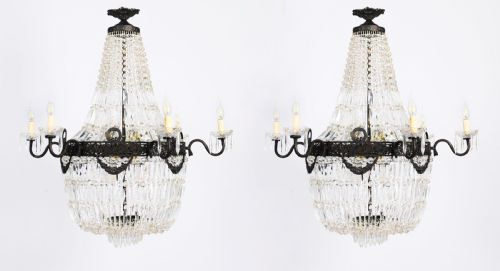
The objects span periods from the 19th century through the 1930s, utilising styles such as French Chateau, Regency and Louis Revival. Buyers often encounter compact dome tops alongside larger multi-light ballroom fixtures.
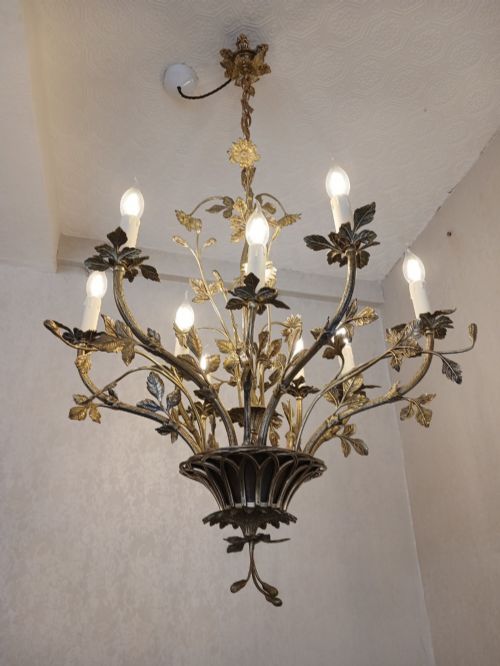
Most examples function primarily as pendant lights and ceiling lighting, designed to project refracted light across a room. The forms range from simple single-light baskets to grander multi-tier waterfall designs.
Assessing quality in construction
The refinement of the metal mounting and the clarity of the glass determine the standing of an individual piece. Heavier brass frames and crisply cut crystal prisms produce superior light refraction and structural durability.
Complexity of assembly elevates certain examples, particularly where multiple tiers of tents, waterfalls and beaded swags intersect. The integration of coloured glass elements or specialised prisms further distinguishes finer pieces.
Vintage Basket Chandelier Retail Price Guide 2026
Typical asking prices for vintage basket chandelier among the pieces listed under this phrase on Sellingantiques today, from the lower quarter to the upper quarter. They describe what is for sale here now, not the wider market.
Listings feature Edwardian and 1920s periods alongside 1930s examples, constructed from brass, bronze, cut glass and crystal.
The Vintage Basket Chandelier Glossary
- Bag chandelier
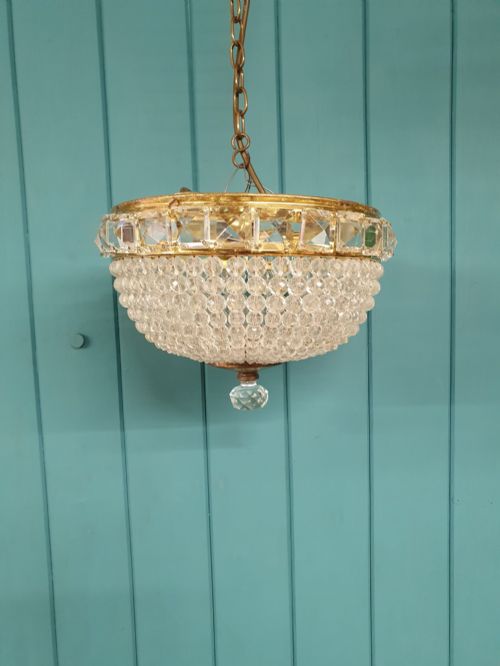
- A lighting fixture featuring a gathered lower section of glass beads resembling a small pouch or bag. These pieces often feature a flat or domed top ring.
- Tent and waterfall
- A configuration where upper strings of beads form a sloping canopy above a cascading lower display of crystal drops. This style derives from French Empire design traditions.
- Coffin prism
- A long, flat-faced rectangular pendant drop with a pointed or bevelled end, commonly hung from the perimeter of Edwardian ceiling lights.
- Dome top
- A rounded upper framework that gathers glass beads toward a central ceiling mount, frequently seen on compact Edwardian fixtures.
Vintage Basket Chandelier: Frequently Asked Questions
How do I hang a basket chandelier?
These fixtures suspend from ceilings using standard electrical wiring and robust ceiling hooks suited to their weight. Professional installation ensures the brass or bronze frame secures safely overhead.
Height placement depends on room proportions and whether the fitting hangs above a table or within an open walkway. Adjusting the chain length allows the cascading crystals to catch optimal light.
What periods do these chandeliers come from?
The pieces span the Edwardian era, the 1920s and the 1930s, incorporating earlier 19th-century design influences. French Empire and Louis Revival styles dominate the aesthetic vocabulary across these decades.
Distinguishing between periods involves examining the metalwork thickness and the specific cut of the crystal prisms. Edwardian examples often favour compact dome shapes, while later pieces lean into elaborate bag and tent configurations.
How do I clean a crystal chandelier?
Maintenance involves gentle dusting and careful washing of individual glass beads and prisms while attached to the frame. Using a mild solution prevents damage to the delicate wire connections securing the glass.
Keeping the brass and bronze mounts free of moisture protects the original metal finish during cleaning routines. Regular upkeep preserves the reflective sparkle of the cut glass.
Where do French Empire styles originate?
French Empire designs draw inspiration from neoclassical motifs popularised during the Napoleonic era, later reinterpreted in Edwardian and 1920s lighting. These pieces emphasise formal symmetry, tent formations and cascading crystal waterfalls.
Workshops in France and Italy adapted these grand palace aesthetics for domestic ceiling lighting. The resulting fixtures combine classical restraint with dramatic refractive displays.